Showing posts with label Silicon Valley. Show all posts

All About Misunderstood Markets And Defensibility

total addressable market tam global markets

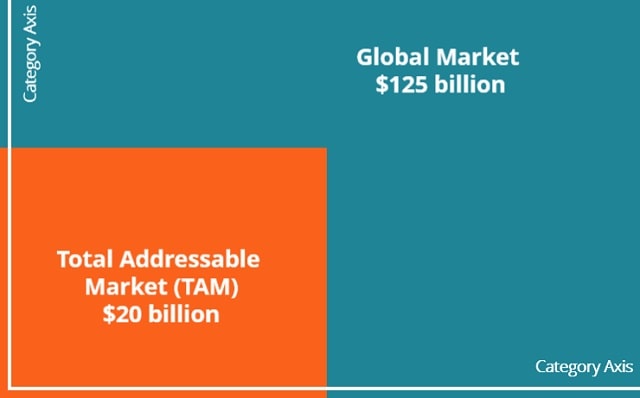
The Total Addressable Market (TAM) is important to differentiate between the global market for companies and investors alike. Silicon Valley has a strong view on TAM. To be taken seriously, your TAM needs to be $10B+, to generate real excitement, your TAM needs to be $100B+. This goes some of the way towards explaining the increased investment in digital health and real estate. Both have humongous TAMs, both real estate and digital health, depending on how your quantify them are measured in trillions. But, despite their apparent size, when you really cut them down to size, something comes to light about the overall market. 

While U.S. real estate asset prices are worth trillions, there are $100B in real estate agent commissions a year. Of those, the majority of agent relationships are created from first degree connections (friends, family, colleagues). So, of the “up for grabs” agent market, if you absolutely nailed a new real estate brokerage model, you are talking about maybe a $10B market, of which getting 20-30% would be a great feat. 

RedFin, with their discount brokerage model took 15 years to get to 1-2% market share across several U.S. cities. So despite the headline figures, maybe that vertical SaaS player with a seemingly small TAM of $6B, but clear GTM and high margins, looks more attractive. TAMs can be quite deceptive. 

But TAMs alone don’t explain why Vertical SaaS has done so well and we have yet to see a real estate tech or health care tech $10B+ winner. The incentive systems are so well baked in health care and real estate. Try seeing a cash list at your local hospital. Or, buying a home directly, without an agent. Both will put you directly into the teeth of the system. And you will see it squirm at first, then reject you and if you continue to push, it will bite you. 

These deeply ingrained incentive systems and regulatory capture create the false sense that the TAMs are really up for grabs. PCP to specialist networks look like they should be run more efficiently, but then you learn about the strong ties among members. Real estate agent and mortgage brokers too have close relationships. Laws have banned passing of referral bonuses, but that doesn’t stop dinners, sports tickets and gift giving that skirts the system. 

Spending time in real estate and more recently in fast-growing consumer fintech (Earnin), the absence of these built-in systematic biases was refreshing. It reminded me of the thrill of the blue ocean, of green field. While the challenge of creating a new category of product is immense, I’d argue, it’s far easier than the challenge of working through the systematic entrenchment in health care and real estate. 

While I am not altogether bearish, we are still waiting for the breakout in either health or real estate. In health, I’m bullish on direct primary care models and virtual care. They’ve shown real promise in reducing costs for patients. I’m bullish on risk models that are finally, at a glacial pace, changing incentives in the system. 

In real estate, the buy before your sell models are brilliant. These are definitely the highest NPS experiences in real estate. These companies abstract complexity in the way great software does. Their models are also very attractive, seller commission + buyer commission + mortgage + bridge loan. The economics add up quick. 

As the classic saying goes, as a startup can you figure out distribution before the incumbent figures out innovation. In spaces with systematic lock-up, incentive misalignment and regulatory capture - the incumbents can not innovate at all, but change the system around them to either harm your ability to distribution and advantage their ability to respond. 

As with most things, there is no black or white answer to how to approach these spaces, we live in the grey. We exist in the fuzziness and volatility of the new economic marketplace. We remain stuck inside the wall of investment information available. The best we can do is analyze, re-compute and keep our opinions ever-changing as the dynamics in these spaces come to light.

10 Surprising Facts You Haven't Been Told About San Jose

surprising facts city of san jose ca

Did you know that San Jose means Saint Joseph, or that the California metropolis that bears the moniker is officially called the City of San San José? Here are 10 other facts you may not have known about the Santa Clara Valley town nestled on the southern shore of the San Francisco Bay. 

1. A Rare Japantown 

You may have heard of Chinatowns, but what about Japantowns? In the United States, there were once many. However, after the Japanese internment during World War II, only three Japantowns remain. One is in San Jose. The other two are in San Francisco and Los Angeles. 

2. A Lot Of People Live In San Jose 

A lot of people indeed live in the city of San Jose, CA. It’s the third most populous city in California and the 10th most populous in the United States. 

3. San Jose Is The Heart of Silicon Valley 

These days, San Jose is unofficially considered the capital of Silicon Valley. Major technology companies, like IBM, Cisco Systems, Adobe, and eBay, are all headquartered in the area. 

4. A Rich City: San Jose Is Smothered In Money

It boasts the third-highest per capita GDP in the world, behind Zurich and Oslo. San Jose has the most millionaires and billionaires, per capita, in the country. San Jose also has the most expensive housing market in the nation and is fifth worldwide. 

5. San Jose Was The First Capital Of California 

Before colonization, the land where San Jose now sits belonged to the Tamien Nation of the Ohlone peoples. In 1777, the Spanish founded Pueblo de San José de Guadalupe, California’s first city. In 1849, San Jose became the state’s capital, and a two-story adobe hotel served as the government building. Back then, the Senate convened on the lower floor, and the Assembly occupied the top one. 

6. San Jose Is Home To A Famous Haunted House 

Sarah Winchester, the widow of firearm mogul William Winchester, started building a mansion in San Jose after a medium in Boston advised her to move westward and build a home for the ghosts killed by her family’s rifles. The house, which weighs in at a whopping 161 rooms, now ranks on the National Register of Historic Places. Construction allegedly continued non-stop from 1884 through her death in 1922, and Winchester never used an architect. Instead, she added rooms haphazardly and built features to confuse ghosts, like stairways to nowhere and non-functioning bathrooms. 

7. Pets Are Welcome, Up To A Point 

If you have a Duggar-sized family of pets, San Jose is not the city for you. A city ordinance forbids residents from having more than five registered pets. 

8. Bring Your Own Bag Policy 

An environmentally conscious city, San Jose has a strict “Bring Your Own Bag” policy. Enacted on January 1, 2012, the regulation forbids stores to distribute plastic bags freely. Paper bags made of recycled materials are available to people who forget reusable ones, but they cost at least 10 cents. 

9. The Wave Was Invented In San Jose 

The Wave, as seen in countless sporting events for decades, was invented by a former San Jose State cheerleader, Krazy George Henderson, in 1968. However, it wasn’t until 1981 when the audience participation standard was featured at a professional game. 

10. San Jose Produces Champion Eaters

If you want to train for a power-eating competition, you may want to consider a move to San Jose. In 2007, Joey Chestnut, a San Jose native, won the Fourth of July Nathan’s Hot Dog Eating Contest and defended his title for the following eight years. In 2015, Matt Stonie, who’s also from San Jose, snatched the throne. 

Get Moving To San Jose CA

Do these fun facts make you want to make the move to this great CA city? What are you waiting for? It’s time to move to San Jose! So call a San Jose local moving company to get started!

New Frugal Finance Blog Posts & Articles