Showing posts with label Payroll. Show all posts

Top HR Payroll System For Businesses

top hr payroll system best human resources software paychecks program

The future of payroll is bright and everchanging. Especially for billion-dollar companies who have hundreds, and sometimes thousands, of employees to pay calculated salaries and fees to their workers. 

To help companies keep track and monitor salary payments, high quality HR payroll system have to be put in place. Not only does it help keep book of all the finances, it also keeps companies out of trouble. Every year, business owners are fined millions of dollars because of IRS issues. Typically, these issues are because of payroll errors. 

The best thing for a business owner to keep their payroll on track and in line with the law is to stay on track with the newest payroll systems. Just like with many other technology systems, Payroll is also growing and evolving. To give you some insight on the newest trends, here is a list of the best payroll systems for today's businesses: 

1. GDPR-Compliant Automated Systems 

In the past, geographic restrictions made it difficult to pay someone who were located in another state or town than the business itself. With current technology, it has become easier to employ and pay people from all over the world. 

If your company is using remote workers then you can invest in a GDPR compliant (General Data Protection Regulation) automated system. This system allows the business to ensure security when it comes to all personal data collected. It’s important that all employee’s personal data is kept safe, not only to avoid fines from IRS, but also to ensure the employee’s virtual safety. 

By knowing that payroll system’s not only serve the function of actually paying salaries, but also keeping sensitive information safe, business owners should consider investing in proper tech upgrades. 

2. Transparent Salaries 

There was a time when no one discussed the actual number on their pay slip. With the current fight against equality, it’s more important than ever for everyone to have a clear indication of what salaries are given to what positions. 

Studies have proven that in the past that for every $1 a man earned a woman would only get $0.82 for the same job. It was because of these studies that payroll systems were put in place that will ensure well thought-out and fair pay structures. 

Adding performance evaluation software that works on incentives, will also assist the payroll to make fair salary payments. 

3. Human Resource Incorporation 

A big mistake that business owners make is by underestimating the power of high-quality HR tech. When payroll innovations and HR technology are combined it will make your company much more efficient. 

This will allow HR to track employee’s schedules and time at work more efficiently. As well as leave day requests and holiday times, resulting in much more accurate payroll. 

4. Gig Workers And Tracking 

Hiring full time employees can be a big expense that some businesses just can’t afford. Rather than spending a fixed number on a permanent employee, owners are moving towards hiring part-time freelance workers. 

Depending on the project, the part time employee will only work for a certain number of weeks or months. Having gig workers coming and going do need an organized system. Avoiding skipping someone during payment or when calculating salaries. 

When companies do move towards hiring gig workers, then there has to be a system put in place to handle the influx of workers. 

5. Moving To Automation 

Doing payments manually can take a lot of time. Not only is it time consuming but it opens up an entire window for human error that can be avoided with automatic payroll systems. 

Furthermore, automation can simplify calculation processes of tax deductions, tax rates, and other deductions like housing and insurance. Instead of an accountant filling in and calculating it all, a technology program can do it all for you by only being monitored. 

Other systems that are also becoming quite popular, are those that can be stored in the cloud. This allows data not to be lost within files and hard drives of the company. 

Business owners should update their HR payroll systems, especially if they want to keep on growing.

What HR And Payroll Departments Are Responsible For

what hr and payroll departments are responsible for human resources dept

Did you know that over 150,000 people in the U.S. work in human relations according to the Bureau of Labor Statistics? 

Even with such a large number of employees work in human resources (HR), many employees don't have the first idea what an HR representative does. 

If you've taken an office job, you might be wondering if they're responsible for your salary. After all, is there really any difference between the HR and payroll departments? 

We are here to fill you in about human resources and payrolls! Keep reading below to learn the roles of the HR and payroll departments. 

The Role Of An HR Department 

The HR department exists to assist the staff and help them work to the best of their potential. 

Human resource employees are often responsible for hiring new staff members and training them. 

Along with training new employees, HR also provides training opportunities for existing employees to move into bigger roles. And, they typically outline new company policies with staff members. 

HR employees also act as mediators to resolve any conflict between staff. Additionally, they serve to address individual employee performance issues. 

HR also motivates employees through incentive programs and yearly bonuses. 

The Role Of A Payroll Department 

The payroll department's main objective is to ensure employees are paid on time and correctly. 

In order to do this, payroll staff has to verify compensation data for each employee, such as regular hours, overtime, severance pay, etc. They must also confirm tax deductions in paychecks that go out. Often, they will use payroll software to help them do this. 

The payroll department is then responsible for sending the direct deposit file to the bank. 

They will create check stubs distribute to employees. 

Following a pay period, payroll staff verifies all paycheck information in a payroll report. 

Where HR And Payroll Work Together 

HR and payroll departments have to collaborate to make sure the correct employee information is being processed. 

Sensitive information, such as employee social security numbers, are held by the departments, so it's up to them to keep this information secure. 

Sometimes the payroll department is split between an office's HR department and its finance department. This is because much of the work relies on both interaction with employees, as well as accounting-based skills. 

It's crucial that HR and payroll work together because if employees have issues with their payment at any point, the issue will come back directly to HR. It is in their best interest to make sure the payroll department has everything it needs to operate efficiently. 

A lot of the collaborative work between these two departments relies on a fact-checking process. For example, HR will file a salary change for an employee. The payroll department will then verify that change. 

Fulfilling Department Duties 

Both the HR and payroll departments are necessary to keep your company running smoothly. 

While they certainly must work together at times, they don't perform all the same duties. The two complement each other and can't exist without the other.

How an Automatic Payroll System Helps Businesses

how automatic payroll system revolutionize business hr paycheck software

Are you a busy business owner with a hundred and one different tasks on your plate? Do you often forget about completing payroll to pay your employees until it's almost too late, and you have to sit up nights to make the numbers work? 

If so, then we are here to save the day with one small recommendation: it is time you implemented automatic payroll technology in your business to take care of your employees' pay stubs. 

Keep Employees Happy with Automatic Payroll 

When it comes to payroll, there are two crucial reasons why you should leverage an automatic payroll option. 

The first reason is that it is going to help keep employees happy. At the end of the day, your employees are the ones who help you run your business. Without them, there's no way that you could grow or scale operations. 

There are lots of different ways to keep employees happy — focus on creating a positive company culture, offer scope for career growth, and give them great benefits. But at the end of the day, your employees took this job to get paid. 

So if you are not paying them on time, every time, then they are going to start wondering about whether they should stick with your business. They are going to take calls from other recruiters. They are going to submit applications at other establishments. 

And if they decide to leave, you are faced with the cost of hiring and training a backfill. Avoid this unfortunate situation — use automated payroll to ensure that your workers get paid on time, every time. 

Save Time As a Busy Business Owner 

The other primary benefit of automatic payroll is that it saves you time. You're a busy entrepreneur. You don't have time to do manual accounting tasks. 

The more time you spend on doing payroll manually, the less time you can spend on operations that actually grow the business. So even if the automatic payroll software may seem like a significant expense, you should really think of it is an investment where your ROI is increased time to spend on growth-inducing business activity. 

How Do I Find a Good Automatic Payroll Software? 

Now that you understand the importance of software automation for payroll, then arises the question of how to find such a software option. 

The answer to that question is easy. There are many legitimate paystub maker options on the market. All you need to do is create a shortlist of your favorite ones that have the simplest UIs and lowest cost, and then take a look at their online reviews. 

If the software provider in question doesn't have a plethora of positive customer reviews that it can point to, run. 

Leverage Software, Starting Today 

There you have it! Equipped with this guide, you should be much better informed on how you can leverage automatic payroll and paystub generation to revolutionize your business, starting today. 

For more business advice beyond automatic payroll and human resources, take some time to check out the rest of the articles that are available to read on the website before you leave. Visit the HR section of our website right now for more information!

What Are Payday Loans? Your Questions Answered

what are payday loans

Most banks don't like risk. If you have less than average credit or income, strict lending rules can make it almost impossible to qualify for a personal loan.

In an emergency, you can turn to payday loans to cover short term expenses. What are payday loans and how are they different from other loan options?

Check out this guide to understanding how payday loans work.


What Are Payday Loans?

Payday loans are a short term solution to cash flow problems. These loans are intended to last you only a couple weeks until your next paycheck, hence the name payday loan.

One of the biggest reasons to choose a payday loan over other loan types is that it is easy to qualify and get cash. Many payday lenders fund your account the same day. 

If you choose to work with an online lender, you can get a loan 24 hours a day, 7 days a week. This gives you flexible options when responding to an emergency in the middle of the night.

Since you don't need collateral or high credit scored to qualify, most payday lenders just need a few basic details from you before issuing a loan. 

Payday loan amounts are usually much smaller than traditional loans and have interest rates in the triple digits. To understand why interest rates on payday loans are so high, you first have to understand how lenders make money.


What's a Good APR?

An APR is the amount of interest you pay daily on a loan. The higher the interest rate, the more money you will repay the lender.

Most people aim for the lowest possible interest to keep loan payments low. Lenders make money when borrowers repay their loan debts plus interest over an extended period of time.

In 2022, Americans paid more than $104 billion in credit card interest alone. Payday lenders don't have the luxury of offering credit over the long term.

Since borrowers are expecting to repay the debt in just a matter of weeks, the interest rate is much higher than that of credit cards or loans from a bank.

The average interest rate is around 16 percent, but this rate applies to years of spending or borrowing money. Usually, the longer the loan term, the lower your interest rate.


Subprime Loans

A payday loan is a type of subprime loan. If your credit score is between 550 and 669, you're considered a subprime borrower.  Subprime loans are offered to borrowers who can't qualify for traditional loans because of this low credit rating.

These loans are a higher risk to lenders because a low credit score may be a sign of financial mismanagement. Because lenders are afraid you might not pay back the debt because of money problems, they are more likely to charge high fees and interest on the loan.

This makes payday loans more expensive than other types of debt. You'll need to understand how payday loan terms work in order to avoid repaying more in interest and fees than you can afford.


How to Repay a Payday Loan

It's a good idea to have a payment strategy in mind before getting a payday loan. Interest rates on loans can range from 390 to 780 percent. 

When you first get your loan, the lender asks for a personal check for the amount you borrow. The personal check includes any fees applied to the loan.

In exchange, you get instant access to cash. These online payday loans secure personal bank account information instead of a physical check.

The money is deposited into your account and you're expected to repay the debt from the same account. The lender keeps your information on file until your next payday when the entire amount plus fees and interest must be repaid. 

If you can't pay or choose not to pay, you can roll the loan over into your next pay period. Lenders might accept a partial payment, but it's not guaranteed.

If you do get the chance to make partial payments, you'll be expected to make payments on a routine schedule set forth by the lender. 


How to Get a Payday Loan

Not every state allows payday loans. There are 12 states that ban payday loans completely:


  • Arkansas
  • Arizona
  • Connecticut
  • Georgia
  • Maryland
  • Massachusetts
  • New Jersey
  • New York
  • Pennsylvania
  • North Carolina
  • Vermont
  • West Virginia

This means that even if you work with an online payday lender, you can't borrow money if you live in one of these states. Other states have laws that limit how much you can borrow and how interest rates are applied. 

Payday loans are often available through a physical branch you can visit to apply in person. This is the same location you'd visit to make and receive payments.

Other borrowers can apply online using their electronic banking information to set up a new account with a lender. Payday loans range from $100 to $1,000 depending on the limits set by the state. 


Is a Payday Loan Right for Me?

What are payday loans in the end? A payday loan is a short term way to fix small cash flow problems. 

If you've been having financial issues for a while, a payday loan can only worsen your situation. Payday loans are best for people who can repay the debt right away.

When the loan reaches a new payday loan term, the lender usually issues a new loan with new fees and interest to cover the old one. This means the debt can quickly snowball making it impossible to repay.

Make sure you are using payday loans for the right reasons to avoid adding to your financial woes. For more financial information and insights on payday loans, visit the Loans and Frugal Finances sections of our budget blog right now.

The Complete Guide On How To Read A Pay Stub

how to read a pay stub paycheck information

Is it your first time to get a full-time job that gives paychecks? Are you having a hard time reading a paystub? Do you want to understand what the various parts of the pay stub mean? 


Over 22 million Americans lost their jobs in April because of the pandemic. The likeliest outcome is that people will live paycheck to paycheck due to the crisis. Today, as we find more ways to fight the crisis, people are coming back into the workforce. 

You must know how to read a pay stub no matter what industry you’re in or what your job is. In this guide, we’ll help you improve your understanding of a paycheck stub and how it works. Keep reading to learn more about pay stubs and how to read them. 

1. What Is In A Pay Stub? 

Before we go on, let’s define what a pay stub is for a quick second. Companies and businesses generate pay stubs to help employees keep track of their income. Pay stubs are your record of the pay you received, complete with the details about the pay. 

To better learn to read a pay stub, you first need to know what the parts mean. Below, we’ve got a list of the details and terms you’ll see in a typical pay stub. Note that pay stubs may differ in appearance depending on the company, but they all carry the same info. 

Basic Details In A Pay Stub 

Some of the first things you’ll see at the top of your pay stub are basic information. This includes your full address as well as your employer’s. Both these pieces of information need to be up-to- date and accurate. 

If your company includes it in your pay stub, you’ll also see identifying information. It may be in the form of an employee ID number or Social Security number. 

You’ll see included is pay type, which is often either per hour or salary. You’ll also spot the date that the employer issued the paycheck. This is the date when you’d receive your paycheck. Next to that is the pay period or the time frame that your pay stub covers. 

Other Parts Of A Typical Pay Stub 

After the basic details, the next thing you need to know is the next part of a pay stub. This includes your total earnings, taxes, and final payment. Now, you may be wondering about a few things. 

What are the gross earnings on a paystub? How does it differ from net pay? Not everyone knows what they are, so let’s define what some of these words mean. 

The gross pay that’s written on the paycheck stub is the total pay. That’s how much you’d get before the taxes, and other deductions get taken out. This is different from the net pay, which is the final pay or final amount after the deductions. 

2. How To Read Your Paycheck Stub 

Now that you’ve got all the details down, let’s study how one reads a pay stub. Whether it’s old or new, we want you to take a pay stub. Let’s read it together. 

First, let’s take a look at the top. Check that all the basic information about you and your employer are correct. If something is missing or erroneous, it’ll be the fault of the payroll department or company. 

After you’ve checked that all the basic information is correct, let’s take a look at the two most important aspects. Go to the gross pay. As we mentioned, this is the earnings you’d get in a pay period before any withholdings. 

This is often the largest number in the pay stub. This also excludes other earnings like bonuses. Knowing what your total wage is useful so that you know what your typical income is. 

What is your earned income on the pay stub? This is the next aspect we move to. You may also know it as the net pay or final pay. Remember, this is the total money after taxes that you’ll bring home. 

3. How To Know What Taxes And Withholdings Got Taken 

Now, you may be wondering how you can ensure that all the items on the pay stub got calculated right. With the gross pay and net income in mind, let’s jump to the middle. We’re taking a closer look at the withholdings and taxes. 

Under taxes, check how much the federal tax (FT or FWT) and state tax (ST or SWT) amounts are. This is how much you give back to the government as taxes. State taxes are payments that go to public projects like health care. 

Note that not all states collect an income tax and state tax will differ per state. If you want to file for exemptions on your federal tax, fill out a new W-4 form. Ask the human resources department for help if you need any and to change the W-4 form for you. 

After the taxes, check other deductions like Social Security (SS or SSWT) and Medicare (Med or MWT). Social security payments go to finance your retirement. This is a contribution that’s worth 6.2% of your income. 

Medicare payments are worth 1.45% of your paycheck. If you don’t find Medicare under your pay stub, look for an item labeled FICA instead. FICA may also include social security. 

If you want to know what the other abbreviations mean on your pay stub, talk to human resources. 

4. Why Learn How To Read A Pay Stub? 

Now, you know how to read a pay stub. The question you may now be thinking is why it matters. The first reason is so that you can see and understand where your money goes. 

Next, you want to avoid any mistakes. Indeed, your pay stub goes through a few people first. However, they can still miss errors and give you the wrong payment for a pay period. 

It helps to be able to understand your pay stub so you can spot any errors. Even before the peak of the Coronavirus, 49% of Americans already expected to live paycheck to paycheck this year. If there are errors on your pay stub, bring it up with HR or the payroll department. In times like these, every cent counts. 

Get a Better Understanding Of Your Pay Stubs 

Now you know how to read a pay stub. We hope you now know what’s written on your pay stub. Of course, handling your finances only starts here. If you want more informative guides on paycheck stubs, check out our other content on other financial documents and employment information. We provide tons of financial guides and lists for you to discover, right here!

How to Calculate Employee Wages and Set Salaries: The Complete Guide

how to calculate employee wages set salaries

Employee wages are an ever-present part of any business. It's a topic that many people don't like to think about directly, despite it being incredibly important for the wellbeing of your business and its workers. 

Many businesses end up valuing employees too highly and then losing out on profits. Meanwhile, others undervalue their staff and force them out the door as a result.

It must be understood that setting employee wages is a balancing act.

Once you've understood this fact, read on to find out how to calculate wages for your employees.


Step 1: Understand the Job

The first thing you need to do in setting employee wages is to understand the job you're asking them to fulfill in the first place.

Often it can be helpful to write the job description out first or create a list of responsibilities for the job role. An unspoken truth about job roles is that they are often very different despite being advertised under the same name.

A receptionist for a small business might predominantly be in charge of handling calls and not greeting staff. Whereas a receptionist in a hotel is more responsible for direct customer satisfaction and checking guests in and out.

You can't set the right salary for a job without first understanding what the job exactly is. Once you've outlined all the responsibilities of the job in question, you can start to properly figure out the appropriate salary.


Step 2: Set Your Budget

When looking to hire a new employee, you need to factor in how much money your business can allocate to this new employee. The best way to do this is to look at your end of year accounts, to see how much overall profit you'd be able to afford in hiring a new employee.

This is vital to budgeting properly and ensuring a new staff member won't break your bank. But it's also important to help you set an upper and lower limit.

Setting an upper and lower limit to your budget can help you to come up with the final figure for your salary. An upper limit is an absolute maximum you'd be willing to pay someone to fulfill the role.

Conversely, the lower limit is the lowest you feel you could respectably offer for the position in question. Some business owners advertise these upper and lower limits in the job advert itself.

This can be helpful as it then attracts potential applicants of different experience levels, which can create a broader pool of applicants to choose from.


Step 3: Research the Job Market for Average Employee Wages

The next thing to do after you've set your boundaries is to look at the boundaries set by the job market itself. 

Every job has an expected average salary rate, from entry-level to individuals with a lot of experience. If you're pitching your job wildly outside of this amount, you'll either get a lot of inexperienced people jumping at the chance to gain a much higher salary than they'd usually have access to, or your job simply won't get applied to by the people you're looking for.

It's likely that those looking for a job will also be researching these salaries.

This is why it's good to take a look at the overall job market before you set your salary. Find out what the average salary for this role in your geographical area is.

This can also help you to see how complex the job role is in comparison to others like it in the area which can also affect your final figure. The best way to conduct this research is to look at online job sites where jobs are advertised.

You're able to search for the job title as well as specify geographical area through most job board websites. Once you've conducted this research, you'll have a better idea of what other companies typically pay these employees as a salary.

It's also helpful when it comes to deciding how you will pay this new employee. Some companies pay by the hour, others as an annual sum. However, certain jobs come with expectations by applicants, which you need to bear in mind. For instance, a doctor likely wouldn't accept a job where they were paid by the hour.

Doing your research can help you decide this, and is the second to last step in the process.


Step 4: Think Flexibly

The final thing to bear in mind is to think flexibly in your salary listing. Think about all the many responsibilities that you're asking of this person or any future opportunities that could be open to them.

With setting salaries it is important to think about the dream person you'd want for this position. Then, create your salary based on what you think they would expect for the role.

Being flexible is dependent on your business position. If you're budgeting a bit more than you'd like to be, consider pitching slightly lower than what you imagine your dream person would want, but not so low that they'd be put off. Or, if you can afford it, offer the job as slightly higher pay.

If your employees are being paid more, they'll be happier and likely want to work harder for your business.

No matter what you choose to do, you'll need effective payroll services. Take a look at these online payroll services that can make paying your staff members a breeze.


Do What's Best For Your Business and the Employee

Overall, when it comes to employee wages, everything comes back to the balancing act we mentioned at the start. A salary needs to work for the business, but also work for the employee.

If you follow the above 4 steps, you should be in a position to properly put a price on that new job. As a final point, remember that a salary can always be increased later on. 

It can be good to factor pay rises into the initial figure, and to mention this to any prospective employees. You want your business to grow alongside those who work with you to make it a reality with competitive employee wages.

If you want to know more about the ins and outs of running a business beyond employee wages, make sure to take a look through some of the older posts on our website. Visit the HR and Career sections of the Frugal Finance Blog right now to learn more about employee wages and salaries.

10 Tips To Deal With Payday Loans

tips deal with payday loans fast loan

Going through a rough patch and need extra cash to solve some issues at hand? If you are thinking about getting a payday loan, please do. 

Payday loans are a blessing in many sense. They are going to provide you that much needed moment of relief when stuck with a cash deficit. Typically, payday loans are short-term cash loans of a few hundred dollars that you borrow against a post-dated cheque. You make the repayment of the borrowed amount along with the interest when you get your next pay. If you do not make the payment on the agreed date, then the lender can cash your check to get the borrowed amount, interest, and non-payment fee. 

If you wish to make the payment later, one usually has the option to renew the loan repayment for the next payday. It is called ‘Rollover’ and comes at a very high cost as the repayment amount almost gets doubled. However, this rollover may sometimes push you in the ‘quicksand effect’ of the payday loan. Once you are in, no matter how hard you try, you keep sinking deeper! 

If you have somehow gotten yourself involved in this vicious cycle, please go through the tips below to smartly tackle it and eliminate it eventually. 

Tip 1: Stay Cool And Plan Well 

Payday loans have a very short tenure, i.e., until your next payday. Those 15-20 days will pass by like a gust of wind, and you will be in a state of panic to make the repayment. If you don’t get the income you were expecting, then you will have to ‘roll over’ the loan, increasing the repayment amount significantly. 

All of this could be avoided if you plan well. Usually, the amount initially is small, and that’s what makes you negligent about its exponential nature. The moment you borrow a payday loan from a lender, you must make it your short-term priority to arrange the repayment amount. If today you borrow that cash to take your mother to the hospital in an emergency, from tomorrow onwards, you should be calling your friends and family for help with the repayment. 

Tip 2: Negotiate With Lenders Over Repayment Control 

At the time of taking a payday loan, make sure that you give minimum control of repayment to the lender. Lenders might even ask for a blank cheque with your signature, saying that the amount could increase if you are unable to pay on time. That’s a big NO. Always put an amount on the cheque according to the repayment schedule before signing it. Some lenders might ask you to give them CPA – Continuous Payment Authority. 

If they have a CPA, they can deduct payments from your bank account regularly. So, whenever you get money credited to your account, they will debit their charges without your consent. Try giving them a post-dated cheque with a fixed amount. If they keep pushing you to give CPA, then do so with a time limit of two months. Nothing more! 

Tip 3: Never Take More Payday Loans To Make Repayments 

The easiest way to get sucked into the debt-hole is to keep borrowing more money to repay the previous debt. Just imagine that you have been rolling over your payday loan repayment for the last three months, and now the numbers look scary. To make some of the payments so that the interest rate gets reduced, you take another payday loan. And then you live happily ever after, burdened with loads of debt! One lender is more than enough. Avoid taking more payday loans at all costs. 

Tip 4: Ask The Banks To Stop CPA 

If a lender keeps using the CPA, request the bank to stop all the CPA transactions. This way, you will have more control over the repayments, and some breathing space to chalk out a proper plan. 

Tip 5: Ask Your Employer For A Loan 

If you are employed, then getting out of payday loans becomes a lot easier for you. You can request your organization to lend some amount which can be utilized to pay off your payday loan. You don’t have to pay interest on the money borrowed from your employer. Repayment of an employment loan can be made in easy instalments in the form of small deductions from each month’s salary. 

Tip 6: Have Some Side Hustle To Make Timely Repayments 

Earning extra cash is never a bad thing. You should have done it in the first place to avoid going for the payday loan. However, you can still do some freelancing with the skills that you have. Use the extra cash that you are earning to pay off the loan amount ultimately. If you are not making enough, at least pay the interest amount on time to contain the primary debt within limits. 

Tip 7: Ask Your Friends & Family For Help 

Do this before it is too late. Even if five people from your inner circle contribute $150 each, you could quickly repay the full amount with interest if you had taken a $500 payday loan. But if you go to them when the amount has grown up through the ceiling, you might end up a bit disappointed! 

Tip 8: Sell What You Don’t Need; Save What You Need 

It is time that you listen to your wife. She has been asking you to get rid of the unwanted stuff in your home for days. Sell all that you don’t need. Place it on eBay for sale and use the cash for the payday loan repayment. 

Tip 9: If You Can’t Earn More, Spend Less! 

So, you have tried all possible ways of earning more, only to have failed miserably. Don’t worry; you can still get the payday loan off your shoulders. You have to cut down your expenses. Stop eating out and going to movies until you have paid your mortgage off. Remember, a penny saved is a penny earned. 

Tip 10: Contact Government Mediators For Support 

If you are already in too deep, and the debt has compounded up to an astronomical sum, then you should seek out government-appointed mediators. Almost all countries have debt mediation organizations that are there to resolve such issues. There are laws in place to safeguard the interests of both the borrower and the lender. It would be helpful if you have taken multiple payday loans, and the lenders are pressurizing you to make payments that are out of your financial reach. 

Conclusion 

We are sure that after going through the tips shared above, you must have gotten a fair idea about the significantly trouble-free alternatives to pay-off your payday loans. No matter how star-crossed you may be, there is always someone to extend a hand of support. Try to have some side income, and always keep some emergency reserves for the day when you will find all the phones busy or switched off, except the phone of the payday lender.

How to Read a Paycheck Stub: Everything You Need to Know

how to read a paycheck stub understand paystub


The United States labor force is comprised of over 160 million individuals. Do you know what the vast majority of those people have in common?

They all receive a paycheck and stub on at least a monthly basis.

Getting a check and a stub is something that every professional learns to love over their careers. To that end, if you're entering the labor force for the first time, it's important that you figure out how to read a paycheck stub in order to make sense of what's being presented to you on your check.

Below, our team briefly breaks down key sections that you'll find on your pay stub so you know what you're looking at.


Earnings

No matter what piece of software your employer is using as a check stub maker, at the top of your stub, you're going to see your earnings.

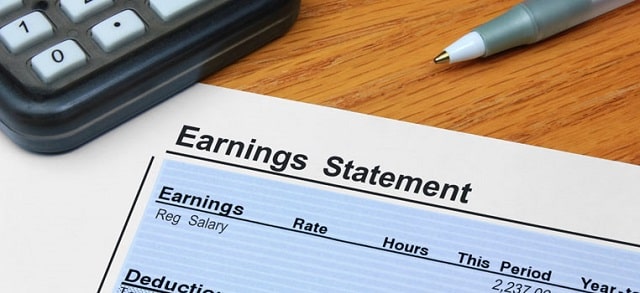
The earnings section of your paycheck's stub will break down how many hours you've worked, at what rate those hours were worked, and how much money you were paid during your current pay period. Next to that, you'll see how much money you've been paid this year so far.


State / Federal Taxes Withheld

Situated nearby the earnings section of your pay stub, you'll find how much money the government made off of your labor. That section should be broken out into rows that tell you how much of your money went to the federal government and how much of it went to state programs (Medicare, state income tax collections, etc.)

If you have a city income tax (like Manhattan does for example), you may also see that on your stub.


Employer Taxes

One of the beautiful things about working for somebody else is that they are forced to help subsidize portions of your tax burden. The degree to which your employer is helping pay your taxes is located in the employer taxes section of your pay stub which should look a lot like the employee tax section.

For the most part, this isn't a section that you need to pay attention to.


Deductions

When we're teaching people in person how to read a paycheck stub, one of the sections that confuse them the most is the deductions section. Deductions account for money that you're contributing to optional benefits programs. These programs include medical insurance, dental, vision and possibly a retirement plan.

As with the rest of your stub's sections, you'll see how much you contributed during this pay period and how much you've contributed over the course of the year.


Employer Contributions

Many employers elect to subsidize employee participation in health and retirement programs. In the employer contributions section of your stub, you can see to which degree your employer is adding value to your benefits.

As with employer taxes, this section shouldn't be of serious concern to you unless you suspect that your employer is under contributing to programs that they pledged certain amounts to.


That Sums Up How to Read a Paycheck Stub

Understanding how to read a paycheck stub is a right of passage for workers. Now that you have a better understanding of what your stub it trying to communicate to you, collect your checks with confidence and don't be afraid to speak up if something seems off.

Mastering finance is hard work. Our team aims to make things easier. If you're interested in learning more about all things money, read additional content on our blog!

What is Gross YTD on Your Paycheck Pay Stub

paychecks what is gross ytd paycheck year to date column

Pay stubs are often mysterious documents employees pretend to understand but really don’t. Terms like YTD, deductions, pre-tax, post-tax, and more of these are plenty to confuse someone who is unfamiliar with the terms.

Rather than nod your head and act like you know the answer to “what is gross YTD?”, why not let us explain it? Let's go over these terms and help you understand not just what you earn, but also what you take home on your payday pay stub.


Basic Paycheck Information

First, let’s start with the basic facts. Your name and your address get listed and allow you to use this document for income verification, if necessary. This is helpful when you’re trying to apply for housing, attempt to get a loan or trying to prove your identity.

Along with your name and address, they post the number of hours you worked with the dates of the current pay period. Some businesses pay their team members every week. Other companies distribute checks every other week. Still, other employees only get paid once a month.


What Is Gross YTD?

Gross pay is a term that describes the amount of pay you receive before they take any deductions out. For example, if you make $25.00 an hour, and work 40 hours per week, your gross pay is the product of $25 x 40 hours equaling $1,000.00. That is your gross pay for the week.

To understand Gross YTD, multiply your weekly gross pay times 52 weeks for the year. That product will be your Gross YTD and give you an annual number to work with. To continue with our example, the answer would be $1,000 gross pay each week times 52 weeks equaling $52,000 for the year.

This is often the number of agencies use to determine individual qualification for various programs involving housing, tax deductions, loan approval, and other procedures, despite having several deductions taken out of this amount.


Deductions From Your Earnings

Deductions are necessary, even though no one wants anything taken out of their paycheck generally. However, this is a classification used for retirement savings and court fees (if there is an order in place), as well as federal and state taxes.

Some deductions are mandatory but others are voluntary, especially retirement savings you signed up for. These benefits are sometimes provided by your employers and they may match your contribution. It helps to have benefits like this that allow you to prepare for the years you're not going to work.

If you don’t have a retirement plan through your employer, you might choose to divert part of your check into a savings account with a third party. This, however, will not show up on your pay stub since it's not originated by your employer. Either way, these deductions reduce the amount you take home to spend.

If you contribute to a retirement savings plan with your employer, you will see a running tally of how much you have paid in throughout the year.

Data like this helps you plan ahead and determine if you want to increase this amount. If you are not on track and you can afford to invest more from your check, you can make this choice effectively.


Vacation and Sick Pay Hours

If you are able to earn vacation and sick time from your employer, this will also show up on your pay stub from Paychex, ADP, or whoever handles your company's payroll. You should be able to view exactly how many hours you earn each pay period and how many you currently have for the year.

If sick times accrues at a different rate than vacation hours, both of these numbers show up on the pay stub. There will be a total accumulation to calculate with. When you are planning a vacation or setting up a doctor’s appointment, it is important to make sure you have the time available.

It can also help you manage the use of this time since some businesses only allow you to accrue so many hours before they stop adding up. Employees who work overtime hours can use this documentation to make sure they are getting the right amount of time added into their accruals.

Otherwise, they might end up getting shorted time they have earned. Viewing this document every pay period helps everyone stay accountable and on track.


Resources to Understand Paystubs

Remember that you can also use online tools to understand your check stub. Use a YTD calculator to punch in your weekly numbers to simplify the process.

This will instantly let you know what to expect and give you the data you will need to file your taxes. Provided there are major changes through the rest of the year, it is a valuable number to work with to plan next year’s budget.

Access these tools for free whenever you need more details on your current financial situation. It gives you insight on how hard you're working, whether you are getting paid what you are worth and whether or not you should consider making any changes. Data like this is valuable and will make your hard work more profitable.


Contact Us for Help

We are happy to answer questions and help you read and understand your pay stub. The online tools can shed light on whether or not you are on track to reach your financial goals. If you are trying to buy a home, pay off a car or qualify for a loan, you need this document.

Understand what you are reading, and ask questions about what you don’t. There is no need to lack information when so many professionals are available to give assistance.

Contact your representatives today and let them help you move toward feeling educated. You work hard for your money every week to get those profitable paydays. Why not use the available information and resources to understand where it is going when it comes to work paychecks?

Only you can spend your money wisely, so learn how to read the paperwork your employer gives you. Questions like “What is Gross YTD?” will no longer make you feel nervous. Instead, you will feel more in control of your job income.

How to Do Payroll: 5 Tips for Doing Payroll Yourself

how to do payroll yourself

How can you handle payroll in a way that’s quick and easy?

About 40% of small business owners tackle payroll alone. As anyone can attest, that can take time and resources away from the business. Learning how to do payroll can be time-consuming and costly, especially if you make a mistake.

How can you make payroll fast and efficient? Keep reading to find out.


1. Schedule Time to Do Payroll

Payroll takes time to do. It can take all day, depending on the number of employees you have. You’ll need to schedule this time in advance.

Make sure that your schedule is blocked off during this time. You don’t want to be interrupted and make a mistake on payroll.


2. Gather Employee Information in Advance

Before you start payroll, you need to make sure that you have your employees’ information. You want to make sure you have everyone’s W-4 forms. You should have them upon hiring new employees. The W-4 tells you the number of allowances the employee takes so you can withhold the right amount of taxes.

Next, you need to make sure that you have your timesheets from everyone. Some companies have this information online, while others use a paper-based system.


3. Do You Have an EIN Number?

You need to make sure that you have an EIN number or an employer identification number. This is like a social security number for your business.

You need to go to the IRS and request one for your business. It only takes a few minutes to fill out the online form and get your number.


4. Know Tax Laws

Taxes are complicated. The amount of taxes that you need to withhold depend on the amount of income earned and the number of allowances an employee withholds. If you have an employee that is subject to wage garnishments, that makes the process much more complicated.

There are standard taxes that apply to everyone, regardless of income. That’s for social security and Medicare. Employees pay 6.2% in social security if they make less than $128,700.

Medicare taxes amount to 1.45% of income. Employers are responsible for matching those percentages.

Once you figure out federal taxes, you have to calculate state and local taxes.


5. You Can Always Outsource

Tax laws are so complicated, that you want to throw your hands up and give up. The good news is that you can always outsource to payroll services.

They can handle the taxes and payroll issues for you. That allows you to focus on your business.


How to Do Payroll Quickly and Easily

Learning how to do payroll isn’t easy. It takes time to learn the tax laws and your legal obligations.

The fastest and easiest way to do payroll is to outsource it. You can save time, money, and know that payroll is being done right. You don’t have to worry about making costly tax mistakes when you do payroll.

Want more business tips? Head over to the Sales section of the blog to learn how to close sales and increase your revenue.

Why You Need to Keep Proof of Employment

why keep proof of employment pay stub file paper copy records

We use our phones to transfer money and deposit checks. Any company that doesn't do direct deposit is considered antiquated. Most people can't remember the last time they went to a brick-and-mortar bank.

And yet, we are still periodically asked for paper proof of employment.

In this digital age, we have not yet gone completely paper-free. Holding onto a hard copy of your pay stubs may pay off. 

Check out these 5 situations in which having your pay stub can save you time and energy.  


When Filing Taxes

Taxes are grueling, especially if you are a freelance or contract employee. Self-employment provides its own tax headaches. Whether you're dealing with your simple W-2 or you have much more complicated taxes, keeping your pay stubs provides easy-to-decipher proof of income. 

It also provides detailed evidence of the amount of tax that was withheld from each check for Social Security, Medicare, and employer-sponsored retirement funds.  


When Filling Out a Rental Application

When renting a home or apartment, you will be asked to provide proof of income. This allows the rental company to assess whether you qualify for the rental. 

In many cases, there is a qualifying amount of money you have to make in order to be able to rent the space.

For example, for some apartments, you need to prove a combined monthly income that is equal to twice the rent amount. 

If you don't have pay stubs to provide, you can provide your bank statement. This can get messy because it gives the rental company more information about your finances than they need, or more than you want them to have. 

Your pay stub can also be used to verify your current address. 


When You Need Proof of Employment and Income

Like with a rental application, any application for a loan or other financing requires you to provide proof of employment and income.

This allows the loan officer to determine your ability to repay the debt. 

The paystubs can prove you have a steady income without revealing all of your financial secrets via bank statements. Does the lender really need to know that you buy a daily coffee?

Pay stubs also provide the added benefit of documenting your hours worked and overtime hours worked. This can help you properly estimate your annual income if you are an hourly employee. 


When Filing for Compensation

There may be a time when an accident or other unfortunate situation puts you out of work. If this happens, you may need to file for loss of earning compensation or worker's comp. 

The process of filing can be daunting but having hard copies of your pay stubs can make it a little easier.

They provide evidence of what you typically make in a month and how much you anticipate in lost income as a result of an injury.  Focus on your health, not the stress of filing. 


When Checking for Discrepancies

Direct deposit is simple and easy. But when was the last time you looked at the associated paystub to make sure it matches with what you should be getting paid?

Your employer is just human, and humans make mistakes. If you don't take a look at your pay stubs every pay period, it may be months before you realize they aren't paying you the right hourly wage, or they are withholding too much for taxes. 


So Don't Shred Just Yet 

Here are five situations in which proof of employment can make your life a whole lot easier. Whether you're looking to rent an apartment or file your taxes, pay stubs can relieve some of your financial headaches. 

Looking for more ways to reduce stress and live your best life? Subscribe to our blog for all the insider tips and tricks. 

New Frugal Finance Blog Posts & Articles