Showing posts with label Payment. Show all posts

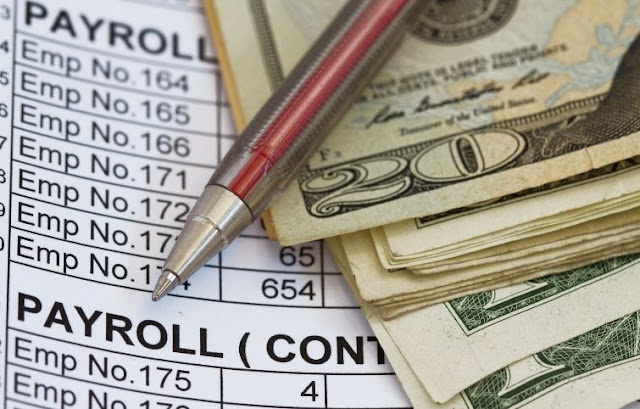
Top HR Payroll System For Businesses

top hr payroll system best human resources software paychecks program

The future of payroll is bright and everchanging. Especially for billion-dollar companies who have hundreds, and sometimes thousands, of employees to pay calculated salaries and fees to their workers. 

To help companies keep track and monitor salary payments, high quality HR payroll system have to be put in place. Not only does it help keep book of all the finances, it also keeps companies out of trouble. Every year, business owners are fined millions of dollars because of IRS issues. Typically, these issues are because of payroll errors. 

The best thing for a business owner to keep their payroll on track and in line with the law is to stay on track with the newest payroll systems. Just like with many other technology systems, Payroll is also growing and evolving. To give you some insight on the newest trends, here is a list of the best payroll systems for today's businesses: 

1. GDPR-Compliant Automated Systems 

In the past, geographic restrictions made it difficult to pay someone who were located in another state or town than the business itself. With current technology, it has become easier to employ and pay people from all over the world. 

If your company is using remote workers then you can invest in a GDPR compliant (General Data Protection Regulation) automated system. This system allows the business to ensure security when it comes to all personal data collected. It’s important that all employee’s personal data is kept safe, not only to avoid fines from IRS, but also to ensure the employee’s virtual safety. 

By knowing that payroll system’s not only serve the function of actually paying salaries, but also keeping sensitive information safe, business owners should consider investing in proper tech upgrades. 

2. Transparent Salaries 

There was a time when no one discussed the actual number on their pay slip. With the current fight against equality, it’s more important than ever for everyone to have a clear indication of what salaries are given to what positions. 

Studies have proven that in the past that for every $1 a man earned a woman would only get $0.82 for the same job. It was because of these studies that payroll systems were put in place that will ensure well thought-out and fair pay structures. 

Adding performance evaluation software that works on incentives, will also assist the payroll to make fair salary payments. 

3. Human Resource Incorporation 

A big mistake that business owners make is by underestimating the power of high-quality HR tech. When payroll innovations and HR technology are combined it will make your company much more efficient. 

This will allow HR to track employee’s schedules and time at work more efficiently. As well as leave day requests and holiday times, resulting in much more accurate payroll. 

4. Gig Workers And Tracking 

Hiring full time employees can be a big expense that some businesses just can’t afford. Rather than spending a fixed number on a permanent employee, owners are moving towards hiring part-time freelance workers. 

Depending on the project, the part time employee will only work for a certain number of weeks or months. Having gig workers coming and going do need an organized system. Avoiding skipping someone during payment or when calculating salaries. 

When companies do move towards hiring gig workers, then there has to be a system put in place to handle the influx of workers. 

5. Moving To Automation 

Doing payments manually can take a lot of time. Not only is it time consuming but it opens up an entire window for human error that can be avoided with automatic payroll systems. 

Furthermore, automation can simplify calculation processes of tax deductions, tax rates, and other deductions like housing and insurance. Instead of an accountant filling in and calculating it all, a technology program can do it all for you by only being monitored. 

Other systems that are also becoming quite popular, are those that can be stored in the cloud. This allows data not to be lost within files and hard drives of the company. 

Business owners should update their HR payroll systems, especially if they want to keep on growing.

A Brief History Of Credit Card Payments

history of credit cards diners card

Credit cards are a godsend that we often take for granted. Since their inception, we no longer have to carry a heavy wallet around full of cash or coins. Now, this small piece of plastic barely the size of a one-dollar bill can hold up to thousands if not, hundreds of thousands of dollars. 

Credit cards are so common in fact, that it is quite hard to imagine a life without them. You can buy pretty much anything you want with them. From your weekly groceries to all sorts of online transactions. 

However, you might wonder how to credit card we know of today got to be. With that being said, let’s take a look at its history, and see how it was actually created. 

The Beginnings 

Believe it or not, the whole idea of credit card-like payments dates all the way back to the ancient era. The Mesopotamians used to conduct trade with other civilizations, by using certain clay tablets, that were supposed to replace the circulation of massive amounts of copper coins between them. 

Moving all the way up to the 1800s, American merchants used the so-called credit coins, or charge plates to farmers, serving as a promise that the pay will be delivered once the crops are harvested. 

The Diners Club Card 

However, a close resemblance of the credit card we know of as of today was invented in the year 1950. It all started when a client having his dinner at New York’s Major’s Cabin Grill realized that he forgot his wallet. Out of frustration, he cooked up an idea that won’t let this happen again. A few months later he invented the first form of the credit card. A small cardboard card by the name of Diners Club Card. Just a year later, this card managed to attract up to 20.000 users. 

The First Plastic Card 

Just a few years later, in 1958 the first true credit card was introduced by The Bank of America. Although it was initially made of paper, it soon took its famous plastic form. The card had a spending limit of 300$ and was largely accepted by merchants. 

The Magnetic Stripe 

We all know of the black stripe that covers a part of the back of our cards. It was actually invented in the early 1960s, by an IMB engineer called Forrest Parry. At first, the magnetic stripe was used to hold details of CIA identity cards, but it was later adopted as a standard for payment cards in 1969. 

The Rise Of Online Payments 

Believe it or not, the online payment system was first brought to life by online movies. It all started in the late 90s when a movie business was looking to boost their profits. The idea they came up with, was to charge its clients via an online subscription. This idea soon took off, and many other similar businesses followed suit, giving birth to the online payment system we know today in 2025. 

The New Millennium 

The early 2000s represented an important time for credit cards. New technologies surfaced which boosted the evolution of them. For example, in 2002, Bank of America introduced a new card, smaller in size, perfect for attaching it to a keychain. 

Later, in 2003 MasterCard came up with contactless technology. Which, just like today, allowed you to hover the card over the payment terminal. 

Shortly after the introduction of smartphones, mobile wallets became a thing in 2008. Credit card payments could now be made via smartphone, and that has changed the game going forward in 2025.

What HR And Payroll Departments Are Responsible For

what hr and payroll departments are responsible for human resources dept

Did you know that over 150,000 people in the U.S. work in human relations according to the Bureau of Labor Statistics? 

Even with such a large number of employees work in human resources (HR), many employees don't have the first idea what an HR representative does. 

If you've taken an office job, you might be wondering if they're responsible for your salary. After all, is there really any difference between the HR and payroll departments? 

We are here to fill you in about human resources and payrolls! Keep reading below to learn the roles of the HR and payroll departments. 

The Role Of An HR Department 

The HR department exists to assist the staff and help them work to the best of their potential. 

Human resource employees are often responsible for hiring new staff members and training them. 

Along with training new employees, HR also provides training opportunities for existing employees to move into bigger roles. And, they typically outline new company policies with staff members. 

HR employees also act as mediators to resolve any conflict between staff. Additionally, they serve to address individual employee performance issues. 

HR also motivates employees through incentive programs and yearly bonuses. 

The Role Of A Payroll Department 

The payroll department's main objective is to ensure employees are paid on time and correctly. 

In order to do this, payroll staff has to verify compensation data for each employee, such as regular hours, overtime, severance pay, etc. They must also confirm tax deductions in paychecks that go out. Often, they will use payroll software to help them do this. 

The payroll department is then responsible for sending the direct deposit file to the bank. 

They will create check stubs distribute to employees. 

Following a pay period, payroll staff verifies all paycheck information in a payroll report. 

Where HR And Payroll Work Together 

HR and payroll departments have to collaborate to make sure the correct employee information is being processed. 

Sensitive information, such as employee social security numbers, are held by the departments, so it's up to them to keep this information secure. 

Sometimes the payroll department is split between an office's HR department and its finance department. This is because much of the work relies on both interaction with employees, as well as accounting-based skills. 

It's crucial that HR and payroll work together because if employees have issues with their payment at any point, the issue will come back directly to HR. It is in their best interest to make sure the payroll department has everything it needs to operate efficiently. 

A lot of the collaborative work between these two departments relies on a fact-checking process. For example, HR will file a salary change for an employee. The payroll department will then verify that change. 

Fulfilling Department Duties 

Both the HR and payroll departments are necessary to keep your company running smoothly. 

While they certainly must work together at times, they don't perform all the same duties. The two complement each other and can't exist without the other.

How an Automatic Payroll System Helps Businesses

how automatic payroll system revolutionize business hr paycheck software

Are you a busy business owner with a hundred and one different tasks on your plate? Do you often forget about completing payroll to pay your employees until it's almost too late, and you have to sit up nights to make the numbers work? 

If so, then we are here to save the day with one small recommendation: it is time you implemented automatic payroll technology in your business to take care of your employees' pay stubs. 

Keep Employees Happy with Automatic Payroll 

When it comes to payroll, there are two crucial reasons why you should leverage an automatic payroll option. 

The first reason is that it is going to help keep employees happy. At the end of the day, your employees are the ones who help you run your business. Without them, there's no way that you could grow or scale operations. 

There are lots of different ways to keep employees happy — focus on creating a positive company culture, offer scope for career growth, and give them great benefits. But at the end of the day, your employees took this job to get paid. 

So if you are not paying them on time, every time, then they are going to start wondering about whether they should stick with your business. They are going to take calls from other recruiters. They are going to submit applications at other establishments. 

And if they decide to leave, you are faced with the cost of hiring and training a backfill. Avoid this unfortunate situation — use automated payroll to ensure that your workers get paid on time, every time. 

Save Time As a Busy Business Owner 

The other primary benefit of automatic payroll is that it saves you time. You're a busy entrepreneur. You don't have time to do manual accounting tasks. 

The more time you spend on doing payroll manually, the less time you can spend on operations that actually grow the business. So even if the automatic payroll software may seem like a significant expense, you should really think of it is an investment where your ROI is increased time to spend on growth-inducing business activity. 

How Do I Find a Good Automatic Payroll Software? 

Now that you understand the importance of software automation for payroll, then arises the question of how to find such a software option. 

The answer to that question is easy. There are many legitimate paystub maker options on the market. All you need to do is create a shortlist of your favorite ones that have the simplest UIs and lowest cost, and then take a look at their online reviews. 

If the software provider in question doesn't have a plethora of positive customer reviews that it can point to, run. 

Leverage Software, Starting Today 

There you have it! Equipped with this guide, you should be much better informed on how you can leverage automatic payroll and paystub generation to revolutionize your business, starting today. 

For more business advice beyond automatic payroll and human resources, take some time to check out the rest of the articles that are available to read on the website before you leave. Visit the HR section of our website right now for more information!

What Are Payday Loans? Your Questions Answered

what are payday loans

Most banks don't like risk. If you have less than average credit or income, strict lending rules can make it almost impossible to qualify for a personal loan.

In an emergency, you can turn to payday loans to cover short term expenses. What are payday loans and how are they different from other loan options?

Check out this guide to understanding how payday loans work.


What Are Payday Loans?

Payday loans are a short term solution to cash flow problems. These loans are intended to last you only a couple weeks until your next paycheck, hence the name payday loan.

One of the biggest reasons to choose a payday loan over other loan types is that it is easy to qualify and get cash. Many payday lenders fund your account the same day. 

If you choose to work with an online lender, you can get a loan 24 hours a day, 7 days a week. This gives you flexible options when responding to an emergency in the middle of the night.

Since you don't need collateral or high credit scored to qualify, most payday lenders just need a few basic details from you before issuing a loan. 

Payday loan amounts are usually much smaller than traditional loans and have interest rates in the triple digits. To understand why interest rates on payday loans are so high, you first have to understand how lenders make money.


What's a Good APR?

An APR is the amount of interest you pay daily on a loan. The higher the interest rate, the more money you will repay the lender.

Most people aim for the lowest possible interest to keep loan payments low. Lenders make money when borrowers repay their loan debts plus interest over an extended period of time.

In 2022, Americans paid more than $104 billion in credit card interest alone. Payday lenders don't have the luxury of offering credit over the long term.

Since borrowers are expecting to repay the debt in just a matter of weeks, the interest rate is much higher than that of credit cards or loans from a bank.

The average interest rate is around 16 percent, but this rate applies to years of spending or borrowing money. Usually, the longer the loan term, the lower your interest rate.


Subprime Loans

A payday loan is a type of subprime loan. If your credit score is between 550 and 669, you're considered a subprime borrower.  Subprime loans are offered to borrowers who can't qualify for traditional loans because of this low credit rating.

These loans are a higher risk to lenders because a low credit score may be a sign of financial mismanagement. Because lenders are afraid you might not pay back the debt because of money problems, they are more likely to charge high fees and interest on the loan.

This makes payday loans more expensive than other types of debt. You'll need to understand how payday loan terms work in order to avoid repaying more in interest and fees than you can afford.


How to Repay a Payday Loan

It's a good idea to have a payment strategy in mind before getting a payday loan. Interest rates on loans can range from 390 to 780 percent. 

When you first get your loan, the lender asks for a personal check for the amount you borrow. The personal check includes any fees applied to the loan.

In exchange, you get instant access to cash. These online payday loans secure personal bank account information instead of a physical check.

The money is deposited into your account and you're expected to repay the debt from the same account. The lender keeps your information on file until your next payday when the entire amount plus fees and interest must be repaid. 

If you can't pay or choose not to pay, you can roll the loan over into your next pay period. Lenders might accept a partial payment, but it's not guaranteed.

If you do get the chance to make partial payments, you'll be expected to make payments on a routine schedule set forth by the lender. 


How to Get a Payday Loan

Not every state allows payday loans. There are 12 states that ban payday loans completely:


  • Arkansas
  • Arizona
  • Connecticut
  • Georgia
  • Maryland
  • Massachusetts
  • New Jersey
  • New York
  • Pennsylvania
  • North Carolina
  • Vermont
  • West Virginia

This means that even if you work with an online payday lender, you can't borrow money if you live in one of these states. Other states have laws that limit how much you can borrow and how interest rates are applied. 

Payday loans are often available through a physical branch you can visit to apply in person. This is the same location you'd visit to make and receive payments.

Other borrowers can apply online using their electronic banking information to set up a new account with a lender. Payday loans range from $100 to $1,000 depending on the limits set by the state. 


Is a Payday Loan Right for Me?

What are payday loans in the end? A payday loan is a short term way to fix small cash flow problems. 

If you've been having financial issues for a while, a payday loan can only worsen your situation. Payday loans are best for people who can repay the debt right away.

When the loan reaches a new payday loan term, the lender usually issues a new loan with new fees and interest to cover the old one. This means the debt can quickly snowball making it impossible to repay.

Make sure you are using payday loans for the right reasons to avoid adding to your financial woes. For more financial information and insights on payday loans, visit the Loans and Frugal Finances sections of our budget blog right now.

How Do Payment Portals Work?

how do payment portals work ecommerce transactions

The global use of online payments will surpass credit and debit card usage over the next four years, possibly even by the end of 2021 or early 2022 due to the Coronavirus pandemic e-commerce impact. Many more businesses shifted to digital payments and ecommerce stores when brick and mortars were locked down or went out of business.

By 2023, approximately 1.31 billion people are forecasted to use mobile payments over a six-month period. Payment portals and gateways adoption is set to double in the US by 2025. 

Accepting payments online is a major feature of many websites, but how do pay portals work? 

This article looks behind the scenes and explains the process of collecting payments online quickly and securely. 

Payment Power

Below you will learn the differences between payment portals, payment gateways, and processors. Find out about the different gateway types and how transactions remain secure. Discover which pay portals target specific industries like health care. And how are payment becoming more frictionless while maximizing safety?

Read on to learn how a payment portal can keep you and your customers safe when paying online. 

What Are Payment Portals? 

A payment portal offers a secure means for customers, clients, and patients to make online payments using their credit or debit card. 

In the growing world of e-commerce, customers add items to their cart and then check-out. The checking-out process is often handled by a payment portal. Customers submit their card details, name, and address, and the portal handles the transaction. 

In the healthcare industry, pay portals act in a similar way to a shopping cart. 

Patients visit their doctor's website or a dedicated page to pay for their procedures and prescriptions. All data gets encrypted to ensure Patient Health Information (PHI) confidentiality. The patient can then view all their past transactions on the secured screen for full payment history. 

Pay Portals and Payment Gateways 

Payment gateways and portals are often used as interchangeable terms. Yet there is a slight difference between these two terms. 

A payment gateway acts as the technology behind the security. It ensures the safe transfer of sensitive information like a credit card number or CVV. 

Gateways also process card payments through a merchant service account. They request authorization from credit and debit card companies and process those results. Once accepted, the gateway returns a successful transaction code that the website can display to the customer. 

Payment Gateways Versus Payment Processors 

Payment processors analyze and transmit transactional information. Yet they don't authorize the transfer of funds between the seller and buyer. 

A payment gateway includes both services. 

Types of Payment Portals 

Three types of payment portals exist for online sellers to accept payments: 

1. Redirect services 
2. Off-site payments 
3. On-site payments 

A redirect service takes the customer from the seller's website to the processor's website. 

PayPal is an example of a redirect service as it processes payments on PayPal.com. Users get transferred and have the option to log in or enter their card details. However, some people find this confusing and abandon their checkout as a result. 

On-site and Off-site portals keep the customer on the seller's website. Instead of being redirected to a third-party site, they enter their card details on a familiar screen. 

The difference between the two is where the processing takes place. 

Off-site payment portals process payments behind the scenes. The payment details get sent securely to a third-party who then returns the authorization status. The seller must use an SSL secure connection, which we'll discuss shortly. 

Large enterprises use on-site payments as they process payments themselves. They have full control over every detail but the system is extremely costly to maintain. 

Integrating Payment Portals 

How do online payment portals work on existing websites? 

Depending on their website platform, online sellers can add a payment portal in a few steps. For example, Shopify merchants can add payment gateways through their Shopify Payments service. 

They require an Employer Identification Number (EIN) and their bank details. Once added, Shopify lets customers in the US pay by: 

• Visa 
• Mastercard 
• American Express 
• JCB 
• Discover 
• Elo 
• Diners Club 

WooCommerce can integrate with 100 payment gateways by installing the right extension. 

WooCommerce Payments is a dedicated payments service designed specifically for the platform. It's free to install and merchants only pay the transaction fees. 

Wix users must upgrade their site to the Premium Plan to accept payments. 

The admin dashboard offers several options under the 'Accept Payments' tab. From here, they can choose a payment method and click 'Connect' to use them. 

All pay portals integrate with any type of website. Read the documentation and ask for assistance to set things up correctly for web payments. 

Examples of Payment Gateways 

Some common payment gateways include PayPal, Stripe, Square, WorldPay, and Authorize.net. 

Payment wallet processors that target mobile phone users include Apple Pay and Google Pay. Amazon also has its own payment gateway called Amazon Pay. 

Specific Industry Types 

Certain industry types can benefit from specific payment portals that are designed to fulfill a particular task. 

QuickPayPortal is known as a patient portal as it allows patients to pay for their medical bills and services online. It's fully HIPAA compliant and can be used to book appointments too. 

How Are Online Pay Portals Secured? 

Online merchants are responsible to keep their customers' data safe and reduce the risk of fraud during payment. The factors below help to ensure transactions remain secure. 

• SSL Secured 
• PCI Compliance 
• 3D Secure 
• Address Verification Service 

SSL security encrypts data sent and received from a website. That's essential when submitting card data for processing and collecting authorization information. 

To tell if a site is SSL Secured, check the lock icon on the address bar of the browser. If it's locked then the site is secure. You can also tap or click on the icon for more details. 

PCI DSS is a set of regulations created by the major payment card brands. It requires vendors to comply with 12 data security requirements. However, payment portals cover these issues so there's no cause to worry. 

3D Secure and Address Verification Service (AVS) add extra security measures. They require customers to add additional information like a password to complete their purchase. 

Payment Gateways and More at Frugal Finance 

Payment portals enable any type and size of business or seller to accept payments online.

Integrating pay portals is relatively straightforward. The main issue is deciding which service to use. 

Make sure to research transaction fees, initial charges, and the terms and conditions. Also, ensure the service offers full security at all stages of payment and authorization. 

Read more about payment gateways, fintech developments, and e-commerce transactions in our Tech section. 

We have articles on accepting online payments and selling online with secure ecommerce stores. Be sure to bookmark us as we add content regularly and check out other categories like business or finance for additional insights. Read more of our posts in the Frugal Finance and Tech sections and pay attention!

Finding the Best Payday Loan Option

how to find best payday loan option

Countless Americans are floundering at a financial level these days.

Consider the current level of US consumer debt. This startling figure hovers just under $14 trillion right now. That’s trillion, with a 't'!

This outlandish level of debt provides an indication of the financial pressure many people are under. Unable to make ends meet, they take out a loan as the only alternative.  

Are you in a similar situation right now?

Well, there’s every chance you’re looking for a payday loan to tide you over. Easily accessible to anybody in need (even when bad credit scores are a factor), they’re handy options for anybody who finds themselves in financial hardship.

With an endless list of lenders out there, though, the tricky part is finding the right payday advance loans for the job. Want some help doing exactly that?

Read on to discover our top tips for finding and picking the best payday loans possible.


Always Remember Interest Rates

Payday loans provide quick and easy access to vital cash, but it comes at a cost! Almost every loan provider in this niche will charge sky-high interest rates.

At the end of the day, this is how they make their money.

After all, offering loans to people with bad credit isn’t without risk. As well-intentioned as they might be, there’s a higher chance that bad credit borrowers won’t be able to repay the loan as planned. Lenders charge a significant rate of interest to make that risk worthwhile.

Make sure you consider the interest rates of the different providers at your disposal. Calculate the overall cost of the loan plus interest and ensure you have the means to repay it on time. Don’t, and you can soon end up in a vicious circle of missed repayments and spiraling debt.


Steer Clear of Sharks

Most payday loan providers are legitimate entities who want to help.

Sure, they charge high rates of interest, but that’s simply the cost of entry in this domain. They’ll still provide you with the cash you need and get you out of a bind in the process.

Some, however, are only out there for the money. They’re referred to as ‘loan sharks’ and actively want to find borrowers who can’t afford to repay their loans.

Why? Because they make a sizeable living off the missed repayments and late fees.

They make it as easy as possible to access the cash, slap significant interest rates on top, and often apply pressure to get you to sign the dotted line. You get your money. But the interest makes it near-impossible to repay.

One missed repayment adds to the overall burden of debt, which means there’s even more to repay next month. That cycle continues until you’re far worse off than when you started. Our advice?
Avoid these kinds of lenders like the plague!


Check the Website for Credibility

The first rule of separating the sharks from the good guys? Check their website.

You can sometimes tell a lot about the operation from the standard/style of the site.

A high-quality website of a payday lender suggests they’re a legitimate operation. By contrast, any grammatical errors, spelling mistakes, dodgy graphics, and general lack of professionalism aren’t exactly reassuring.

Try to find their physical office address too; be wary if you can’t.

Now, it’s true that some lenders do operate online only (in other words, they’re a trustworthy company without a physical office). More often than not, though, a physical address is a good sign; a lack of one is not. Find the address and run it through Google Maps to verify its location.

This isn’t, of course, a fool-proof method of identifying a loan shark. Nor is it necessarily a way to pick the best payday loan for the job (for instance, some reliable lenders offer reasonable terms from a shocking website). Nevertheless, it’s a good place to start.


Contact the Lender

The main benefit of getting a payday loan online is how easy it is. You log on, input your details, and walk away with the money you need in no time at all.

But there’s a danger in that too.

Basically, you never have to talk to a human being! The result? It’s harder to verify that you’re dealing with a fair, reasonable, and trustworthy company.

That’s why we suggest that you take the time to call the customer service helpline on their website. If you experience anything less than a friendly, helpful, and responsive operator on the line, then it may be best to look elsewhere.


Verify the Law

Did you know that payday loans are illegal in some states?

Well, you do now! Even if they’re not illegal, there might be rules imposed that restrict the APR a lender can charge on the loan.

Both of these factors can help you decide if a payday loan lender is right for you.

Do some digging to unearth the rules in your state. If you’re being offered a loan in a state where it’s illegal, then you know to avoid it. The same goes if you’re offered a loan with a sky-high APR that exceeds the permissible rate in your state.

Look elsewhere until you find a payday loan lender that operates in line with the law.


Find the Best Possible Payday Loan

Most people in America aren’t exactly plush for cash right now.

These are trying times, fraught with financial hardship. For many, taking on one form of debt or another is the only way to make ends meet.

The good news is that there’s no shortage of payday loan providers out there that can deliver the goods. The bad news is that not all of them are made equal! Finding the best possible payday loans company isn’t always easy.

Hopefully, though, this post on payday loan options will help you do it.

Would you like to read more payday loan articles like this one? You’re in luck! Browse the ‘Loans’ section of our Frugal Finance website now.

The Complete Guide On How To Read A Pay Stub

how to read a pay stub paycheck information

Is it your first time to get a full-time job that gives paychecks? Are you having a hard time reading a paystub? Do you want to understand what the various parts of the pay stub mean? 


Over 22 million Americans lost their jobs in April because of the pandemic. The likeliest outcome is that people will live paycheck to paycheck due to the crisis. Today, as we find more ways to fight the crisis, people are coming back into the workforce. 

You must know how to read a pay stub no matter what industry you’re in or what your job is. In this guide, we’ll help you improve your understanding of a paycheck stub and how it works. Keep reading to learn more about pay stubs and how to read them. 

1. What Is In A Pay Stub? 

Before we go on, let’s define what a pay stub is for a quick second. Companies and businesses generate pay stubs to help employees keep track of their income. Pay stubs are your record of the pay you received, complete with the details about the pay. 

To better learn to read a pay stub, you first need to know what the parts mean. Below, we’ve got a list of the details and terms you’ll see in a typical pay stub. Note that pay stubs may differ in appearance depending on the company, but they all carry the same info. 

Basic Details In A Pay Stub 

Some of the first things you’ll see at the top of your pay stub are basic information. This includes your full address as well as your employer’s. Both these pieces of information need to be up-to- date and accurate. 

If your company includes it in your pay stub, you’ll also see identifying information. It may be in the form of an employee ID number or Social Security number. 

You’ll see included is pay type, which is often either per hour or salary. You’ll also spot the date that the employer issued the paycheck. This is the date when you’d receive your paycheck. Next to that is the pay period or the time frame that your pay stub covers. 

Other Parts Of A Typical Pay Stub 

After the basic details, the next thing you need to know is the next part of a pay stub. This includes your total earnings, taxes, and final payment. Now, you may be wondering about a few things. 

What are the gross earnings on a paystub? How does it differ from net pay? Not everyone knows what they are, so let’s define what some of these words mean. 

The gross pay that’s written on the paycheck stub is the total pay. That’s how much you’d get before the taxes, and other deductions get taken out. This is different from the net pay, which is the final pay or final amount after the deductions. 

2. How To Read Your Paycheck Stub 

Now that you’ve got all the details down, let’s study how one reads a pay stub. Whether it’s old or new, we want you to take a pay stub. Let’s read it together. 

First, let’s take a look at the top. Check that all the basic information about you and your employer are correct. If something is missing or erroneous, it’ll be the fault of the payroll department or company. 

After you’ve checked that all the basic information is correct, let’s take a look at the two most important aspects. Go to the gross pay. As we mentioned, this is the earnings you’d get in a pay period before any withholdings. 

This is often the largest number in the pay stub. This also excludes other earnings like bonuses. Knowing what your total wage is useful so that you know what your typical income is. 

What is your earned income on the pay stub? This is the next aspect we move to. You may also know it as the net pay or final pay. Remember, this is the total money after taxes that you’ll bring home. 

3. How To Know What Taxes And Withholdings Got Taken 

Now, you may be wondering how you can ensure that all the items on the pay stub got calculated right. With the gross pay and net income in mind, let’s jump to the middle. We’re taking a closer look at the withholdings and taxes. 

Under taxes, check how much the federal tax (FT or FWT) and state tax (ST or SWT) amounts are. This is how much you give back to the government as taxes. State taxes are payments that go to public projects like health care. 

Note that not all states collect an income tax and state tax will differ per state. If you want to file for exemptions on your federal tax, fill out a new W-4 form. Ask the human resources department for help if you need any and to change the W-4 form for you. 

After the taxes, check other deductions like Social Security (SS or SSWT) and Medicare (Med or MWT). Social security payments go to finance your retirement. This is a contribution that’s worth 6.2% of your income. 

Medicare payments are worth 1.45% of your paycheck. If you don’t find Medicare under your pay stub, look for an item labeled FICA instead. FICA may also include social security. 

If you want to know what the other abbreviations mean on your pay stub, talk to human resources. 

4. Why Learn How To Read A Pay Stub? 

Now, you know how to read a pay stub. The question you may now be thinking is why it matters. The first reason is so that you can see and understand where your money goes. 

Next, you want to avoid any mistakes. Indeed, your pay stub goes through a few people first. However, they can still miss errors and give you the wrong payment for a pay period. 

It helps to be able to understand your pay stub so you can spot any errors. Even before the peak of the Coronavirus, 49% of Americans already expected to live paycheck to paycheck this year. If there are errors on your pay stub, bring it up with HR or the payroll department. In times like these, every cent counts. 

Get a Better Understanding Of Your Pay Stubs 

Now you know how to read a pay stub. We hope you now know what’s written on your pay stub. Of course, handling your finances only starts here. If you want more informative guides on paycheck stubs, check out our other content on other financial documents and employment information. We provide tons of financial guides and lists for you to discover, right here!

How Do Payday Loans Work?

how do payday loans work pay day loan

Last year 40 percent of adults aged 18-37 used payday loans or other similar ways of getting quick cash. Payday loans are a simple way to get hold of badly needed cash if you need it before your next paycheck comes in.

How do payday loans work, exactly? Can anybody take one out, and if so, how much can you borrow?

Read on to learn more about payday loans.


What Is a Payday Loan?

Payday loans are short-term cash loans that are borrowed against an upcoming paycheck. 

The idea is that you borrow the money, and as soon as you have received your paycheck, the loan and any interest is paid off. Since the loan is short-term, you should not have accrued an enormous amount of interest, even with the high interest rates that usually come with this type of loan.


How Do Payday Loans Work?

Different lenders will have different systems in place for recouping the balance of the loan plus any fees and interest.

One of the most common methods is to get the borrower to write a check for the amount that you are borrowing plus any fees and interest. Once you have been paid, the lender can then cash the check to recoup their money. 

Some lenders require you to authorize them to take an electronic payment from your account once your paycheck arrives, or you may be asked to make the payment via a prepaid card. Whatever method you use, the principle remains the same.

If you have other outgoings and don't have enough cash left over from your paycheck to cover the loan, it may be possible to extend it. Obviously, the amount of interest will increase in this case.


Who Is Eligible for Payday Loans?

Pretty much anyone can take out a payday loan, as long as they meet the lender's criteria.

You'll usually need an active bank account, some kind of proof of your income (so that they know you'll be getting a paycheck soon), and some identification. Since the loan is based on you having an upcoming paycheck, there aren't usually any credit checks, so you can take out a payday loan even if your credit rating is poor.

Even if you're self-employed, it's still possible to get a payday loan. Check out our Frugal Finance Loan section for more information. 


How Much Can I Borrow?

How much you can borrow will depend on several factors such as the lender you choose, your income, and the size of the interest and fees.

Don't expect to be able to borrow $10,000 if you're only getting $1,000 in your next paycheck. Most loans are usually around the $500 mark, but you may be able to borrow more depending on your circumstances.

Don't forget, the more that you borrow, the more interest you'll need to pay on your payday loan.


Are Payday Loans Right for You?

How do payday loans work? Now you know more about the payday loan option pros and cons.

Whether or not a payday loan is the right choice depends on your situation. You need to be sure that you can repay the payday loan promptly without incurring too much interest. 

How to Calculate Employee Wages and Set Salaries: The Complete Guide

how to calculate employee wages set salaries

Employee wages are an ever-present part of any business. It's a topic that many people don't like to think about directly, despite it being incredibly important for the wellbeing of your business and its workers. 

Many businesses end up valuing employees too highly and then losing out on profits. Meanwhile, others undervalue their staff and force them out the door as a result.

It must be understood that setting employee wages is a balancing act.

Once you've understood this fact, read on to find out how to calculate wages for your employees.


Step 1: Understand the Job

The first thing you need to do in setting employee wages is to understand the job you're asking them to fulfill in the first place.

Often it can be helpful to write the job description out first or create a list of responsibilities for the job role. An unspoken truth about job roles is that they are often very different despite being advertised under the same name.

A receptionist for a small business might predominantly be in charge of handling calls and not greeting staff. Whereas a receptionist in a hotel is more responsible for direct customer satisfaction and checking guests in and out.

You can't set the right salary for a job without first understanding what the job exactly is. Once you've outlined all the responsibilities of the job in question, you can start to properly figure out the appropriate salary.


Step 2: Set Your Budget

When looking to hire a new employee, you need to factor in how much money your business can allocate to this new employee. The best way to do this is to look at your end of year accounts, to see how much overall profit you'd be able to afford in hiring a new employee.

This is vital to budgeting properly and ensuring a new staff member won't break your bank. But it's also important to help you set an upper and lower limit.

Setting an upper and lower limit to your budget can help you to come up with the final figure for your salary. An upper limit is an absolute maximum you'd be willing to pay someone to fulfill the role.

Conversely, the lower limit is the lowest you feel you could respectably offer for the position in question. Some business owners advertise these upper and lower limits in the job advert itself.

This can be helpful as it then attracts potential applicants of different experience levels, which can create a broader pool of applicants to choose from.


Step 3: Research the Job Market for Average Employee Wages

The next thing to do after you've set your boundaries is to look at the boundaries set by the job market itself. 

Every job has an expected average salary rate, from entry-level to individuals with a lot of experience. If you're pitching your job wildly outside of this amount, you'll either get a lot of inexperienced people jumping at the chance to gain a much higher salary than they'd usually have access to, or your job simply won't get applied to by the people you're looking for.

It's likely that those looking for a job will also be researching these salaries.

This is why it's good to take a look at the overall job market before you set your salary. Find out what the average salary for this role in your geographical area is.

This can also help you to see how complex the job role is in comparison to others like it in the area which can also affect your final figure. The best way to conduct this research is to look at online job sites where jobs are advertised.

You're able to search for the job title as well as specify geographical area through most job board websites. Once you've conducted this research, you'll have a better idea of what other companies typically pay these employees as a salary.

It's also helpful when it comes to deciding how you will pay this new employee. Some companies pay by the hour, others as an annual sum. However, certain jobs come with expectations by applicants, which you need to bear in mind. For instance, a doctor likely wouldn't accept a job where they were paid by the hour.

Doing your research can help you decide this, and is the second to last step in the process.


Step 4: Think Flexibly

The final thing to bear in mind is to think flexibly in your salary listing. Think about all the many responsibilities that you're asking of this person or any future opportunities that could be open to them.

With setting salaries it is important to think about the dream person you'd want for this position. Then, create your salary based on what you think they would expect for the role.

Being flexible is dependent on your business position. If you're budgeting a bit more than you'd like to be, consider pitching slightly lower than what you imagine your dream person would want, but not so low that they'd be put off. Or, if you can afford it, offer the job as slightly higher pay.

If your employees are being paid more, they'll be happier and likely want to work harder for your business.

No matter what you choose to do, you'll need effective payroll services. Take a look at these online payroll services that can make paying your staff members a breeze.


Do What's Best For Your Business and the Employee

Overall, when it comes to employee wages, everything comes back to the balancing act we mentioned at the start. A salary needs to work for the business, but also work for the employee.

If you follow the above 4 steps, you should be in a position to properly put a price on that new job. As a final point, remember that a salary can always be increased later on. 

It can be good to factor pay rises into the initial figure, and to mention this to any prospective employees. You want your business to grow alongside those who work with you to make it a reality with competitive employee wages.

If you want to know more about the ins and outs of running a business beyond employee wages, make sure to take a look through some of the older posts on our website. Visit the HR and Career sections of the Frugal Finance Blog right now to learn more about employee wages and salaries.

How To Send ACH Payments Securely

sending ach payments securely automated clearing house safe payment

Nowadays, there are tons of ways to give and receive digital payments. There are several apps, websites, and other ways to accept online payments from around the world.

The chain of sending ACH payments or wiring money online goes from the originator through the bank and then to the beneficiary. 


Sending ACH Payments

ACH Payments have been around since the 1970s and may seem like a dinosaur. However, there are more agencies, banks, and institutions that are sending and receiving funds through ACH than ever before.

The most recent numbers compiled to asses this reveal that the ACH network dealt with $23 billion payments adding up to $51 trillion dollars.


What is ACH?

ACH or Automated Clearing House is the main system agencies use to transfer funds electronically. Funds get deposited into financial institutions and payments are made through online transactions. 


How Do ACH Payments Work?

ACH payments go through the ACH Network. Funds go from one banking institution to another by way of a centralized system (ACH). The system then directs the funds to the intended person or business. 

These payments can be set up to reoccur and several employers use them to pay their employees. They offer benefits for both consumers and merchants. Bookkeeping with ACH payments is simple. You just use the feature "send check online".


Who Uses ACH?

As mentioned above a lot of people are using ACH all over the world. If you're an employer and pay workers through direct deposit, you probably use some form of ACH.

If you pay your monthly bills electronically with your checking or savings account, you use ACH. 


The Ins and Outs

If you dig a little deeper into what ACH is all about you will find that large numbers of transactions through ACH can be from several different sources that are batched together. They can be successive payments or just a one-time thing.

An ACH Direct Deposit is different from an ACH Payment. However, it does use the same kind of processing network. ACH Direct Deposits are for things such as tax refunds, interest payments, annuities, and of course payroll. 

ACH payments are categorized in two ways; ACH Credits and ACH Debits. ACH Credits send or push the funds from a customer's account to yours. 

ACH Debits withdraw or pull the funds from the customer's account and put them in yours. Pulls are usually made on mortgages, rent, gym memberships, car payments, utilities, and insurance premiums.


NACHA

NACHA is a not-for-profit association that manages the administration, governance, and management of the ACH Network.

NACHA sets up the rules for ACH. However, the actual processing is overseen by The Clearing House Company and the Federal Reserve.

Credit unions, banks, merchant providers, and any other entity that participates has to adhere to the rules of NACHA.


Make Your ACH Transactions Secure

The best way to make your ACH transaction secure is to follow these four steps.

  • Set-up Merchant Specific Registration
  • Micro Deposits
  • Encryption & Tokenization
  • Secure Vault Payments

Look for merchants that have some or all of these features for sending ACH payments safely and securely. You should also avoid using public computers or public WiFi when completing any financial transactions to keep your information safe.


Transaction Approved

It seems almost impossible that something so modern has been around for such a long time. If you ask anyone on the street what is ACH exactly, they probably wouldn't have a clue.

As a society, we have only just begun to fully embrace the world of digital banking, investing, and electronic payments over the last decade or so. Without realizing it, we have been banking electronically by sending ACH payments for almost 50 years.

Looking for more financial information? Keep checking out our site. Visit the Frugal Finances and Tech sections of our financial blog for more information on fintech, payments, banking, and much more.

10 Tips To Deal With Payday Loans

tips deal with payday loans fast loan

Going through a rough patch and need extra cash to solve some issues at hand? If you are thinking about getting a payday loan, please do. 

Payday loans are a blessing in many sense. They are going to provide you that much needed moment of relief when stuck with a cash deficit. Typically, payday loans are short-term cash loans of a few hundred dollars that you borrow against a post-dated cheque. You make the repayment of the borrowed amount along with the interest when you get your next pay. If you do not make the payment on the agreed date, then the lender can cash your check to get the borrowed amount, interest, and non-payment fee. 

If you wish to make the payment later, one usually has the option to renew the loan repayment for the next payday. It is called ‘Rollover’ and comes at a very high cost as the repayment amount almost gets doubled. However, this rollover may sometimes push you in the ‘quicksand effect’ of the payday loan. Once you are in, no matter how hard you try, you keep sinking deeper! 

If you have somehow gotten yourself involved in this vicious cycle, please go through the tips below to smartly tackle it and eliminate it eventually. 

Tip 1: Stay Cool And Plan Well 

Payday loans have a very short tenure, i.e., until your next payday. Those 15-20 days will pass by like a gust of wind, and you will be in a state of panic to make the repayment. If you don’t get the income you were expecting, then you will have to ‘roll over’ the loan, increasing the repayment amount significantly. 

All of this could be avoided if you plan well. Usually, the amount initially is small, and that’s what makes you negligent about its exponential nature. The moment you borrow a payday loan from a lender, you must make it your short-term priority to arrange the repayment amount. If today you borrow that cash to take your mother to the hospital in an emergency, from tomorrow onwards, you should be calling your friends and family for help with the repayment. 

Tip 2: Negotiate With Lenders Over Repayment Control 

At the time of taking a payday loan, make sure that you give minimum control of repayment to the lender. Lenders might even ask for a blank cheque with your signature, saying that the amount could increase if you are unable to pay on time. That’s a big NO. Always put an amount on the cheque according to the repayment schedule before signing it. Some lenders might ask you to give them CPA – Continuous Payment Authority. 

If they have a CPA, they can deduct payments from your bank account regularly. So, whenever you get money credited to your account, they will debit their charges without your consent. Try giving them a post-dated cheque with a fixed amount. If they keep pushing you to give CPA, then do so with a time limit of two months. Nothing more! 

Tip 3: Never Take More Payday Loans To Make Repayments 

The easiest way to get sucked into the debt-hole is to keep borrowing more money to repay the previous debt. Just imagine that you have been rolling over your payday loan repayment for the last three months, and now the numbers look scary. To make some of the payments so that the interest rate gets reduced, you take another payday loan. And then you live happily ever after, burdened with loads of debt! One lender is more than enough. Avoid taking more payday loans at all costs. 

Tip 4: Ask The Banks To Stop CPA 

If a lender keeps using the CPA, request the bank to stop all the CPA transactions. This way, you will have more control over the repayments, and some breathing space to chalk out a proper plan. 

Tip 5: Ask Your Employer For A Loan 

If you are employed, then getting out of payday loans becomes a lot easier for you. You can request your organization to lend some amount which can be utilized to pay off your payday loan. You don’t have to pay interest on the money borrowed from your employer. Repayment of an employment loan can be made in easy instalments in the form of small deductions from each month’s salary. 

Tip 6: Have Some Side Hustle To Make Timely Repayments 

Earning extra cash is never a bad thing. You should have done it in the first place to avoid going for the payday loan. However, you can still do some freelancing with the skills that you have. Use the extra cash that you are earning to pay off the loan amount ultimately. If you are not making enough, at least pay the interest amount on time to contain the primary debt within limits. 

Tip 7: Ask Your Friends & Family For Help 

Do this before it is too late. Even if five people from your inner circle contribute $150 each, you could quickly repay the full amount with interest if you had taken a $500 payday loan. But if you go to them when the amount has grown up through the ceiling, you might end up a bit disappointed! 

Tip 8: Sell What You Don’t Need; Save What You Need 

It is time that you listen to your wife. She has been asking you to get rid of the unwanted stuff in your home for days. Sell all that you don’t need. Place it on eBay for sale and use the cash for the payday loan repayment. 

Tip 9: If You Can’t Earn More, Spend Less! 

So, you have tried all possible ways of earning more, only to have failed miserably. Don’t worry; you can still get the payday loan off your shoulders. You have to cut down your expenses. Stop eating out and going to movies until you have paid your mortgage off. Remember, a penny saved is a penny earned. 

Tip 10: Contact Government Mediators For Support 

If you are already in too deep, and the debt has compounded up to an astronomical sum, then you should seek out government-appointed mediators. Almost all countries have debt mediation organizations that are there to resolve such issues. There are laws in place to safeguard the interests of both the borrower and the lender. It would be helpful if you have taken multiple payday loans, and the lenders are pressurizing you to make payments that are out of your financial reach. 

Conclusion 

We are sure that after going through the tips shared above, you must have gotten a fair idea about the significantly trouble-free alternatives to pay-off your payday loans. No matter how star-crossed you may be, there is always someone to extend a hand of support. Try to have some side income, and always keep some emergency reserves for the day when you will find all the phones busy or switched off, except the phone of the payday lender.

New Frugal Finance Blog Posts & Articles