Showing posts with label Telecommunication. Show all posts

Why ISPs Have Bad Customer Service

why ISPs internet service providers have terrible customer service bad cable companies

Telecoms Today

The state of Hawaii has 12 internet service providers (ISP) available at its disposal and the 6th most connected state in the US, with 98% of the residents who have access to broadband internet i.e. speeds of 25 Mbps or more. Honolulu being the biggest metropolitan, gets the average speeds of about 14 Mbps, next to Pearl City with speeds of 15 Mbps. These speeds of the internet are above the average speed of state which is 10 Mbps. 

ISP Industry Introduction

However, when it comes to customer service, year after year, huge broadband and cable companies remain unsuccessful to provide. For instance, the recent American Consumer Satisfaction Index was released by the end of 2025, and cable providers and ISPs continue to witness the worst customer satisfaction scores in the US. Such companies are so ruthless at what they do, they are more often than not outdone by even everyone's favorite punching bag: the IRS (Internal Revenue Service). 

Different ISP Reviews By Hawaiians

When it comes to broadband service on a scale of 100, some of the leading ISPs continue to deliver the worst scores in an already terrible scenario: 

"Internet Service Providers (ISPs) could not do any better when compared with the cable companies and the overall industry ratings which is at the same 62. The top three ISPs are Verizon FiOS (70), AT&T Internet (69), and Altice (63) that have rankings above the average. At the lowermost of the rankings are MediaCom (56), Frontier (55), and Windstream (57). 

Cable Customer Service Concerns

After a few years or so, big broadband and cable companies would declare that they've finally witnessed the light and would be spending time to support their terrible customer service. As a couple of years ago, Comcast announced it had signed up a "Customer Experience VP" who will finally make the company's generally terrible customer service a topmost concern. Also, CEO Brian Roberts could be found no less than once a year stating that the company is heading for addressing the issue by hiring qualified people, refining support systems, and largely reconsidering the business's policies. You can also check for yourself Spectrum internet customer service that is constantly working on improving their customer's experience. Spectrum customer service department does this by automating and making the CS departments well equipped and trained to resolve the issues in no time. 

Cutting The Cable Cord

Things are in the same way bad when it comes to the cable TV front, despite the increase in competition from live streaming providers, compulsory cable operations still can't seem to realize this whole phenomenon of "treating their customers with respect" mechanism. Though most detested industries such as airlines ranked in the 70s and some more prominent brands like Amazon reached the 80s, and cable TV is still struggling somewhere in the 50s and 60s. 

When it comes to the cable TV sector, the development of live streaming video has provided its consumers with some relief. Streaming service providers which include Hulu, Netflix, and Amazon, consistently rate way much higher in customer satisfaction, for the reason that they give customers what they've been looking for ages: economical prices and flexible channel packages. In due course, cable operators would be required to play on price, nonetheless, they're seemingly waiting until immeasurable millions of their paying consumers have run away to greener grasses before really utterly revamping their business models. Though, the race in the TV space is intensifying either way. 

Broadband Blunders

The broadband region is less favorable. With no significant regulatory error and slight competition, there's categorically no incentive to expand customer service or provide a better product in the majority of the markets. The emphasis remains on development for progress's sake (megamergers) and scale, minus the expansion of customer service in proportion. The final result should be impartially apparent, provided the broadband sector ranks inferior to a long list of extensively loathed sectors such as the banking, airline, and insurance businesses. That kind of achievement requires some thoughtful, continuous efforts that the kind of monopoly bias money just can't buy. 

Final Thoughts On ISP Interest

AT&T ($T) tops the television category with a score of 70, next to Verizon with a score of 68. That is thought-provoking as while those two businesses have their own customer service concerns, they are essentially unknowns, in the cable range. 

The conventional cable companies Charter (NASDAQ: CHTR), Cox, and Comcast (NASDAQ: CMCS.A) all rank below the average for the business. Those big cable giants have promised to deliver better services, however, that visibly has not functioned.

Beginner Guide on How to Make a Conference Call

beginner's guide how to make a conference call

A conference call is a form of communication where several people can participate at the same time. For many business owners, this is the most effective way to hold meetings remotely, without the need to travel.

There are many tools and apps for making conference calls, and most include a video setting so you can see the participants on a screen. Instead of going back and forth with emails, conference calls allow you to share ideas and feedback instantly.

If you're a beginner and don't know how to start, here are 5 essential steps to learn how to make a conference call like a pro.


Step 1: Find the Right Service Provider

To make a conference call, you need a service provider that can support this type of communication. You can start a call from your cell phone or landline, but modern technology offers free conference call solutions.

If you're using the minutes on your cell phone plan to make a call, note that you'll be charged for each call separately. Using a special online app is a more affordable solution, especially if several people attend the call.


Step 2: Make a Plan for the Call

Before you make conference calls, it's useful to have an agenda. This will help you manage the conversation better and avoid awkward silence.

Start by making a list of the people on the call, their names, and contact information. Then, write down the topic of interest, any points to address, and questions to ask.


Step 3: Send Invites

If you're using online tools to make a call, you should send invites to everyone participating. Include details like date, time, and topic, so people can enter the call in their calendars.

Make sure to include a link to the call so everyone can join in a single click. Also, inform people if the call is video or audio so they can prepare accordingly.


Step 4: Call the First Person

How does a conference call work? Simple: just call one person, and add the rest to the call. You can type in the number in the dial pad or find it in your contact list.

With online tools, you can start the call with one person and wait for the others to join in, or just sign into the software, and start the call once everyone has joined.


Step 5: Merge the Call

Once you make the initial call with one person, it's time to merge the call. Simply click on "add call" to include the other participants, and click "merge call". This method works if you're calling from your phone.

If you are using apps or tools, you don't need to merge the call. Everyone will join at the same time, and the call can begin.


Now You Know How to Make a Conference Call Like a Pro!

Whether you want to learn how to make a conference call for business or personal purposes, these tips will help you manage it with ease. It is time to make calls like a champ!

For more tech tips and tricks, head to the tech category on our blog where we cover the latest industry trends.

How To Measure Marketing ROI With Call Tracking

measure marketing roi call tracking phone calling metrics

If you are going to get the best from your telemarketing marketing efforts, then you need some means of measuring their efficacy. How are your customers finding their way to your business phone numbers, and what will allow you to reach more of them in the future? 

If you don’t understand which of your marketing channels are generating the best return on your investment, then you won’t be able to optimise your marketing expenditure. Thus, ROI can be considered an essential metric for telemarketing and phone call sales. 

What Is Call Tracking? 

If you are making conversions over the phone with an online phone number, rather than online, then you will want to consider call tracking. This allows you to associate a given phone call with an online marketing channel. Your online customers will be given different phone numbers depending on how they came to request it. 

What Is Its Purpose And Benefits? 

When every call made to your business is tracked to source, you can determine which of your channels is more effectively persuading customers to pick up the phone. If a sizeable proportion of your phone conversions are coming after a customer clicks on a given ad, then you can say that the ad in question is doing its job. The same applies to keywords. This information will allow you to refine the way you spend on marketing. 

Multi-channel attribution allows a marketing department to assess the buyer’s entire journey, including how long it took to make the leap from being made aware of your business to actually making a purchase. If call-tracking isn’t a part of this process, then you will develop a blind spot. 

How Does It Help The Marketing Department? 

Your marketing department is sure to be grateful of the following calling information for two reasons. 

Pushing For Larger Budgets 

Call tracking software provides definitive evidence that a given marketing channel is generating a measurable return on the investment. This will embolden them to ask for more money. After all, if every pound spend is generating more exposure, more custom and more growth, then underinvestment becomes an obvious mistake. 

Of course, without the information, it is difficult to make this case for bigger budgets. 

Efficient Spending 

As well as increasing overall spend based on the information provided by call tracking, marketing departments may wish to reallocate the firms that they already have assigned to a given marketing channel. If it is determined that a given keyword is bringing in more custom, then why not focus efforts there? 

In order to gather this information, the marketing spend will need to be spread to begin with. If certain keywords aren’t being targeted at all, then they won’t generate the calls that they otherwise might. Thus phone call tracking should be viewed not as a substitute for experimentation, but as a complement to it.

Global System For Mobile Communications (GSM) Explained

global system for mobile communications gsm cellular communication mobile phones

Did you know that GSM history goes back to 1975 and it is the most popular wireless cellular communication technique? If you want to learn more about GSM and how it works, you are in the right place. We are going to go over everything there is to know about it. 

Keep reading to learn all the ins and outs of GSM networks. 

What Does GSM Mean? 

Global System for Mobile Communication is an international standard term. There are many parts of the world like Europe, where GSM is the only type of cellular service available. GSM was developed as a digital system. 

In Europe and in Asia, GSM operates in the 900 MHz band, and in the United States, it operates in the 1900 MHz band. 

Companies like Mobile Versterkers help with making sure that you are getting the most out of your signal with a special GSM amplifier. 

How Does GSM Work? 

There is a combination of Time Division Multiple Access (TDMA) and Frequency Division Multiple Access (FDMA) that is used for GSM to work. FDMA is a frequency band that is divided into multiple bands where each sub-divided frequency band is given to a single subscriber. 

TDMA is where the same frequency channel is given to different subscribers. This is done by dividing the frequency band into different time slots. Every user gets his or her own timeslot. This allows multiple stations to share the same transmission space. 

Originally GSM used two frequency bands of 25 MHz width, 890 to 915 MHz frequency band for up-link, and 935 to 960 MHz frequency for down-link. After some time, two 75 MHz bands were added. This included 1710 to 1785 MHz for up-link and 1805 to 1880 MHz for down-link. 

The up-link is the link from the ground station to a satellite and the down-link is the link from a satellite down to one or more receivers or ground stations. GSM divides the 25 MHz band into 124 channels where each one has 200 KHz width and the 200 KHz that is not used serves as a guard band to help avoid any interference. 

GSM Network 

The GSM network has four parts that work together to function as one. You have the mobile device, the BSS (base station subsystem), the NSS (network switching subsystem), and the OSS (operation and support subsystem). 

First, the mobile device connects to the network with its hardware, and then the SIM card provides the network with identifying information about the mobile user. Next, the BSS will handle the traffic between the NSS and the cell phone device. 

This is made up of the base transceiver (BTS) and the base station controller (BSC). The BTS has the equipment that communicates with the mobile phones, and the BSC communicates with a group of BTS stations and controls them. 

The NSS helps with routing the calls, authenticating and storing caller information via the SIM cards, and helps with SMS (short message service). 

Main Controls 

There are a few main controls in GSM and each control has three different types included. 

Common Control Channel 

This is also known as the CCCH and it has a few types available. There is the RACH (Random Access Channel) which is used by MS when it's first making access to the network. The RAHC is only for up-link. 

The second type is the PCH (Paging Channel). This is only for down-link. PCH is the network page for the MS when there is a short message incoming, or an incoming call. 

AGCH (Access Grant Channel) is the third type of CCCH. This is only for down-link and it is used for acknowledgment of the access attempt that is sent on RACH. 

Broadcast Channel 

The BCH or Broadcast Channel is only for down-link and it has three different types as well. The first type is the FCCH (Frequency Correction Channel). This is what enables MS to synchronize to frequency. 

The second type is the BCCH (Broadcast Control Channel). This is what broadcasts information about the serving cell. The last type is the SCH (Synchronization Channel). This is what carries information for frame synchronization, such as the base station identity code and the frame number. 

Dedicated Control Channel 

The DCCH is for down-link and for up-link and also has three different types. There is the FACCH (Fast Associated Control Channel) which is used to send fast messages. Another type is the SDCCH (Stand-Alone Dedicated Control Channel), which is used to set up calls, authenticate the calls, and to cipher location update and SMS. 

The third type of DCCH is SACCH (Slow Associated Control Channel). This is used to transfer signals while MS is having an ongoing conversation on topic or while the SDCCH is being used. 

Technology Growth 

Even though GSM is the preferred network for many subscribers because it is economic and available everywhere, there are different communication technologies being developed and others that have already been developed. You might be familiar with Universal Mobile Telecommunications System (UMTS) or Long Term Evolution (LTE) technologies. 

UMTS provides users with 3rd generation wireless communications, giving them faster data speeds. LTE provides 4th generation technology. 

Feeling Like A GSM Expert? 

As you can see there is a lot to know about GSM. You might have never realized how much was behind making a simple phone call on a mobile device. We have seen the mobile phone revolution unfold right before our eyes and it will continue to grow and expand over time. 

Did our blog post on global system for mobile communications help you today? Please come back soon to never miss our latest tech and telecommunications posts.

What You Need To Know About The 5G Network

what to know about new 5G network wifi technology radiation conspiracy theories high speed

Tech news today is full of new technologies that are changing the face our world at a rate that has never been seen before. And one of the newest technologies to have created a huge buzz is the 5G technology. So, here is what you need to know about this new technology. 

What Is The 5G Network? 

5G is the latest generation technology standard for mobile networks – the successor of the currently used 4G network. Mobile network companies such as Verizon, AT&T and Sprint in the US, as well as other companies in other parts of the world began the rollout of the new network in 2019. However, widespread availability of this network is still some time away. 

Despite that, most mobile companies are already launching new models of phones that are 5G ready. Some of them are the Samsung’s Galaxy S10 and the Galaxy Fold, LG’s V50 ThinQ, Huawei’s Mate 30 Pro 5G and so on. 

Why Switch To 5G? 

The main reason why mobile networks will switch to the new 5G network is because of the speed. Currently, the 4G network offers a top speed of up to 100 Mbps, but the 5G network is capable of offering 10 times that speed; you will be able to enjoy speeds of as much as 20 Gbps! 

Besides the high speeds, you will also have greater bandwidth, which means that many more devices can be connected at one time. Latency will also be removed, which means that the time taken for a device to make a request to the server and get a response will reduce to zero! 

The benefits of this technology are expected to fuel global research technologies across numerous other fields. Internet of Things (IoT) innovations, autonomous and even smart technology will see growth thanks to this upgrade. Healthcare technology will also reap huge benefits from 5G. 

Basically, anything that uses networks is basically going to reap great rewards from 5G technology. 

Fears About 5G 

In recent reports, there have been concerns raised about the dangers of using 5G technology. Fears that electromagnetic radiation emitted by this network abound. There are even ridiculous conspiracy theories that 5G tech is causing the coronavirus, which is the most ludicrous thing imaginable. But people still believe these claims about 5G and are afraid of it.

However, scientific research has shown that even those who claim to be sensitive to electromagnetic radiation cannot tell when they are in an electromagnetic field. Furthermore, decades of scientific research have shown that there is no link between cell phone radiation and cancers. 

The problem starts with the definition of radiation itself. When people think of radiation, we think about nuclear weaponry. However, there are actually two types of radiation – ionizing and non-ionizing. Non-ionizing radiation is too weak to cause chemical bonds to break, which means that they are too weak to cause any health issues in living creatures. 

Wi-Fi technology comes into the category of non-ionizing radiation, which means that the radiation emitted is too weak to cause damage to our bodies. In fact, when you step out in the sun, you are exposed to radiation that is much higher than what is emitted by 5G towers or by connected devices. 

What we need to understand is that scientists constantly test new technologies such as 5G to ensure that they are safe for everyday use.

What Is a SIP Trunk? Benefits of SIP Trunking

what is a sip trunk benefits sip trunking phone technology

Session initiation protocol, or SIP, is a rapidly growing market. In recent years, the global SIP trunking market was at 7.63 billion dollars and it’s projected to be at 13 billion dollars by 2024. Small, medium, and large companies are using SIP trunking to save money and grow their business. 

This relatively new technology is taking the world by storm and making it easier and quicker to do business. 

While this is exciting news, many business owners and decision-makers don’t know what SIP trunking is or how it works. If you’ve been wondering what is a SIP trunk and how it can benefit your business, this short and simple telephone tech guide is for you.


What Is a SIP Trunk?

If you have heard about SIP trunking, you may be wondering what is a SIP trunk, and how does SIP work? 

In short, a SIP trunk is like a middle man, routing your calls through the internet instead of over a phone line. You can think of a SIP trunk as a new-and-improved connection for your phone calls. When you are using SIP trunks, you don’t have to worry about phone lines, circuit boxes, or hardware for your phone system. 


What Are the Benefits of SIP Trunking?

There are many SIP benefits you’ll experience by switching from a traditional phone system to a SIP trunking system. Some of these benefits include:

Reliability: because a SIP trunk acts as a router, you will have a more reliable connection when using SIP trunking. If a connectivity issue occurs, your calls will be routed to another SIP trunk so you are still able to use your phone system.

Productivity: having a reliable system will increase your company’s productivity levels. Your employees will be able to spend their time getting things done, rather than being stalled by a slow or crashing system.

Mobility: with a traditional system, you need to be near the phone to receive calls and access phonebooks, etc. Since a SIP system is completely online, you can access your account and all of the information you need from anywhere with an internet connection.

Simplicity: SIP trunking is simple and easy to use. If you can browse the internet or download and use an app, you will have no problem using a SIP system. 

Affordability: even with all of the benefits SIP trunking provides, using SIP is much more affordable than using a traditional phone system. SIP trunking is usually about 40% cheaper than a traditional system, although you can save up to 80%.


Your Business Can Benefit Greatly From SIP Trunking

In a nutshell, SIP trunks route calls to your phone by using the internet instead of a more traditional phone line. This simple change to your phone system results in big benefits like reliability, increased productivity, and mobility. 

The best part of SIP trunking for your telephone systems? It’s affordable, making it one of the most useful telecommunication tools you can use to grow your business without draining your bank account. SIP trunking is truly the best technology for your phone systems today.

The Essence Of Telemedicine

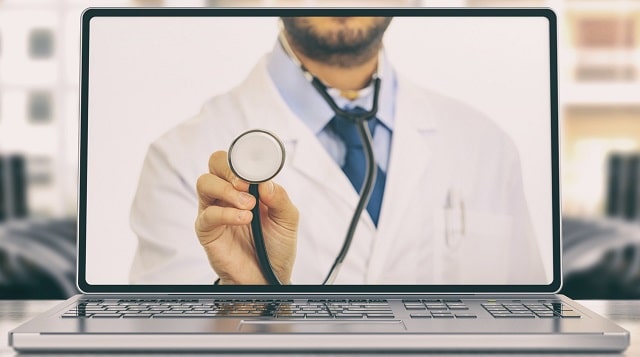
definition telemedicine doctor online sessions medical consultation facetime physician zoom meeting

In the wake of technology, many advancements in the health sector have become relatively apparent. To that end, adjusting to newer approaches to medicine have become inevitable. It is at this point that telemedicine steps in, and reliably so. 

Over the years, telemedicine has been valuable to the health sector. It has undergone various changes and evolution, which have all played a role in refining it. Initially, it was essential in connecting doctors to their patients. Today, it offers you more than this. Perhaps, trying out telemedicine in Deerfield Beach, FL, would be a perfect solution to these problems. 

Are you wondering what telemedicine is? It is the reliance on telecommunication technology in diagnosing and treating patients remotely. Perhaps we should explore the basics of telemedicine. 

Services Offered Through Telemedicine 

Indeed, understanding the services that you get from this approach will be crucial in decision-making. Here are some of the top things you will be sure of getting in the long run. 

Telementoring 

Did you know that medical practitioners will often look up to various figures in the field? Well, telemonitoring allows specialized experts in a given area of medicine to guide their juniors. This way, delivering credible treatment and services to patients becomes relatively seamless. For instance, a doctor in an established institution could guide a junior doctor on how to treat autism. He will provide all the necessary steps on how to manage the condition. 

Teleconsultation 

This form of telemedicine highlights the essence of reaching out to a doctor through technology. Usually, it involves video conferencing. Sometimes, you could take pictures and send them to the expert for more elaborate interpretation. During the consultation, the medical practitioner will also guide you in self-diagnosis. 

Telemonitoring 

Here, a patient will often be connected to a biosensor, which will be essential in sending critical health data. Some of the most common sensors include glucometers, vital-sign monitors, and electronic scales. With the results obtained, it will be easier for the doctor to prescribe suitable treatment remotely. Also, it could help in monitoring your condition as an after-care approach. 

What Makes Telemedicine Effective? 

Collaboration Tools 

These tools are those elements that connect the doctors or healthcare centers to patients. They include laptops and smartphones. In most cases, experts will refer to them as video endpoints. They will often be essential in defining the experience of the end-user. 

Cloud Services 

Relying on cloud solutions is currently taking over with a storm. Cloud-based services have become critical in ensuring that there is a seamless connection with the provider, and you will be sure of better storage and security of your info too. 

Medical Peripherals 

Diagnostic tools, including digital stethoscopes, ultrasound machines, and otoscopes, will be vital in improving the efficiency of the process. Using these tools will play a central role in improving the quality of both audio and video components of telemedicine. 

Are you too far from civilization, yet you need treatment? Feel free to visit the Soffer Health website to learn more about the telemedicine services at your disposal. Telemedicine will be a convenient option for you.

Pros And Cons Of Fiber-Optic Internet for Small Business Owners

advantages and disadvantages of optical fiber small businesses internet connection speeds

Conflicted about the internet service you should get for your small business? Should it be cable, DSL, or optical fiber? You undoubtedly want something fast and reliable, so how about you get fiber-optic? Optical fiber communication is revolutionizing the telecommunications world.

Fiber optic doesn’t degrade with distance, thus delivers consistent data transfer speeds. Fiber optics communication represents an advanced form of digital communication compared to electrical transmissions.

That said, it’s not without its drawbacks. If you are thinking of the best internet to install for your small business, we’ll look at the advantages and disadvantages of optical fiber to help you make an informed decision.


Advantages of Optical Fiber

Fiber-optic connectivity can offer a great advantage to your small business. You most certainly need high speeds, maximum uptime, and data storage. Here you’ll learn some of the biggest advantages of optical fiber for internet connection.

High Speeds

Optical fiber is one of the fastest internet options you can choose for your small business. The fiber optics cables carry light to transmit data. This means that fiber optic speeds are only slightly slower than the speed of light, which is super impressive. This is so much faster than Cat5 or Cat6 copper cables.

Besides this, with fiber optics cables, you get minimal signal degradation. This is precisely what a growing business needs. Your business should never experience downtime because it’ll affect productivity. Your internet connection needs to be a tool that supports and instills a desire to work and be productive.

Suitable for High Bandwidth Needs

One of the most notable advantages of optical fiber internet is the capability to offer higher bandwidths. This supports faster data transmissions and supplements all your wireless communication technologies. Given the fact that optical fiber sends data as pulses of light, it offers a super high-frequency signal. This means they can carry a higher frequency range. A higher frequency range means a high bandwidth.

Offers Long Distance Communication and Transmission

Optical fiber is highly suitable for long-distance communication and transmission compared to other internet options. 

Fiber optic cables have minimal attenuation loss. This allows transmission over long distances without much need for signal repeaters. Optical fiber can go as far as 100 kilometers without the need for active or passive processing.

In comparison, copper wiring usually suffers losses, given that it runs on electrical properties. It requires signal repeaters after several kilometers. The longer the copper cables, the higher the resistance. Besides this, the higher the frequency, the lower the signal strength, which makes copper unsuitable for business.

Immune to Electromagnetic Interference

The biggest advantage of optical fiber has over electrical transmission is the fact that it is immune to electromagnetic interference, also known as EMI. EMI simply means things like radio jamming, lighting, solar flares, among others. This makes optical fiber ideal for businesses located in areas prone to high EMI, such as power or utility lines.

Cloud Access

The cloud is becoming more and more important for all types of businesses. You certainly need it for things like data storage and CRM tools. Optical fiber offers the bandwidth and speeds your business needs to access the cloud at any time. You’ll benefit from little to no delays, which means your customer services will not be disrupted.

Super Reliable

Optical fiber internet connectivity is significantly more reliable compared to copper or electrical connectivity. This is because fiber is stronger and not susceptible to weather conditions. Unreliable internet is one of the worst things a small business can experience. Downtime can slow things down, or bring the business to a stop.

Secure

Optical fiber is one of the most efficient ways to combat cybercrime. The only way to penetrate fiber-optic cable is by physically cutting them. An information security breach can cost your small business a lot in terms of financial penalties and customer deflection. Installation of optical fiber connectivity may not mitigate all your business risks, but it does offer security.

Cost-Effective

A fast internet connection means productivity for your business. Slow internet could mean thousands of dollars in losses, which means a reliable connection such as optical fiber will save your business these losses. Your business will not only gain flexibility but scalability as well.


Disadvantages of Fiber Optics

Despite having so many advantages, optical fiber has some drawbacks as well. It would be best if you considered all aspects before coming to a decision. Let’s look at the disadvantages of fiber optics.

Physical Damages

Fiber cables happen to be thinner compared to metallic wiring. This makes them much more delicate. Given their small size, they are easy to damage during rewiring or by accident during renovations. Given that optical fiber can transmit much more data, fewer cables are used for more people.

This means that if one cable is damaged, it could disrupt business for more companies and organizations, including yours. Beyond this, fiber happens to be quite sensitive to bending, so laying it around corners becomes a bit tricky. Fiber optic networks are also susceptible to chemical and radiation damages.

High Installation Costs

Despite being cost-effective, the initial installation costs can be quite high. Installation needs skilled experts from a reputable company and specialized test equipment to lay the network. The connection nexuses and endpoints require special equipment for setup. This means that repairs will also be costly because diagnosing issues will require similar skills and equipment.

Fiber Fuse

Fiber network is susceptible to something known as fiber fuse during high power. Fiber fuse is a term used to describe a situation where too much light meets an imperfection in the fiber cables. Such an occurrence could damage long lengths of fiber cables in a very short time. This is a significant disadvantage of fiber optic cable.


Knowing the Advantages and Disadvantages of Optical Fiber Means You’re Ready for Optical Fiber Connectivity for Your Business

Now that you are well aware of the advantages and disadvantages of optical fiber, you’re in a better position to decide whether it’s suitable for your business. In the long run, it’s clear that optical fiber will replace copper and electrical networks.

Ways To Help Your Children Reduce Phone Use

how to reduce children phone use cut teen smartphone usage

It’s easy for you to shout at your children for always being on their phones. You get angry because of their actions. The truth is that you’re not spending enough time to help them out. If you want your children to be responsible using their phones, you also have to do your share as a parent. 

Be A Role Model 

You can’t keep telling your children to stop using their phones when you’re doing the same. You also have to control your phone use. Don’t spend too much time browsing social media content. You can use your phone to work, but you need to stop at some point. 

Set Clear Rules At Home 

Just like many other things, you need to set clear rules in regard to phone use. You have to be strict in implementing these rules. When you tell your children not to use the phone during dinner, you have to set punishments for violating the rule. Avoid making empty threats since they won’t follow your rules in the future. 

Offer Rewards 

If your children successfully avoided phone use for an entire day, you can reward them. Make them involved in deciding what reward they want. If it’s reasonable enough, you can give it to them. The point is that through these rewards, you motivate them to do the right thing. 

Play With Your Children 

The reason why they’re always on their phones is that you don’t spend enough time with them. Make sure that you play with your children. Think of fun games that you can do with them. You will forget about digital devices when spending time with each other is more fun and exciting. 

Explain The Effects Of Constant Phone Use 

You can’t keep telling your children what to do and what to avoid without explaining to them the purpose of your rules. In regard to phone use, you need to be clear that you worry about their health. Phones emit radiation, and excessive phone use could make a person ill. The good thing is you can use EMF protection to block radiation from entering the body. Despite that, it’s still essential to reduce the time spent using the phone. 

Help Your Children Study Their Lessons 

You probably know more about what your children are studying. They might spend a lot of time on their smartphones to research. Instead of doing it, you can ask them to study with you. Apart from providing them with the right information, you also bond with them. They will be grateful for the time you spend with them. You can even hope that they excel more at school because of the assistance you give at home. 

Reduce Your Kids' Smartphone Use

As a parent, you must aid your children to overcome their cell phone addiction. It’s easy for them always to use their mobile phones if they don’t receive guidance from adults. Start by changing your smartphone habits and asking your children to do the same.

8 Reasons To Switch to an iPhone

why switch to iphone vs android phone choose apple over droid smartphones

There are two types of people in this world: Those who have an Android phone, and those who have an iPhone. 

Ok, there's maybe more than that, but, there's no doubt that the debate between iPhone vs Android goes back a long time. It seems like for many people, the brand they start with is the one they stick with. 

But, if you've always had an Android, you don't know what you're missing out on. Even though iPhones do have their drawbacks, there are a lot of benefits to buying an iPhone over an Android. 

So, why switch to iPhone over an Android smartphone? 

Check out this guide to find out the advantages of iPhones. 

8 Reasons To Make The Switch To iPhone


1. Information Security 

As technology continues to take over our lives, information security becomes more and more of an issue. 

If you're someone who takes information security seriously (as you should), then you may find it alarming that 97 percent of smartphone malware is targeted at Android phones. That number is dwindling each year but it's still a stark comparison between Apple and Google / Samsung smartphones.

The reason Android users are more susceptible to software malware is because Apple takes exhaustive precautions when selecting which app developers can have access to Apple's ecosystem. 

In other words, getting apps with malware into the Apple App Store is nearly impossible. 

Android uses Google's Play Store for its apps. And unfortunately, Google doesn't vet as thoroughly as Apple does when it comes to app store access. 


2. The Apple Ecosystem 

Many Android users don't know what they're missing out on when it comes to the Apple ecosystem.

The range of Apple products keeps growing and growing. This means you can easily sync your devices together with just a few clicks. You don't need to spend time downloading extra software or extra applications to sync things together. 

All you need to do is sign into your Apple account on a new device, and voila! All of your contacts, photos, calendars, and emails will instantly sync. This also means that you don't have to pay twice for books, movies, or apps. You just need to simply redownload them on each device. 

And, because Apple has a closed ecosystem, user safety is guaranteed. 


3. iMessage 

You don't quite understand the disappointment of seeing a green text bubble until you have an iPhone. 

For those who don't know, Android texts show up in a green bubble, whereas iMessages show up in a blue one. 

Why is the different color such a big deal?

The blue bubble is Apple letting you know your messages are end-to-end encrypted. This means that the only people who can see these messages are the people who are communicating. 

In other words, no eavesdropper can decrypt your conversation -- not even the company that's running the messaging service. If someone were to try and hack into your messages, all they'd get was a bunch of gibberish. 

With text messages sent on Androids, end-to-end encryption is not used. This means that your private conversations could be vulnerable to the eyes of hackers. 

On a less serious note, iMessage is also great because it allows you to send messages to friends and family from anywhere in the world, just as long as you have WiFi. With Android, you can't do this. 


4. Excellent Support and Help 

Whether you're shopping for a new iPhone or fixing a damaged iPhone, help is just around the corner. 

If you have an issue with your iPhone, you can go online to the Apple site and tap into a huge database of how-to articles. You can also get help via live chat. Or, you can schedule an appointment at the Apple Genius Bar at your earliest convenience. 

And, because Apple products are so popular, it's easy to find authorized Apple resellers and repair shops. 

Android users, on the other hand, don't have this sort of support system. To fix your Android phone, you'll either have to go through the phone maker or your carrier.


5. Get the Best Apps First 

If you're a big fan of apps, you'll be happy to learn that Apple almost always gets access to new apps first. 

For example, for one popular game app, Fortnite, it took months to come out with an Android-friendly version. Same with other popular apps like HQ Trivia and Super Mario Run. 


6. No Bloatware 

One of the biggest gripes Android users have is that the phones come with a lot of bloatware. 

While Android has slightly improved upon this by consolidating all carrier bloatware into a single folder, it's still annoying to have this junk taking up space in your phone. 

The great thing about iPhones is that they don't come with a single piece of carrier software. This makes for a clean experience from the moment you buy your phone. 


7. User-Friendly 

Without a doubt, the iPhone beats out the Android when it comes to user-friendliness. 

All of your apps are launched from the home screen, and all of your settings can be found under one menu. 

And while an Android can be customized and modified in different ways, the operating system's basic features are still much more complicated to get the hang of than iPhone's system. 

If you value a smartphone with a small learning curve, the iPhone is the way to go. 


8. Faster 

Last but not least, we can't forget that the iPhone is faster than the Android. If speed is a top priority, iPhone mobile phones are the superior option.

Because the iPhone is less cluttered and more streamlined than the Android, you'll be talking, texting, and searching at the speed of light. 


Why Switch to iPhone: Are You Ready to Make the Switch? 

"Why switch to iPhone?" As you can see, there are many compelling reasons to switch from Android to iPhone smartphones. Now, all you need to do is head to your phone carrier and tell them the news that you're ready to make the telephone switch. 

When you get your new iPhone, be sure to come back to our blog to check out more articles like this one. Visit our Tech section today!

New Frugal Finance Blog Posts & Articles