Showing posts with label Venture Capital. Show all posts

20 Top Business Presentation Tips For 2026

top business presentation tips speaker experts pitch perfect powerpoint slide deck presenting

Presentations in business or other organizations are a big deal, and you only get one chance to make a first impression or seal the deal. No matter your role in a company, at some point you will be required to present your ideas or sales pitch. Every top business leader knows the potential power of a presentation or pitch. Convincing, persuading, and selling your ideas are all critical skills, whether you are presenting to a small team in a video conference or on a venue stage in front of thousands of people. A business presentation can even make or break your career, especially these days in the age of everything being recorded and shared on social media.

Today’s entrepreneurs know quite a bit about the art of presentation, so we asked them to share some of their best tips and techniques. Here are some of the highlights on top presentation tips from business leaders around the world in 2026. 

20 Top Tips For Powerful Presentations In 2026

First Impressions Matter Most

The first few moments of a business or sales presentation are critical. You can either set the stage for success or cause everyone in the audience to immediately think “how long is this going to take?” You only get one chance to make a good first impression while presenting. 

“The best tip for having a successful presentation is to start strong,” said Ajay Mehta, CEO of Birthdate Candles. “The beginning of your presentation is what draws your audience in, so be sure that you start off in a strong way. Grab your audience’s attention by using an image, video or joke. This will entice them into your presentation and keep them interested throughout.” 

Even more important than gimmicks is a strong presentation presence and tonality that conveys confidence from the start of your presentation or sales pitch. 

Slim Down The Presentation 

When you look over your presentation, is there anything that can be removed or simplified? The last thing you want to do is overcomplicate things during presentations and lose interest from the audience. 

“Carve out excessive words and slides - this will make things easier for everyone,” said Brandon Monaghan, Co-Founder of Miracle Brand. “Better to speak slowly and clarify your points. It is not a race or a competition to cram the most content into one presentation.” 

Even if your business presentation addresses complex topics, aim to simplify the speech and support your points with visuals. 

Explain Why The Audience Is Here 

Unless you are already a celebrity, audiences will want to know who you are and why your message is important. Make a connection early on so that everyone is invested. 

“When you are a public speaker, the first thing you need to accomplish is showing why the audience should see your presentation as relevant,” said Travis Killian, Owner and CEO of Everlasting Comfort. “There are a growing number of professionals trying to make their mark on the webinar, seminar and convention scenes. But, not everyone has the credentials to lend their advice. Tell a little bit about yourself, establish a connection and briefly explain how you achieved your own success.” 

Avoid acting like a know-it-all, and just be real about who you are. Being genuine is key as a business presenter in 2025 and will be in 2026 also. 

Make The Connection To Our Audience

Some of the best public speakers don’t present themselves as perfect or flawless. Often times it is more effective to show your human side and connect with others in a real way. 

“Always be sure to show your passion and connect with your audience when giving a presentation,” said Tri Nguyen, CEO of Network Capital. “Great presenters know how to be honest and connect with their audience to get their point across. You can do this by injecting your passion and enthusiasm into your presentation. Your audience will feel this and stay connected to your presentation throughout its duration.” 

Authenticity can go a long way for keeping audiences engaged and getting key points across. 

Psych Up The Crowd 

Even if you are speaking on a serious subject, try to get the crowd excited with positive energy and enthusiasm from the starting gate. Use technology to fill in the gaps and punctuate your points. 

“Getting people excited and engaged in your presentation can help boost morale and lead to better results if you are looking for a call to action at the end,” said Cody Iverson, Co-Founder and CEO of VisCap Media. Videos, infographics, and other visually appealing material breaks up talking and photos. 

This helps a great deal on Microsoft PowerPoint slide decks. Get people involved in the presentation by asking the room questions or getting suggestions for answers, depending on what your presentation is about.” 

We all know that meetings aren’t the most exciting events, so put in some extra effort to break the monotony. 

Storytelling 

You can only go so far with facts, figures, and charts during a presentation. Mix things up with stories throughout the session to keep audiences captivated for the less entertaining parts. 

“Tell a story when presenting,” said Omid Semino, CEO of Diamond Mansion. “Stories help people pay attention, connect, and remember things. Storytelling will help your audience engage in your presentation. So think about what you are presenting and how you can create your presentation to tell that story.” 

Stories don’t have to be thrilling to be effective – it is all about the delivery. 

Any Questions? 

It is best to not take questions throughout your presentation, since this disrupts its flow and effectiveness. Wait until you have made your points and take questions after. 

“Leave some time for Q&A at the end of your presentation, because people will have follow-up questions and want to say their piece,” said Kelli Lane, CMO at Genexa. “Be accommodating and do your best to answer questions. If you don’t know something off the bat, connect with them later and follow up.” 

Remember to thank everyone for their company presentation questions and put a memorable twist on your answers if you can. 

Simplify Everything 

If you could effectively transmit one key idea into the mind of every audience member, what would it be? Pinpoint this idea and make it the central focus of your presentation. 

“A great tip for having a successful presentation is to keep it simple,” said Alex Czarnecki, CEO of Cottage. “Focus your presentation on the core message that you wish to convey. This will allow you to communicate the core message effectively to your audience. If it doesn’t apply to your core message then do not include it in your presentation.” 

This is a good tactic to trim down your presentation and make it more impactful. 

Not So Fast 

Everyone tends to rush when they reach the stage or get to the floor for a presentation. It is in our nature to speed up, but you need to fight that urge and take it slow. 

“Slow and steady wins the race,” said Vincent Bradley, CEO and Co-Founder of Proper Wild. “If you speak too fast, it will be difficult for your audience to understand what you are trying to say, and it will make you appear nervous. By consciously slowing down your speech, you will project confidence and calm. This will also force you to make your presentation clear and concise. So instead of trying to fit thirty minutes of content into a fifteen-minute presentation, you will have to prioritize information and intelligently choose your words in advance.” 

Try practicing with timers or video yourself to make sure you maintain a slow and even pace. 

Tech Wizard 

When the presenter is fumbling around with technology in front of an audience, that is not going to instill much confidence. Learn the tech inside and out so that you avoid being that person. 

“Know the software that you will be using during your presentation like the back of your hand,” said Bill Glaser, CEO of Outstanding Foods. “Especially during remote and hybrid work, knowing tips and tricks for presentation software like Zoom and Google Meet can level-up your communication abilities. For example, Zoom shortcuts can make your presentations run seamlessly, and knowing which buttons perform which actions can help you avoid unnecessary technical difficulties.” 

Watch tutorials, read blogs, or simply practice as much as possible with these platforms, because it will pay off. 

Audience Specific 

You never want an audience to feel like they are receiving the same, automated speech you have made a thousand times before. Mix it up and personalize the presentation for the people in front of you. 

“Know your audience and address them with details that would only be relevant to the room at the present moment,” said Dr. Livingood, Founder and CEO of Livingood Daily. “People can tell when you are being generic – or worse – disingenuous.” 

No need to overhaul your whole presentation. Just add some flourishes to make things more personal where it is appropriate. 

Vocal Mastery 

Watch some classic speeches from CEOs, politicians, and motivational speakers. They are a commanding presence on the stage, and use their voices effectively as well. 

“Start thinking about what you sound like,” said Celebrity Vocal Coach Roger Love. “Your voice is the most powerful communication tool you possess. A 2017 Yale study proved that we have learned to lie with our words and our body language, but the sounds of your voice reveal authenticity and truth. Learn how to use melody, volume, pitch, and pace to create sounds that move people emotionally.” 

It is always weird to record yourself and play it back, but this is how the best speakers master their craft. 

Research Heavy 

Charisma is a key trait when presenting to an audience, but you will also need to back up what you say with facts. Research is the key to a well-rounded presentation. 

“There is no better way to become a better presenter than to do your research,” said Timmy Yanchun, Co-Founder of LTHR Shaving. “Nothing can replace data when you need a go-to reference or point, and it also serves for excellent after-seminar or webinar downloads. Have all of your information in order, backed with slides that will make it simple to introduce a point and then elaborate.” 

Even if your presentation isn’t exactly a fireworks show, the research will make it worthwhile for anyone listening. 

Give The Audience What It Wants 

You know your mission as a presenter: send the right message and make persuasive points. But have you considered what audience members want from this exchange? It is worth thinking about if you are presenting something important. 

“The number one tip for a great presentation is to focus on your audience’s needs,” said John Levisay, CEO of The Pro’s Closet. “Build your presentation around what your audience will get out of your presentation. Keep the audience’s needs in mind as you create your presentation and while giving it. This will make it easier for them to understand and respond.” 

Be sure to hit your main points while catering to the needs of the audience, too. That is the winning formula for professional presenters. 

Solution-Oriented 

Since the first caveman stood on a rock to explain how to make fire, one thing has always been true about presentations: they need to solve real problems. 

“Being a presenter has changed dramatically since the pandemic, with so many regular speakers learning to adjust to a computer screen and the challenges of webinars vs. in-person events,” said Heidi Robinson, Chief Operating Officer at Because Market. “However, one positive thing is that most speakers have learned to find ways to really connect with their audience - even if they are halfway across the globe. Everyone loves solutions to common problems. So, make an effort to provide those, along with actionable steps to never experience those challenges in the first place.” 

If your presentation doesn’t identify a problem and offer a solution, consider a new angle. 

Show, Don’t Tell 

If there is a way to make your points with visual aids, before-and-after photos, or straight facts and figures, do that. Nothing is more effective than clearly showing the audience what you can do for them. 

“Vividly paint a picture,” said Michael Port, CEO of Heroic Public Speaking. “All world-saving performances are transformational experiences for your audience. Start out by showing, here is what you have got today, and here is how it could be. This builds immediate rapport and hooks the audience’s interest. You know them. You understand them and their pain points. You have got their back, and you have got a better way to solve their problems.” 

Not every message needs a visual component, but this strategy can emphasize the points that matter most. 

Chill Out Before The Presentation

It is totally normal to be nervous before a big presentation, even if there are just a few people in the room. Be prepared, keep it together, and use some mental tactics to stay on point. 

“Having relaxation techniques to help calm your nerves right before you present can help you look more professional and confident while giving your presentation,” said Eddie Huai, CEO of Luna Blanket. “Being too nervous, or even talking about how nervous you are, can actually give off the impression that you are unprepared if speaking with people who don’t know you, so acknowledging it with yourself and handling it beforehand can help with that. Breathing techniques, visualization, and other quick methods are easy ways to relax before a big presentation.” 

Do some research on relaxation methods and find a way to calm down quickly before you go on. 

Follow A Format 

It can be tricky to map out a presentation from scratch, especially if you are new to the medium. Use an established blueprint at first and make adjustments as you figure out the format. 

“When you are giving a presentation, always remember to follow the 10-20-30 rule,” said Jim Beard, COO of Box Genie. “This rule states that to have a presentation that contains no more than 10 slides, it should last no longer than 20 minutes and have a font size of no less than 30 points. This will help keep you from overloading your presentation with too much information on the slides. Remember the slides are there as a guide, while the presenter elaborates on the points to allow full understanding of the topic.” 

Do a few presentations based on a familiar structure, and you will get the hang of it in no time to become a perfect presenter. 

No Nerves 

Nervousness is often just a sign that you are unprepared for the task ahead. Have a healthy sense of self-confidence, but put in the work as well so that you feel emboldened when the time comes to present. 

“Early preparation is the best thing you can do for yourself if you are nervous for a presentation,” said Meghan Maupin, Co-Founder and CEO of Atolla. “That way, you can tell yourself that you have gone over everything you need and can walk into the room with confidence that you will succeed in your presentation. I like to try to remember key points for each slide, rather than memorize a script where you could get stuck on a single word.” 

Skilled presenters have the confidence to freestyle away from their carefully crafted PowerPoint pitch deck when needed, and preparation is what allows them to improvise effectively. This is especially crucial when answering colleague or prospect questions at the end of presenting or taking questions from the audience after speaking on a Power Point slide deck.

Break The Ice 

You can spend hours perfecting a business presentation, but you will stumble out of the starting gate if you don’t have a great intro to propel you forward. 

“The best way to create an engaging and successful presentation is with a strong introduction,” said Jack Mason, CEO of Jack Mason Watches. “Many use this as an opportunity to tell a quick story or joke that engages the audience. Setting the tone in the presentation from the start, tells your audience what to expect from the rest of your presentation. If done correctly, you will hook your audience in for a great presentation that they will watch the entire time.” 

Presenting Powerfully Conclusion

Some business professionals love seizing the opportunity to make presentations a special event, while others dread presenting completely. But one thing is certain, if you are going to present your pitch, it needs to be powerful in at least one way. Hopefully our top business presentation tips will offer something for everyone and take their public speaking skills to the next level. Pitch perfect, ensure your speaking is peaking, and make your powerful presentation profitable in 2025!

All About Misunderstood Markets And Defensibility

total addressable market tam global markets

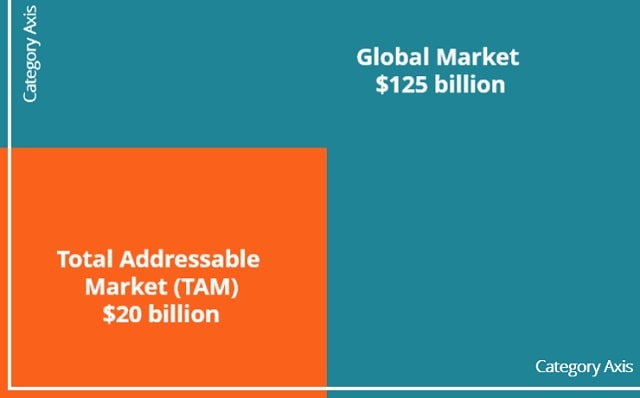
The Total Addressable Market (TAM) is important to differentiate between the global market for companies and investors alike. Silicon Valley has a strong view on TAM. To be taken seriously, your TAM needs to be $10B+, to generate real excitement, your TAM needs to be $100B+. This goes some of the way towards explaining the increased investment in digital health and real estate. Both have humongous TAMs, both real estate and digital health, depending on how your quantify them are measured in trillions. But, despite their apparent size, when you really cut them down to size, something comes to light about the overall market. 

While U.S. real estate asset prices are worth trillions, there are $100B in real estate agent commissions a year. Of those, the majority of agent relationships are created from first degree connections (friends, family, colleagues). So, of the “up for grabs” agent market, if you absolutely nailed a new real estate brokerage model, you are talking about maybe a $10B market, of which getting 20-30% would be a great feat. 

RedFin, with their discount brokerage model took 15 years to get to 1-2% market share across several U.S. cities. So despite the headline figures, maybe that vertical SaaS player with a seemingly small TAM of $6B, but clear GTM and high margins, looks more attractive. TAMs can be quite deceptive. 

But TAMs alone don’t explain why Vertical SaaS has done so well and we have yet to see a real estate tech or health care tech $10B+ winner. The incentive systems are so well baked in health care and real estate. Try seeing a cash list at your local hospital. Or, buying a home directly, without an agent. Both will put you directly into the teeth of the system. And you will see it squirm at first, then reject you and if you continue to push, it will bite you. 

These deeply ingrained incentive systems and regulatory capture create the false sense that the TAMs are really up for grabs. PCP to specialist networks look like they should be run more efficiently, but then you learn about the strong ties among members. Real estate agent and mortgage brokers too have close relationships. Laws have banned passing of referral bonuses, but that doesn’t stop dinners, sports tickets and gift giving that skirts the system. 

Spending time in real estate and more recently in fast-growing consumer fintech (Earnin), the absence of these built-in systematic biases was refreshing. It reminded me of the thrill of the blue ocean, of green field. While the challenge of creating a new category of product is immense, I’d argue, it’s far easier than the challenge of working through the systematic entrenchment in health care and real estate. 

While I am not altogether bearish, we are still waiting for the breakout in either health or real estate. In health, I’m bullish on direct primary care models and virtual care. They’ve shown real promise in reducing costs for patients. I’m bullish on risk models that are finally, at a glacial pace, changing incentives in the system. 

In real estate, the buy before your sell models are brilliant. These are definitely the highest NPS experiences in real estate. These companies abstract complexity in the way great software does. Their models are also very attractive, seller commission + buyer commission + mortgage + bridge loan. The economics add up quick. 

As the classic saying goes, as a startup can you figure out distribution before the incumbent figures out innovation. In spaces with systematic lock-up, incentive misalignment and regulatory capture - the incumbents can not innovate at all, but change the system around them to either harm your ability to distribution and advantage their ability to respond. 

As with most things, there is no black or white answer to how to approach these spaces, we live in the grey. We exist in the fuzziness and volatility of the new economic marketplace. We remain stuck inside the wall of investment information available. The best we can do is analyze, re-compute and keep our opinions ever-changing as the dynamics in these spaces come to light.

Financial News Now - Economy Update

frugal finance news financial updates economy developments startup trends

The financial world has been turned upside down recently and things are changing daily. It's hard to stay on top of the latest economic developments and investing trends. Here are the Frugal Finance news stories you need to know now:

Treasury Secretary Janet Yellen has put lawmakers on notice: the U.S. is running out of money fast. That’s right, the money printer might turn off temporarily due to out of control spending in the last two decades (not just from Trump or Biden). Unless, of course, Congress raises the debt ceiling. Yellen has said that if Congress fails to raise or abolish the debt ceiling by mid-October, the U.S. will default on its debt for the first time in history. Yellen also indicated that such this potential event would be a catastrophe for the American economy. A default could have unprecedented consequences for the U.S. Domestically, it could cause the suspension of “Social Security benefits, child tax credits, and paycheck for the military.” Internationally, it could jeopardize the U.S. dollar currency and credit status, which recently was downgraded globally for the first time in history. 

Conservatives insist that they will oppose raising the debt ceiling or suspending it. To make matters worse, a default could coincide with a government shutdown if Congress fails to act quickly. Interest rates rose, sending stocks plummeting yesterday in response to some of the fears. The past several weeks have been stressful on Capitol Hill, as the Democrats have pushed to pass short-term funding and raise the debt ceiling whilst advancing President Joe Biden’s aggressive $3.5 trillion social infrastructure plan. Political opponents recently averted disaster by passing legislation to prevent a temporary government shutdown, with a few hours left to spare on the deadline! But that doesn't mean another potential government shutdown isn't on the horizon, especially with the partisan split bigger than ever before.

Last Tuesday was red Tuesday in the markets. The Nasdaq and Russell 2000 both gave up more than 2%. The S&P 500 sank 2.04% and the Dow dropped 1.63%. All but one sector closed deep in the red. Energy was the lone duckling to register a gain. $XLE gained 0.34%, but $XLK dipped 2.9% and $XLC collapsed 2.44%. The 10-year yield reached its highest level since June, extending the sell-off in tech. To make matters worse, Treasury Secretary Janet Yellen warned that the U.S. government will run out of cash unless Congress raises the debt ceiling. United Natural Foods had a day – shares spiked 27% to 3-year highs after exceeding earnings expectations. Here’s the full report. $LCID recovered its intraday losses in after hours, spiking 6.6% on the news that its first production car began production today. Deliveries will begin next month. The FAANG gang got hit hard – $FB fumbled 3.7%, $AAPL fell 2.4%, $AMZN descended 2.6%, $NFLX shrank 1.5%, and $GOOG gave up 3.8%. $GOGO went 37.6%, $DATS drove 26.7% higher, and $CEI climbed 18.4%.

Global investors grapple with sustainable investing, a labor shortage, and the insistence of employees to work remotely. This summer, we surveyed hundreds of LPs, GPs and service providers about their sustainable investment practices, gathering insights on an increasingly important topic to many in the private markets. We are breaking down the data by respondent type and region to determine what is driving investment decisions. This year's writeup includes a new section that separates VCs' responses from the broader category of general partners. Report topics include: What motivates sustainability efforts for LPs, GPs and others. How investors measure their strategies' impact. The biggest challenges when it comes to pursuing sustainable investing. The effects of the world's current social and political landscape.

VCs bet on the technologically unproven field of quantum computing. IonQ, a quantum computing company, is set to close a reverse merger with a blank-check company and begin trading on the NYSE today at a market capitalization of about $2 billion. Tech giants including Google and IBM, as well as startups like IonQ, Rigetti Computing, and PsiQuantum, are all competing to make the most powerful and reliable quantum machine. While a fully functional quantum machine is still a long way off, venture capitalist interest in the nascent technology is at an all-time high. Investors are betting that some real-life applications will emerge within the next five years, but most quantum computer hardware companies will still need significant capital infusions.

Planning to pursue infrastructure work long term? Private equity investors committed to growing their portfolio companies' government work may benefit from splitting their commercial and federal divisions. With the possibility of new federal infrastructure contracts ahead, now may be the right time to learn the advantages and best practices. Many good reasons exist to consider a split, including the different buyers, client journeys, communications and buying processes, decision-making, audit scrutiny, reporting requirements, and cost structures, to name several. Further, building separate commercial and federal divisions will create broader and deeper resources in both camps, which can be a go-to-market differentiator.

Shares in VC-backed biotech startup Oxford Nanopore jumped as much as 47% in its first day of trading on the London Stock Exchange, following an IPO that valued the company at £3.4 billion (about $4.6 billion). Oxford Nanopore specializes in DNA and RNA sequencing. It made a name for itself during the pandemic, developing COVID-19 testing kits. Its investors include IP Group, Tencent and Temasek. The company, which was valued at £2.2 billion with its last private funding round, is the eighth VC-backed UK startup in the biotech and pharma space to go public this year and the largest by market cap, according to new data. Oxford Nanopore sold 122.4 million new and existing shares at 425 pence apiece, raising £524 million in the offering. IP Group said the IPO generated £84 million for the investor, which will retain a 10.3% stake in the company.

America’s leading producer of memory chips handed investors a small surprise in earnings today. However, the surprise coincided with a forecast that booming demand wouldn’t continue into the next quarter. Micron Technologies reported EPS of $2.42 (analysts expected $2.34). The company also booked revenue of $8.27 billion, a small beat (analysts expected $8.21 billion.)  Revenue was up 36.5% YoY. Those figures should inspire confidence among investors. Unfortunately, there was one big hazard that dampened the otherwise solid quarter. The company’s guidance for the coming quarter suggested that Micron’s best days are behind it (at least, for the next few quarters.) The company expects revenue to be $7.65 billion next quarter, which is a far cry from the $8.49 billion that analysts expected. The company’s EPS guidance was also lower. Micron anticipates non-GAAP EPS of $2.10 next quarter (analysts expected $2.48.) The company’s Q4 2021 earnings coincided with the release of full-year earnings, which can be read here. All-in-all, Micron’s FY 2021 revenue was $27.71 billion, with this quarter being its best by a sizable margin. $MU stock fell over 6% on the news. Other chipmakers fell in sympathy with Micron, including $WDC, $AMD, and $STX.

Pfizer, Moderna, and J&J have become the undisputed winners of the COVID-19 vaccine race. That’s why pharma giant Sanofi is dumping its COVID-19 vaccine candidate to refocus its efforts. Sanofi’s mRNA COVID vaccine flexed a strong performance in its study. According to Fierce Biotech, “between 91% and 100% of participants had a fourfold or greater increase in neutralizing antibody levels over baseline.” In other words, it was pretty effective. However, it might not be as effective at competing with existing vaccine candidates by the time it’s ready for market (late 2022.) Because Sanofi’s vaccine would be extremely late to market, the pharma company is instead focusing on COVID boosters and moving on to greener pastures in the vaccine space. The company says that the next stop for its mRNA platform is a quadrivalent flu vaccine. Sanofi is already one of the leaders in the flu vaccine space, so this move makes a lot of sense. According to a press release issued today, the company plans to initiate clinical studies for its flu vaccine in 2022. Sanofi’s high hopes for mRNA kicked off in August with its acquisition of Translate Bio. The company paid $3.2 billion with the intention of building mRNA vaccines to address “current and future infectious diseases.”

Amazon announced its latest slate of new products this morning, and guess what? THERE’S A ROBOT. Amazon closed up its fall product release today with some fancy gadgets to kick off the 2021 holiday season. Among the gadgets announced include a smart thermostat, the Echo Show 15, a new partnership with Disney, Amazon Glow, a fitness tracker, the Ring security drone, and Astro: Amazon’s new home robot. Astro the Robot moves independently, has eyes and a body, and features Alex’s voice assistant capabilities to control smart home devices — it even acts as a guard dog (or should we say, a guard bot?). Amazon’s robot costs $999.99, but its official release date is TBD.

A suits versus retail traders saga continues as Citadel and Robinhood executives vehemently deny Citadel’s role in pressuring Robinhood (and other brokers) to halt stock trading during January’s MemeStock Madness. A number of ongoing class action lawsuits are starting to surface additional details about January’s stonk madness with Gamestop and AMC. Robinhood responded, saying that the ongoing suits convey “a false narrative of collusion” between Robinhood and Citadel. Citadel’s Ken Griffin unleashed a slew of Tweets on Monday denying the firm’s role in requesting Robinhood to halt trading. The lawsuit’s plaintiffs allege that Citadel’s tremendous short position on $GME shares prompted the firm to pressure Robinhood to halt MemeStock trading for retail investors. Although top officials at Robinhood.com and Citadel had “numerous communications with each other that indicate that Citadel applied pressure on Robinhood,” Robinhood emphasizes “We will work vigorously to continue correcting the record with the facts.” In an internal discussion at Robinhood on January 27, Robinhood’s brokerage arm president said “you wouldn't believe the convo we had with Citadel. total mess”. Meanwhile, Citadel claims “Conspiracy theorists and plaintiffs’ lawyers are trying to concoct an absurd story from regular-way communications among Citadel Securities and the brokers who handle orders for retail investors.” So who actually has their story straight?

Bitfinex, one of the crypto world’s biggest (and most controversial) crypto exchanges, is once again in the news it is truly something alright. The exchange reportedly paid $23.7 million in transaction fees to deposit $100,000 on the blockchain. Oops. The British Virgin Islands-based exchange deposited $100,000 in Tether ($USDT.X), the stablecoin pegged to the dollar, to the decentralized exchange DeversiFi yesterday. Due to some error, the network charged the transaction a whopping $23.7 million as a gas fee. While DeversiFi called it “erroneously high” in a tweet, others took digs. The issue is pretty big since blockchain transactions are supposedly irreversible. To make things even more suspicious and weird, Tether and Bitfinex share common owners and executives. DeversiFi and Bitfinex are also closely linked. This is not the first time that Bitfinex is in the news for odd behavior. Earlier this year, customers lost nearly 119,756 BTC (more than $60 million) from the cryptocurrency exchange.

The S&P 500 and Dow Jones both bounced from yesterday’s dip. Where do we go from here? That’s anyone’s guess. The Nasdaq fell 0.24% to its lowest price since July and the Russell 2000 dipped 0.20%. Utilities bounced the hardest, increasing 0.91%. Consumer staples and healthcare also improved. $BNB.X was the only major large-cap coin in the green today, up 7%. Bitcoin and Ethereum traded marginally lower. Warby Parker went public today by way of the New York Stock Exchange. $WRBY opened at $54.05 and closed at $54.49, giving the eyewear company a valuation of over $6 billion. More on this below. Natural gas futures reversed 7.16%, falling from seven-year highs set yesterday. The U.S. is on thin ice — as the United States runs out of money, Treasury Secretary Janet Yellen warns of potentially “catastrophic” consequences for the U.S. economy. Read the full story below. $RGC ripped 33.8%, $PALT popped 60.1%, and $OMG.X gained 15%.

How The Grinch Stole Supply Before Christmas How The Grinch Stole Supply Before Christmas. Good evening, everyone. Another Thursday has passed us by! It’s only one more day till the weekend!! Every major index ended the day red. The Dow dove 1.6% and the S&P 500 slipped 1.2%. Not a single sector registered a gain. Industrials got whooped the worst, falling 2.05%. That’s one way to end the worst month for stocks since March! Bitcoin and Ethereum were the only ones to catch a bid. $BTC.X bopped 4.20% and $ETH.X increased 4%. Cotton futures closed at ten-year highs, sugar futures soared to four-year highs, and natural gas retook seven-year highs. Initial unemployment claims for the previous week totaled 362,000. According to Dow Jones, economists expected a total of 335,000. That sucks. The Delta variant, as well as raw material shortages, have likely slowed growth in the third quarter. The third quarter’s GDP is expected to grow at a rate of less than 5%. Oh, and a worldwide manufacturing slump has companies scrambling before the holidays. More on this below. $QTUM.X climbed 12.2%, $PALT ripped 26%, and $OPRX hopped 14%.

A Supply-Strapped Holiday Season? A Supply-Strapped Holiday Season? About a month ago, COVID lockdowns throughout Vietnam (a mega manufacturing hub for major US brands) posed serious issues for companies adapting to post-COVID demand. Now, they’re getting worse. In August, Abercrombie & Fitch CEO Scott Lipesky said “We are working through an extended closure of factories in Southern Vietnam.” Urban Outfitters CEO Richard Hayne shared the sentiment, saying that “We have a lot of product there, and we’re trying to get it in” regarding huge swaths of supply stuck in Vietnam mid-lockdown. As it turns out, August was an omen of bad things to come. After Trump’s anti-China tariffs, companies sought factories in other locations. Vietnam was one of them. Some companies like Gap, Lululemon, and Nike manufacture anywhere between 31-50% of their products in Vietnam now. But with the supply chain in flux, U.S. businesses are rethinking their manufacturing presence in the country. Nike lost out on 100 million pairs of shoes due to Delta variant-related lockdowns in Vietnam. Lululemon has started shipping goods on airplanes to keep up with demand. And Bed Bath and Beyond’s own pre-holiday earnings served as a warning for the rest of U.S. retail: expect supply-chain issues this holiday season. Despite increased demand, $BBBY sales plunged 26% through August and the company lowered its full-year revenue projections due to wildly expensive inventory shipping costs. $BBBY and $NKE aren’t the only losers, either. Retail stores fell in sympathy with the Vietnam-related concerns, including $KSS (-11%), $M (-8%), $JWN (-8%), $ANF (-7%), $GPS (-7%), $DBI (-6%), $AEO (-5%), and $TJX (-5%). So did the Grinch steal supply?

There are many multimillion-dollar paintings collected by Bezos, Andreesen, and Leonardo DiCaprio. In fact, the finance bros at Deloitte projects the real art world (not NFT junk) to grow in value by 58% through 2026. That’s a whole lotta fun coupons! Why the rare “Double Down Alert” on art: J Pow aint printing Picassos, so art can cover your ASSets Contemporary Art returns 23.2% when inflation’s > 3%. Literally 0.01 correlation to stonks. Early investors returned 32% in 2020 with a Banksy exit using this art investing platform (splash). So what the heck are you waiting for?

Lordstown Is Selling (Not What You Think) Lordstown Is Selling (Not What You Think) Featured Image EV company Lordstown Motors is reportedly looking to sell its Ohio plant to Foxconn, the company that makes iPhones. The reported acquisition comes at a time when Lordstown is scaling up production of its electric pickup truck, Endurance. The company is also strapped for cash and looking to tap additional funding. However, a sale of its 6.2 million square foot plant would make a lot of sense. Lordstown uses just 30% of the plant, according to Reuters. Foxconn’s sudden jump into EVs is no surprise. Foxconn announced in May that it would build EVs for Fisker, an electric vehicle company. The Taiwan-based company has been looking for a place to call home for its EV ambitions in the U.S. Foxconn crashed out of a heavily-politicized tech manufacturing deal with the state of Wisconsin, which involved a $10 billion factory, earlier this year. Now, it might pick up steam in neighboring Ohio. Lordstown has been embroiled in controversy for months. In March, the company was accused of misrepresenting the number of preorders booked for its electric pickup truck. Hindenburg Research, which had previously gone after Nikola Motor, indicated that “the company’s orders appear largely fictitious.” That prompted an investigation into the Lordstown, which resulted in its CEO and CFO resigning. Lordstown is 10%-owned by Workhorse, the company that failed to secure a contract from the United States Postal Service for new delivery vehicles. In February, USPS awarded the contract to a defense contractor that makes military gear, concrete mixers, and firetrucks. Notably, it has never built a production EV before, just small runs of EVs. $RIDE ripped 8.4% today.

Lucid Preps for Delivery Speaking of EVs… Lucid is rolling vehicles off its assembly line with ambitions to begin deliveries next month. The company’s first vehicle, a luxury EV sedan called Lucid Air, starts at $77,400 (before tax credits.) We featured Lucid in the Rip last month after the company’s Lucid Air Dream Edition R, an ultra-limited-edition run of the vehicle, received an EPA-certified 520-mile range on a single charge. That made Lucid’s first vehicle the first electric car to breach 500 miles, pretty impressive! The Lucid Air has four editions, which have ranges varying from 406 miles to 520 miles. The company has booked over 11,000 reservations, which might not sound that impressive, especially when you consider that Ford has already received 120,000 preorders for its F-150 Lightning. But Tesla had just 12,000 reservations for its high-end sedan, the Model S, in 2012. Lucid is no Tesla (at least, not yet), although the company’s got a solid foundation for its first vehicle. But who knows where Lucid is headed from here. The company is valued at $41 billion as of this writing and went public via the Churchill Capital IV SPAC earlier this year. $LCID stock closed down 3.4% today.

TikTok is the latest to jump into the NFT rush. Today, the video-sharing social networking site launched a non-fungible token (NFT) collection that will see its top content creators partner with top NFT creators. TikTok fans will be able to buy their favorite ‘moments,’ and the platform has even created its own digital auction for the sale. According to the announcement, TikTok Top Moments will feature six “culturally significant TikTok videos.” Lil Nas X, an American rapper, will be the first creator to launch one-of-one/limited-edition TikTok NFTs with artist Rudy Willingham. TikTok will sell their NFTs on Oct. 6. The videos will also be presented at the Museum of the Moving Image in New York from Oct. 1 through Nov.5 in a collection entitled ‘Infinite Duets: Co-Creating on TikTok.’ TikTok’s NFTs will be minted on Immutable X, a layer-2 scaling solution that runs on the Ethereum blockchain, but this isn’t the first time TikTok has entered the crypto space. Last month, the company partnered with the cryptocurrency music service Audius.

Philip Morris International and Altria, two tobacco giants, have been made to stop the sale of their heated tobacco device, IQOS. The company’s IQOS tobacco device supposedly violated a patent owned by R.J. Reynolds, a rival in the tobacco space. IQOS is a heated tobacco product, which was marketed as a “safer” alternative to smoking cigarettes. The U.S. Food and Drug Administration said in its 2020 marketing authorization press release that using IQOS [reduced] “exposure to harmful chemicals,” but were still “not safe.” IQOS, which was sold by Philip Morris and licensed for sale by Altria in the US was an effort by the two tobacco giants to shift away from traditional tobacco products. IQOS didn’t make up a significant sum of their sales. However, IQOS was an attempt at reinvention for Big Tobacco, which has been in need of change. Unfortunately, change hasn’t come easy. Take Altria’s 2018 investment in Juul, which gave it a 35% stake in the leading e-cigarette company. Juul’s edge in the market was its flavored products, which were banned not that long after the acquisition due to accusations that it was targeting minors. Although, the company’s sales supposedly recovered after the ban. Altria ($MO) fell 6.6% and Philip Morris ($PM) fell 4.7% after the news broke and big tobacco takes another financial gut punch.

Warby Parker’s IPO via direct listing was a win for the eyewear company as its share price skyrocketed 36% above its reference price in $WRBY’s trading debut. $WRBY closed the day at $54.53 per share, +36% above its $40 reference price. By market close, Warby Parker’s valuation shot to about $6.8 billion — over twice the company’s $3 billion valuation from its last funding round. Warby Parker was founded over a decade ago as one of the first hallmark brands to provide one-stop eye check-up and eye-wear sales at most of its brick-and-mortar locations. The company is also one of the first direct-to-consumer prescription eyewear brands offering both online and in-person services. Not too shabby. We SEE you, $WRBY.

Gaming Technologies, Inc. (OTCQB: GMGT), a global leader in end-to-end gaming solutions, has added celebrity chef Gordon Ramsey to its rock-star lineup of brand ambassadors. Its current roster of premier partnerships includes Playboy and boxing champion Saul ‘Cannelo’ Alvarez.

Binance Coin ($BNB.X), the fifth-largest cryptocurrency by market cap, soared nearly 10% today. The move came on the heels of Binance Coin’s quarterly burn event. Every quarter, Binance buys back a large amount of $BNB.X to burn (coin burning permanently removes coins from the network.) With a reduced supply, tokens that remain in circulation theoretically become more valuable due to scarcity. In turn, that pushes prices up. Because the burn is tomorrow,  investors bought $BNB.X today in anticipation. Binance burned $390 million worth of $BNB.X in Q2 2021. Binance Coin was initially developed as a utility token that provided Binance users a discount on trading fees. Since it was launched in 2017, Binance Coin has become the native token of the Binance Chain and Binance Smart Chain. The latter has become one of the most active DeFi blockchains in the world.  Due to its many use cases, experts believe Binance Coin is worth keeping in the portfolio.

Dollar Tree is soon to be a Dollar Fifty Tree. This story hits close to home as the home of frugality and saving money. The discount dollar store retailer that previously only sold products for $1 or less just announced that it would be raising prices. The announcement coincided with an increase to the company’s share buyback program. The retailer (which historically sold items for a dollar or less) said that it would start selling certain items for “$1.25 to $1.50” to help pay for higher freight and wage costs. Dollar Tree’s price hike comes amidst a flurry of problems afflicting retail chains: inflation, supply chain woes, and a shortage of employees. Dollar Tree is also leaning into selling higher-priced $3-5 items, which are part of the Dollar Tree Plus collection. Dollar Tree Plus products are already in 340 stores and will be in over 1,500 by the end of 2022. On the news of the buybacks and price hike today, $DLTR rose 16.5%. Maybe money does grow on trees. Dollar tree shareholders are pumped but Dollar Tree customers not so much.

Dealmaking activity has rebounded in the France and Benelux region this year. From exits to fundraising, our latest report breaks it all down. Sweden's financial watchdog is looking into whether EQT violated disclosure regulations in a $2.7 billion share sale. The France and Benelux region has seen a huge rebound this year, as private capital activity is on track to surpass previous annual bests. In only two quarters, PE dealmaking virtually reached pre-pandemic levels, while records have been broken in the region on the VC side. Let's examines the PE and VC markets in France, Belgium, the Netherlands and Luxembourg, breaking down trends across deals, exits, fundraising and sectors. Key highlights include: Activity in Europe's second-largest PE ecosystem reached €87.6 billion in the first half of the year, marking a year-over-year increase of 55.2%. Swelling VC deal sizes put the region on the path to new heights. Fundraising activity had a robust start to the year for both PE and VC investors.

Sweden's financial watchdog is investigating whether one of Europe's largest PE firms violated regulations concerning the disclosure of insider information. EQT is facing a probe into whether it failed to publicize in a timely manner that former and existing partners were selling shares in the firm totaling $2.7 billion. The public offering allowed senior executives to exit some of their stock earlier than planned under a lock-up agreement that was supposed to last until late 2022. Financial regulator Finansinspektionen said that it decided to open an investigation over the "postponed publication of inside information" after being notified of the move by EQT on the same day as the share sale. After being contacted to justify the delay, EQT said in a statement that the firm "has handled the information correctly" and "looks forward to a continued positive and constructive dialogue with the Authority." Partners including chairperson Conni Jonsson and CEO Christian Sinding sold approximately 6% of the firm's issued share capital for 370 Swedish kronor (about $42.75) apiece. The partners said in a press release that they would commit to reinvesting 50% of the proceeds into EQT vehicles over the next fund cycle.

What's driving record capital in genetic medicine? Genetic medicine has attracted record-breaking capital in biotech, with roughly $150 billion invested since 2013. Gene editing enables scientists to precisely tackle the genetic root causes of diseases. Such an approach can be "one and done" and thus avoid the chronicity of the current standard of care. Rapid advancements in this field are creating a robust product pipeline and attracting record capital. But despite all the enthusiasm, companies should tread cautiously with this technology.

Investors are consistently allocating larger amounts of capital to startups that go on to exit successfully—a trend especially distinct with later-stage financing. Our recent analyst note is the third in our series breaking down venture returns by round. In this new installment, we've refined our approach to enable richer analysis of the flow of capital. The data suggests a clear relationship between capital raised and the success or failure of a company. The earliest stages, especially Series A, show asymmetrically high returns compared with later-stage deals. The attractive VC fund returns of the past few years have accelerated the increase in capital allocated to venture investing.

Swedish electric vehicle maker Polestar has agreed to go public through a merger with US blank-check company Gores Guggenheim. The combined company, which will be listed on Nasdaq, will have a valuation of around $20 billion. The deal includes approximately $800 million of cash from the SPAC, which is backed by PE investor Alec Gores and Guggenheim Capital, and a $250 million PIPE investment which will be used to invest in the production of new models and its international expansion. Polestar was set up 4 years ago by automotive giants Volvo Cars and Zhejiang Geely. In April, it raised $550 million from investors including Chongqing Chengxing Equity Investment Fund Partnership, I Cube Capital and Zibo City Government. Polestar is not the only European electric vehicle-related company that has sought to go public via a US SPAC. In June, Barcelona-based EV charger maker Wallbox announced plans to merge with Kensington Capital Acquisition Corp., valuing it at around $1.5 billion including debt. Earlier this year, Quell Acquisition Corp. agreed to combine with German electric aircraft maker Lilium at a $3.3 billion valuation.

Towns from Maine to Washington are still seeing fallout from ongoing closures of the US-Canada border. As China doubles down on banning crypto transactions, NFT marketplaces are using clever workarounds. Never before in history have so many people been under the gaze of so many strangers. One writer muses about what the internet has become, and what happens when the experience of celebrity becomes universal. How to prepare for the future of healthcare investing Are you prepared for the unique challenges facing private equity investors in the current healthcare landscape? At this year's HPE New York 2021 conference, an elite faculty of PE leaders will explore the most pressing challenges facing buyers and sellers.

Momenta, a Chinese startup developing autonomous driving technologies, has received a $300 million investment from General Motors. The company's other backers include Toyota, Dailmer, Tencent and Temasek. Emerge has emerged and raised a $130 million Series B co-led by 9Yards Capital, Spruce House Investment Management and Tiger Global. The Arizona-based company offers a logistics management platform for freight operations. Sternum has raised a $27 million Series B led by Spark Capital. The Tel Aviv-based company offers a platform to secure Internet of Things devices. Intelinair has raised $20 million from investors including Regulator Group and Scientia Ventures. The company offers a crop intelligence platform to help growers make data-based decisions. Intelinair was valued at $41.25 million in 2018, according to recent data. Windpoint Partners-backed Nelson Global Products has acquired Tru-Flex, a designer and manufacturer of hoses and exhaust products for vehicles and industrial use. Daiwa PI Partners has acquired Y International, a Tokyo-based ecommerce retailer of bikes, accessories, maintenance services and more. Daiwa PI bought the business from private equity firm The Riverside Company.

Our analysts will explore the records set throughout the first half of the year, despite lingering uncertainty around COVID-19 and macroeconomic volatility. Key statistics include: VCs completed €47.1 billion worth of transactions in H1 2021, signaling that the VC dealmaking environment has never been stronger. European PE posted its second-highest quarterly dealmaking total on record, thanks—in part—to growing vaccination rates and strong debt markets for leveraged buyouts.

The Augmedix (OTCQX: AUGX) platform, powered by artificial intelligence technology and expert human assistants, converts natural clinician-patient conversation into medical documentation. They provide live support, including referrals, orders, and reminders, so clinicians can focus on what matters most: patient care.

The Evergrande crisis, stagnant prices, investors cashing out are all signs of a real estate downturn and exposing the Chinese economy's dependence on property. This huge hit has impacted all markets, economies, investors, and even local businesses. 

There are new financial news stories and tech articles coming out every hour, so stay tuned to Frugal Finance for more breaking developments!

Frugal Financial News For The Now

frugal finance blog business news now economic development company updates

There's always so much going on in the world of investing and the new economy. It can be hard to stay up to date with all the latest developments for businesses and investors, especially with all the inflation, disrupted supply chains, and employee scarcity many are facing. Here are the Frugal Finance news stories you need to know now:

Stocks ticked higher overall, despite a rocky week rumbled by fears that China's Evergrande could cause global turmoil if it can't pay its soaring $300 billion debt. And you thought your credit card bill was high! Last week, markets wobbled as Chinese property giant Evergrande missed an $83 million payment — and it’s just the tip of a $300 billion debt iceberg. Investors fear that Evergrande's collapse could cause a Lehman-esque global stock slump, and throw local markets into turmoil. If Evergrande defaults, its financial partners, including HSBC, BlackRock, and UBS, could lose big money. Investors are watching to see if Evergrande will come up with the cash during its 30-day grace period — or miss more payments. 

The US Treasury’s borrowing is limited by a “debt ceiling.” If it needs more cash, it asks Congress to raise the cap. Now, the US needs a higher ceiling to cover trillions worth of Covid expenses, but Congress can’t agree on a limit. If a deal doesn't happen, the US could default on its debts for the first time. Analysts say there’s a 20% chance of default, which could wipe out as many as 6 million jobs and $15 trillion in wealth.

Agtech fundraising continued its upward growth in Q2 of 2021. The Covid-19 pandemic caused a surge in funding for agtech startups addressing vulnerabilities in supply chains. Now extreme weather events are highlighting new challenges and driving investment in soil sensors, weather prediction services and aerial imagery that help growers mitigate the effects of climate change. A Q2 installment of Emerging Tech Research on agtech includes spotlights on private companies such as Benson Hill, Semios and CropX. The report also tracks major industry trends, covering funding records, exits, and developments in areas like insect farming and agriculture drones.

Boston's VC ecosystem is thriving. The Boston Massachusetts venture capital ecosystem is often grouped with Silicon Valley's, but the two could not be more different. Boston, home to world-class universities like Harvard and MIT, is fueled by life sciences. Since 2007, pharma and biotech startups have raised more capital than their software counterparts every year, sometimes by a 3-to-1 margin. But Boston's growing tech scene is a juggernaut in its own right with a thriving technology development scene. Boston's software startups are predominantly B2B-related, including hundreds of cybersecurity, network management, robotics, and AI-powered software companies. Boston and adjacent cities like Cambridge, Waltham, and Arlington MA are already enjoying a record year for venture capital, having surpassed their previous year's record for funding.

Fantasy soccer startup Sorare just hit a mind-blowing $4.3 billion valuation. SoftBank has led a $680 million Series B for Sorare, valuing the French fantasy soccer specialist at $4.3 billion. It's the largest-ever Series B in Europe, according to reports. Sorare offers a blockchain-based platform to let users trade digital sports cards. With the new funding, the startup plans to team up with the top 20 soccer leagues worldwide and expand to include other sports. The round is the second-largest deal in VC gaming this year, behind Epic Games' $1 billion funding round in April. Sorare has 600,000 registered users on its platform and has licensed players from over 180 soccer organizations. Atomico, D1 Capital, Eurazeo and other backers participated in the round, as did existing investors Benchmark, Accel and Headline.

Private equity companies were recently rethinking sports investing strategy after fans, teams cry foul In August, CVC Capital Partners agreed in principle to acquire a minority stake in Spain's La Liga soccer league, but not every team is happy about it. Private equity's push into professional sports investing initially appeared to be a slam dunk. But investors have recently faced increasing pushback from players and fans as they attempt to establish themselves in the elite world of pro sports team and league ownership. In August, Real Madrid filed suit against CVC Capital Partners and Spain's La Liga after the firm struck a deal to acquire a 10% stake in the league's commercial activities for around €2.7 billion (about $3.2 billion). The All Blacks rugby team and New Zealand Rugby Players Association have voiced opposition to a deal that would see Silver Lake buy a minority stake in the league. With the PE industry becoming more active in fighting a negative public perception, executives must now ask whether pursuing professional sports investments is worth the possible reputation implications. Interestingly enough, Hollywood stars Ryan Reynolds and Rob McElhenney somewhat recently bought 100% of a smaller Welsh football club the Red Dragons and have had excellent public relations results and approved by fans.

Private funds might have to give up a bigger share of their profits In the US, Democratic lawmakers have floated a proposal that could not only increase tax rates on so-called carried-interest profits but also extend the length of time general partners must hold an asset before they can benefit from a favorable tax rate. Carried interest is the cut (typically 20%) that GPs get on the money returned to investors after a liquidity event. In principle, it gives managers incentives in a way that benefits limited partner investors like pensions and endowments. Alongside the management fee, a 2% annual fee on capital managed by a fund, carried interest is an important component of the "2 and 20" fee structure that underpins private funds. It also represents a lot of potential tax revenue. Under the current system, carried interest earned is treated as capital gains. This means managers typically only pay a federal tax rate of 23.8%, which comprises the 20% net capital gains tax plus a 3.8% net investment income tax, instead of the 40.8% top rate. This is provided that the fund has held onto an asset for more than three years (until the Tax Cuts and Jobs Act of 2017, that threshold was one year). This rarely poses a challenge for the private equity asset class, where typically the holding extends well beyond three years. But some Democratic lawmakers want to extend that to five years. What's more, that holding period may need to be even longer than five years for the manager to qualify for the preferential tax treatment. CĂ©cile Beurrier, a tax lawyer with Debevoise & Plimpton, explains that under the proposals in the US, the clock won't start ticking until the fund is fully deployed. "This is a very important nuance in the context of a fund that lasts eight to 10 years, because usually in the first couple of years the fund is in ramp-up mode, so it usually is not substantially invested until the end of the investment period of maybe three to five years." This is a problem for fund managers, especially when it comes to investments made during this ramp-up period. 

According to recent financial data, US buyout firm holding periods have been getting shorter. The median time has fallen from 6.2 years in 2014 to 4.9 years so far in 2021. For venture capital in the US, meanwhile, median holding periods—dated from the first VC round—have risen from 4.8 years to 5.5 years in the same period. But even if holding periods were to trend downward in the coming years, many investments could still likely fall outside preferential tax treatment. What's more, it could influence when managers decide to exit a startup company.

Private equity and politics potentially prohibit profits. Politicians on both sides of the Atlantic who have long argued that the government should carve a larger slice out of private equity and venture capital profits could be closer to getting their way. The end result could not only eat into private equity profits but could even undermine an important tool for aligning the interests of fund managers and their investors. Some 27% of venture capital, corporate venture capital and private equity firms lost a partner or key recruit in 2021.

From 2010 to 2020, the median late-stage valuation of VC-backed companies tripled in the four most active hubs across the US: New York, Boston, Los Angeles and the San Francisco Bay Area. That increase is significantly higher than the next six most active US VC areas, indicating that factors such as an ecosystem's cost of living, employee compensation, commercial real estate prices and availability of talent have a major influence on deal size and valuation metrics.

India has produced 41 unicorns to date—including edtech giant Byju's and ridehailing company Ola, which is reportedly planning to raise $1 billion in its upcoming IPO. More than 40% of the companies on that list were minted in 2021 alone, according to new data. And, in light of the Chinese government's heavy-handed approach to private enterprises, investors' excitement around India is unlikely to abate soon.

Did you know that 28% of transgender respondents in a recent survey said they had postponed medical care in order to avoid discrimination? The LGBTQ community represents a largely underserved segment of the US population. This inequity can be attributed to several factors, including unequal care opportunities, fear of discrimination and lack of insurance coverage. Our latest installment of Emerging Tech Research delves into the growing LGBTQ-focused healthtech sector and highlights emerging startups that provide gender-affirming treatments, mental healthcare and family-building services for these individuals.

The logistics specialist Transfix is expected to go public soon via SPAC. Transfix, an online platform that connects freight shippers with truck drivers, has agreed to go public via SPAC at an enterprise valuation of $1.1 billion. The blank-check company is sponsored by G Squared, a late-stage firm and primaries and secondaries investor that had previously backed the New York-based logistics specialist. G Squared managing partner Larry Aschebrook told media outlets earlier this year that the firm intended to take a portfolio company public via its SPAC. G Squared is one of a number of venture firms that have formed blank-check companies with the goal of targeting an existing investment. While this may seem like a conflict of interest, these deals are not prohibited if specific guidelines are met. SPAC deals where a firm is involved on both sides of the transaction have the potential to be very lucrative because the proceeds from selling the private company and the "promote" for managing the SPAC are both realized by the firm. The first such transaction to be cleared by regulators was SmartRent, which went public last month via a SPAC sponsored by Fifth Wall, a property tech-focused VC firm that had previously invested in the company via one of its funds.

Why are investment firms scooping up life insurers as well-established companies leave the industry in droves? Here's the history. With "no technology and no experience," Chinese real estate developers are being forced to enter other markets in the face of high costs and low profits for builders. In big steps for accessible footwear, Nike designers have made it halfway to a completely hands-free shoe.

Last quarter, Bed Bath & Beyond's sales of bathroom and home organization products surpassed pre-pandemic levels, doubling from last year. Cue: BB & B raised its annual sales expectations, and expanded its DoorDash partnership to offer more delivery. We’ll see if the bedding icon saw a back-to-college boost when it reports quarterly earnings Thursday. Fashion vs. #Flation means consumer spending surged this spring when shoppers “revenge spent” on new outfits and plane tickets after a couch-bound year. While boosted unemployment benefits have ended, $300 / month child tax credits are now getting doled out. Experts expect spending to keep rising, but prices are also continuing to rise. We’ll see if "revenge spending" has continued when inflation-adjusted consumer spending numbers drop soon.

The Wall Street Journal got its hands on some juicy Facebook-internal docs, and the bad headlines have been snowballing. Controversies include: a secret Facebook moderation program that exempts celebs from usual posting restrictions, and a test initiative that pushed positive news stories about Facebook.com to users. The latest shocking revelation: The Facebook Company has extensive internal research showing that Instagram is toxic for teens. Criticism of social media's impact on mental health has been building for years, amplified by documentaries like The Social Dilemma and vocal lawmakers. What's notable about Facebook is the scale of the problem. Facebook researchers consistently found that Insta is harmful for a significant percentage of users — especially young girls. 32% of teen girls said that when they felt bad about their bodies, Instagram made them feel worse. 6% of American users who reported suicidal thoughts traced those desires to Instagram. For British users, it was 13%. +178%: Suicide deaths for children ages 10 to 14 nearly tripled from 2007 to 2017, when social media saw mass adoption. The paradox is that the most problematic social app features also seem to drive the most engagement — along with profits and stock prices. Last quarter, FB's revenue soared, and profit nearly doubled to $9.5 billion. Snap and TikTok are also experiencing strong growth, largely thanks to young users who are growing up with these apps: 40%+ of Instagram users are 22 and younger. Snap reaches 90% of US 13- to 24-year-olds. And 60% of TikTok users are between the ages of 16 and 24. Despite all the bad PR, social companies' revenue engines are thriving. Extensive regulations exist to protect our physical health like the FDA for food and drugs, and the NHTSA for driving. But we don't have many guardrails to protect mental health. If social giants start seeing regulatory and public criticism hit their balance sheets, an inflection point could force change. Already, lawmakers are pressing Facebook to abandon its plan to launch Instagram for kids.

Universal Music shares soared 40% last Tuesday after going public, as the $53 billion music giant competes to make a soundtrack for the digital economy. Mine: Ford partnered with "urban mining" company Redwood Materials to recycle its EV batteries from cars like the Mustang Mach-E. IRL: Amazon reportedly plans to open physical department stores that feature QR codes, touch screens, and techy dressing rooms. The goal: end "retail ghosting."

Robinhood's IPO Access has already seen the launch of 7 IPOs with 556,180 investors joining in on initial public offering investment share purchases. Robinhood customers have been getting their hands on company shares purchased at the IPO price, and HOOD investors have profited powerfully! When they introduced IPO Access, we wanted to give our customers the opportunity to invest in companies that go public. And we want to invite you to discover some of those upcoming IPOs as well. Check out the IPOs currently in flight with IPO Access on Robinhood.com or the Robinhood mobile app.

IPOs can be risky and speculative investments, and may not be appropriate for every investor. See our full risk disclosure here. Customers will be required to have sufficient cash in their account to cover the 120% buying power hold in order to place a Conditional Offer to Buy (COB). There is no guarantee that requests for IPO shares will be fulfilled. All IPO requests are subject to availability – requests are filled randomly the morning of the company’s IPO. Learn more about our allocation process here. No offer to buy the IPO shares can be accepted and no part of the purchase price can be received until the registration statement has become effective, and any such offer may be withdrawn or revoked, without obligation or commitment of any kind, at any time prior to notice of its acceptance given after the effective date. All investments involve risk and loss of principal is possible. Past performance is not a guarantee of future results. This is not a recommendation of a security or investment strategy. Robinhood Financial LLC is a registered broker dealer (member SIPC). Robinhood Securities, LLC provides brokerage clearing services (member SIPC). Robinhood Crypto, LLC provides cryptocurrency trading. All are subsidiaries of Robinhood Markets, Inc. ("Robinhood"). 

Speaking of Robinhood, they now have an option to grow your cryptocurrency investments even greater. Crypto recurring investments are here! Sit back and watch your coins stack up, commission-free. Starting today, you can buy your favorite coins (or fractions of them) automatically, on a schedule you choose, with as little as $1. It is a great way to grow your crypto holdings over time while reducing your exposure to market volatility. You simply create a recurring investment with these steps. 

Here’s how it works: Make sure your Robinhood mobile application is updated to the latest version in your Apple App Store or Google Play store. Choose a crypto coin you want to buy in the app—bitcoin, ethereum, dogecoin, litecoin, and more Tap Market order and select Recurring investment Set an amount, customize your schedule, and choose a payment method You’re set! You can edit or cancel your recurring investment at any time, and you’ll always be notified before your next order is placed. Learn more about recurring investments in our Help Center. 

Want Robinhood cryptocurrency wallets? Well you are now in luck! As of a few days ago, you can start joining the crypto wallets waitlist. With wallets, you’ll be able to send your coins to your other crypto wallets and receive supported cryptocurrencies into your Robinhood Crypto account. Be one of the first to get access! Here’s how HOOD is saying it works: Join the waitlist. Secure your spot in line with a couple taps Invite friends and move up the list. Jump the list by half for every friend that you successfully invite to Robinhood. Learn more Take a look behind the scenes. A handful of Robinhood customers will get an early peek at what they're building, and they will share their thoughts on our blog they are committed to making crypto more accessible and easier to use for everyone. Learn more about wallets and join the waiting list to secure your spot in line.

You can simplify your audit preparation with Vanta. Vanta is the easy way to get SOC 2, HIPAA or ISO 27001 compliant. More than 1,500 fast-growing companies trust Vanta to automate their security monitoring and prepare for compliance audits—in weeks instead of months. Vanta helps restore trust in internet businesses by giving startups an easy-to-use toolkit to improve—and prove—their security. Simply connect your tools to Vanta, fix the gaps on your customized dashboard and then work with a Vanta-trained Certified Public Accountant to complete your audit.

The number of female founders in asset management hasn't changed much in the past 30 years. Värde Partners co-founder Marcia Page wants to fix that. For 100-year-old Betty Reid Soskin, being the oldest active ranger in the US National Park Service is only the latest chapter. As the trial for disgraced Theranos founder Elizabeth Holmes continues, "Bad Blood" author John Carreyrou discusses Holmes' defense strategies and the likelihood that he'll be called as a witness. Why more startup CEOs are moonlighting as VC investors. It's no secret that bitcoin isn't environmentally friendly. A look at how some sustainable alternatives are aiming to challenge the cryptocurrency's dominance. When Apple's offices reopen, the company expects its employees to be at their desks at least three days per week. That policy is creating an unexpected battle within the tech giant. Google is in a similar situation with requiring hybrid work or requisite back to office policies.

"We are seeing venture capital firms increase total cash compensation across the board, most notably among associates and managing general partners, indicating VCs are willing to pay a premium to recruit and retain top talent." 

—Jody Thelander, founder and CEO of compensation data provider J.Thelander Consulting.

Keep reading more Frugal Finance blog posts and news articles to stay updated on top financial stories, remote working, or stock market trends worldwide!

New Frugal Finance Blog Posts & Articles