Showing posts with label Economy. Show all posts

The 5 Best Investments During Inflation

best investments for inflation

Without earning compounding interest, your money's value is wasting away each year at an alarming rate. Your one dollar today will not be able to buy the same goods in the next few decades (or months at this point), and this is because of inflation. It is inflation that is measuring the services in the economy and the measures of average price levels in a country. This is the increase in price at a given point in time. Because of inflation results, the currency that you are holding today will buy less than before. With your buying power and savings at a loss, especially in a time of increasing inflation and wage stagnation (stagflation), you have to start planning to minimize it the best you can. 

Inflation is running rampant across the United States and many parts of the world right now due to many factors with prices skyrocketing. In fact, the U.S. and other countries just printed more money in the past 2 years than they have in the previous 200! The Fed continues to keep the printing press going for now. And with rapidly growing national debt adding up each year, things on the horizon don't look very promising. While inflation needs to be lowered down to a normal 2-3%, it has been hovering around 4% for awhile in 2025! Even mortgage rates are now at record highs, although they won't last forever since the red hot housing market will eventually cool. Clearly the inflation is not "transitory" as it was called for many months, and could contribute to an upcoming global recession. 

Now in 2025 it looks like inflation is starting to cool off slowly along with home prices, and eventually mortgage rates will start falling a bit. But nobody is home free yet.

Inflated pricing a complicated issue with many moving parts. The record-breaking inflation is blamed by many on Joe Biden, Donald Trump, Powell, The Fed, Russia, or China. But the truth is that no one single person or country or industry or political policy is to blame after the Coronavirus pandemic fallout that has wreaked havoc on the economy.

Nowadays just going to the grocery store or buying building materials is costing a fortune at this point, if you can even get the products you are looking for at all in our new inflation nation. There is a noticeable shortage on all items, and prices are reflecting it. Empty shelves and panic buying are occurring even now, especially around the holidays. Even the almighty Dollar Tree will be raising prices on some items above $1 soon! Some products don't increase prices but instead just reduce size or quantity to cut costs.

This is why it is essential to have a hedge against inflationary price increases. When prices go up, you need an investment that will go up in value, and your portfolio should be able to keep up with the costs as you age. In addition, the economy of a particular country can rapidly contribute to inflation. This can be in the form of a rise in wages or rapid processing of oil and other raw materials. 

It is natural to have inflation in the market. However, who wants to lose money over time? It helps to lower your bills and save more money, but what you really need to do is invest in things that give you a return higher than the level of inflation. This is why many disciplined investors are going into other asset classes when they notice that the markets are going to turn into a climate of inflation. Some of the top assets that you may consider to fight inflation include the following: 

5 Top Investment Options To Fight Inflation

1. Gold 

gold investment hedge against inflation bullion bars

Gold bullions or coins are always considered a hedge when the prices are soaring. This is because gold has not lost its value over centuries, and it’s still considered by many as an alternative currency. Gold bars and specific coins are helpful when a native currency of a country is losing its value as the people’s trust in the government becomes lesser. This is a physical asset that one can hold in their hands, and the value tends to hold for the most part. 

2. Bond Portfolios 

Bond portfolios with 60/40 stock are a traditional mix of bonds and stocks, and they are considered the safest investments. They are conservative, and if you’re unsure about how to do the work on your own and are reluctant to pay for an advisor, you can consider the dimensional DFA Global Allocation instead. This can be a straightforward strategy, and like any other investment plan, it has its cons. 

If you compare them to equity portfolios, they won’t perform well over a significant period of time. There are also the effects of compounding interest to consider. It is essential that the 60/40 is only a hedge that will keep the overall portfolio safe. However, you will likely be missing out on a few returns compared to the stocks with a high percentage. Some bonds have been booming, but no investment is guaranteed in a volatile economy filled with inflation. Bonds have also been having a moment in 2025.

3. Real Estate Investment Trust 

reit etfs real estate investing hedge against inflation property purchases

The REITs are known to be real estate companies that operate and own some income-producing properties. These houses tend to rise with inflation, and you can invest in one that consists of a pool of other like-minded people. The pool will pay out the dividends to the investors. Of course, if you want more exposure to this but want a lower expense ratio, you can always consider Vanguard Real Estate ETFs

However, know that there are disadvantages when you put all your money into a real estate investment trust. They are very sensitive to the changes in high-yielding assets. As the interest rates are rising, some people find it attractive to invest in treasury securities, and the result is a lower share of prices because the funds were withdrawn away from the REITs. 

Another thing is that REITs need to pay property taxes, and this can be more than 20% of their total operational costs. If the council or municipal authorities suddenly pass a law that increases the taxes for the budget shortfalls, the shareholders may find themselves strapped for cash. 

There are certainly high yields in general, but the taxes are imposed on the dividends. Most of the rates fall at about 15%, and the dividends are currently taxed according to the higher percentage of REIT. They are considered a personal income that can raise the rates and potentially put you in a higher tax bracket. 

4. S&P 500 

Stocks are still the best choice when you want to invest for the long term. Businesses usually have gained from inflation, especially if they require little capital as a start-up. Those that are often dependent on natural resources are considered losers. 

Today, the S&P 500 has a high enough concentration when it comes to communication services and technology businesses. They can account for more than 35% of the stake in the Index. Overall, the communications and technological developments serve as capital-light for many companies, and they can emerge as winners afterwards. 

If you are going to invest in the S&P 500, you need to look into the SPDR ETF for the S&P 500 that will be a watch list on your behalf. However, like any other investments out there, specific disadvantages may be present in the S&P 500 Index. One of the significant drawbacks includes giving a higher priority to many companies with a lot of market capitalization. The stock prices for the larger companies will influence the Index in no time. Also, there are no exposures with the small capital companies that historically provided the best returns. 

But when it comes to the very basics, you can get around a 9% growth per year investing in the stock market compared to a 3% loss to inflation each year. And all the compound interest from dividends really adds up.

5. Income From Real Estate 

real estate income beat inflation rental property

The income from real estate comes with rentals. The amount and cash flow you receive every month can beat inflation. When the inflation rises, expect that your home will also increase in value. This is because the landlord can charge a higher amount each month. The result is that there will be a higher rental income that keeps up with the inflation. This is one of the best reasons you should consider investing in real estate if you want diversification. 

However, know that there are cons to real estate investing. First, you have to cough up a considerable amount of money for the initial investment, and the transaction costs are higher than what you may have anticipated. Additional costs like insurance, repairs, and maintenance can't be forgotten as well.

The second thing is that houses and real estate are not liquid, so you can’t quickly sell them without substantial losses in their value. Purchasing a home will require maintenance and management, and you also have a great deal of financial liability if you don’t research this industry before getting into it. And don't forget about other costs like property taxes or condo HOA fees!

In addition to rental income real estate or flipping properties, you can also invest in land if you speculate that it will increase in value over time.

Ignore Inflation Increases 

Inflation can be tough on your personal finances, small business, and retirement planning. But utilizing the above investment options, potentially along with cryptocurrencies like Bitcoin or other precious metals like silver, will ensure that your investing goals aren't inhibited. With a smart strategy including the tips above, you can inhibit the inflation inflammation!

5 Tips To Recover From a Financial Crisis

recovering from a financial crisis

How bad are things going to get in the next few months and years financially? No one really knows if they are being honest. It seems certain that there will be a global recession, but it is hard to predict how long this will last and how severe it will be. 

The McKinsey group has recently estimated that up to 53 million jobs in the US are vulnerable as a result of recent events. They include in this number all permanent lay-offs, temporary furloughs, and employees who are likely to have their pay or hours reduced. 

It seems that there are not many people who will come out of this financial crisis unscathed. So how can you best prepare yourself to weather the storm of financial failure? Read on for five helpful tips on how to survive whatever the global economy has to throw at you. 

5 Tips to Deal With a Financial Crisis 

Whether you have already lost your job or you are facing an uncertain future, it makes sense to be prepared. Here are some steps you can take to get your finances in order and protect yourself from the worst effects of the financial crisis. 

1. Set a Budget 

Now more than ever, it is important to take control of your finances. Whether your income has taken a hit or as yet is unaffected, it is critical that you understand and have control of your outgoings. 

To achieve and maintain financial security, you must be spending less than you earn. This prevents you from getting into debt or eating into your savings and should help you to build up some savings in the long term. This will give you more security against uncertainty. 

The simplest way to manage this process is to write down your total income and list all your expenses. Some will be fixed, like rent and some bills, and others will be variable, like groceries and money for entertainment and clothing. You may need to track your spending for a few months to work out a budget for variable expenses. 

Then you need to set targets and keep track of your progress. This is the best way to be in control of your spending. This level of insight into your personal finances is critical in these uncertain times. 

2. Trim Your Budget Where Possible 

If you want to prepare for the worst or are already facing a reduced income, you need to eliminate all unnecessary spending. Do you really need multiple TV packages and streaming subscriptions? How often are you actually going to the gym? You need to be ruthless and analyze every weekly and monthly expense. 

You could get really serious and try to make some extra money by selling unwanted and unused possessions. You can use online selling sites or advertise locally. You never know what people might want to buy, out of the junk piled up in your garage! 

You could also look at your grocery bill and try some strategies to reduce spending on food. This could involve buying staple items in bulk, cooking meals in batches for the freezer, and having a weekly meal plan. This will mean you are less likely to spend on take-out or impulse buys if you have planned ahead. 

3. Get Help Paying Your Bills 

If your income has reduced, it might be a struggle to pay your bills. The stress of hardship can be extreme when you are worried about covering your rent, heating, and energy expenses. 

There are different kinds of help available for individuals whose income has been affected by the coronavirus outbreak. It may be possible to get assistance in paying for your home energy bill. Help is also available for telephone bills for low-income families. 

It is important if you are unable to meet your bills that you seek help as soon as possible. Otherwise, you could end up in further debt and the situation could quickly become much worse. 

4. Consider Debt Consolidation 

If you are struggling to keep up with debt repayments, it might be worth considering debt consolidation. This is a process of combining all your unsecured debts into one loan with one monthly payment. It can make loan repayment much more manageable. 

While debt settlement companies do not reduce the amount of your overall debt, having one single payment rather than multiple accounts can be much easier to manage. It may mean that the overall interest rate on the loan is lower too. 

However, it is important not to be complacent about this. If credit is freed up, it can be tempting to take on further debt. If you are taking on a debt consolidation loan, you should consider cutting up your credit cards to prevent yourself from getting into more debt. 

5. Plan for your Financial Future 

Knowing that you have enough money now and some put away for the future is the true meaning of financial security. If you can, start to put some money aside. 

It can be helpful to have two different savings accounts. You can use one as an emergency fund for any crises at home or daily unexpected expenses. You could earmark the other account for longer-term savings. Also, don't forget to keep an eye on your pension. Long-term investment is important for a secure retirement. 

If your job is vulnerable, you might want to think about retaining. You could undertake a professional skills audit to help you identify possible alternative career paths. While it is hard to predict which jobs will be most recession-proof, it is always helpful to have a Plan B. 

Surviving the Financial Crisis 

Staring poverty in the face can be a terrifying prospect. Being prepared for a financial crisis, both practically and emotionally, is critical. Don't neglect your mental health at this time and make sure you spend plenty of quality time with your friends and family (even if you have to do this virtually). 

By managing your money carefully and making some plans for the future, you may be able to protect yourself from the worst consequences of a global recession. And in the event of a loss or major reduction in income, you now have some strategies to ease the financial burden. 

Being informed and prepared is your key to success in a financial crisis. For more great tips about frugal living and helpful articles on financial matters, be sure to explore the rest of the website.

4 Gold Investor Tips For Precious Metals Profits

tips for gold investors hedge against inflation precious metals investing

Before we dive into these precious metals investing tips, it is important that we go back in time to get a refresher on how gold became valuable in the first place, and learn a bit of financial history. This way, you will get to appreciate this precious mineral the earth has blessed us humans with even more golden opportunities. Gold has a rich history indeed leading up to our shaky 2025 economy, while planning for the unpredictable 2025 market!

Since as far back as 2000 B.C gold has been in existence, however, what it was being used for at that time remains unclear. It wasn’t until 560 B.C. when the ancient Egyptians began making jewelry out of the precious metal that it began to serve as a currency. At the time, there was a need for a standardized payment system that would ease trade; this was done by the creation of sealed gold coins and it worked because gold was already being accepted all over the place as a means of exchange. 

Following the advent of this shiny metal as a form of money, its importance and value continued to grow spreading far and wide even to the UK and Europe. In 775, Great Britain joined the party as they developed their own metals-based currency. Ever since, this valuable metal has been used as a symbol of wealth and power throughout the world. 

In following this tradition, the U.S government in 1792 established the bimetallic standard which stated that every monetary unit in the country would be backed by either gold or silver. This law didn’t last very long as a series of events led to its abandonment in 1971 when the country’s currency ceased to be backed by any precious metal. At this moment the United States economy was sent down a road of inflation and instability, according to many economists and critics. 

Gold In The Economy Today 

In the economy and the society at large, gold still remains valuable and important despite it not backing any country’s currency. The balance sheets of many financial organizations and even central banks are proof of this fact. Currently, these institutions hold one-fifth of the earth’s supply of gold above ground. Furthermore, a few central banks have strengthened their gold reserves by adding more of the precious metal; an act aimed at protecting their country against any fall in the global economy in the future. Keep reading to learn more about gold reserves in 2025. 

Tips For Investors 

Now that you have been reminded about the value of this metal, let’s go back to the main point of this article. There are many ways one can invest in gold and following some of these ways, one doesn’t have to physically own the shiny metal to make money from it; however, that is a bad investment move as you will get to see in the first tip. 

Own It Physically 

As have been established already, gold’s most basic function is as money. Until 1971 when America abandoned the gold standard under Nixon’s government, it backed the Dollar and following the abandonment of the bimetallic standard, the fiat system was introduced which involved paper moneys that weren’t backed by the precious metal. 

Since no currency in the world is back by the physical commodity, the gold paper market has grown incredibly as there are many people eager to buy money backed by it. This is clearly evident if you examine the commodity exchange market (COMEX), where it isn’t uncommon for there to be paper claims of as much as 500 for every ounce of actual gold available on the exchange market! 

A lot of people who have bought the metal on paper believe they own it physically; however, when they go to claim it, they will find out sadly, that there isn’t enough physical gold available. This is why if you will be investing in this metal as an insurance should the current monetary system crash, you should buy it physically and not on paper. Keep reading to learn more about the commodity exchange market including gold precious metals. 

Buy Only Liquid Bars And Coins 

The whole golden idea of investing in gold in the first place is to be able to convert it to physical cash anytime it becomes necessary; to do this you would have to invest in the most liquid coins and bars, especially coins. 

Legal tender coins like the Australian Nugget, the Australian Philharmonic, or the Maple can be liquidated easily for cash anytime. Although bars can be liquidated, they are usually too bulky and heavy to move around making coins a better alternative. 

Make sure you buy coins and bars from trusted dealers to get what you are paying for. There are so many shady dealers who sell lower karat gold coins and bars for the actual market price. 

gold investing bullion bars

Make Sure You Own It Directly 

Many countries limit gold storage outside of the traditional banking system and this greatly affects the quantity of the metal individuals can store close to them. This wouldn’t be a problem for people who do not have that much money to buy the metal physically. 

However, for people who are wealthy enough to buy large quantities, they should consider moving to places like Liechtenstein or Switzerland that have strong private property rights. However, if this isn’t an option for you, and you would rather store your precious metal with an authorized storage company, make sure you have complete control over it, and that the company has no say in whatever you choose to do with your gold. 

Buy With Your Savings, Not Credit 

Gold is a hedge against the crash of the current monetary system. Our current economy relies on credit and debt which is unhealthy. In the event that the system crashes, people that have purchased the precious metal with credit will lose it since it isn’t technically theirs-they owe someone or some bank or financial organization. Your best bet is saving up and buying it with your money, that way, it is yours and yours in its entirety. 

If you are ready to start investing in gold, start by choosing the right broker. For legit dealers, you can enquire about Noble gold or approach your bank for recommendations. 

Precious Metals Investment Conclusion 

Gold investment is one of the best forms of investment one can make to protect their financial future but, doing it right might be tricky and requires caution and expert advice. That said, you can never wrong if you own the precious metal physically as long as it isn’t bought with credit. Gold is good, so claim your golden opportunity for precious metals profits in 2025!

Frugal Financial News And Investing Insights

frugal financial news stock market updates crypto trends investing insights

Cryptocurrency is facing real regulation threats. Thousands of cryptocurrencies are now traded 24/7 around the globe, without many rules to oversee it. Many countries, including the United States, want guardrail protections. Last week, SEC Chairman Gary Gensler said the Commission would try to maximize regulatory protection of the "Wild West" of crypto. Gensler wants crypto to be regulated in the same way the SEC oversees securities (like: stocks, mutual funds, and bonds). Crypto markets and cryptocurrency exchanges don't have the same controls and protections as the stock market. No single regulator oversees them. This is because most cryptocurrencies are classified as commodities, not securities. So, they are not under the purview of the Securities and Exchange Commission (SEC). Gensler believes many cryptos function like unregistered securities – and should be SEC-regulated as soon as possible.  

The total market cap of cryptocurrencies skyrocketed this year, as coins like Bitcoin, Ether, and Dogecoin gained mainstream appeal. That is also led to more volatility, crypto scams, and money laundering. Now, more countries are considering crypto regulation — or are already enforcing it. The SEC wants to protect crypto investors against fraud and manipulation. That could mean crypto becomes less anonymous — and more regulated. The EU already proposed tightening rules on crypto transfers to make sure they are traceable. Meanwhile, India has been considering a crypto ban for quite some time. Because of its limited purview, the SEC’s strategy has centered on suing token sellers case-by-case. Gensler is calling on US lawmakers to grant the SEC more power to oversee the industry. But regulation could take years. 

Cryptocurrency being unregulated, decentralized, and hard-to-trace nature is core to its identity. Some enthusiasts want it to stay that way. But Gensler and some companies believe crypto's survival depends on regulation. Gensler says that just like traffic lights and speed limits helped make cars mainstream, oversight could boost trust in crypto and allow it to grow. Still, we don't know whether regulation might happen — or what it might look like if it does. But with the rise of meme crypto causing price volatility and Robinhood prioritizing risky coins like Dogecoin, it may only be a matter of time before cryptocurrency oversight is a reality in the United States or worldwide. 

As the Delta variant spreads, Covid restrictions are cropping back up around the world. The CDC recommended re-masking indoors. Half of California is back under mandatory indoor mask mandates, and NYC is requiring proof of vax status for some indoor activities. Meanwhile, Home Depot, McDonald’s, and Target are requiring many workers to mask up again. The chances of more lockdowns are low, but investors are worried Delta will slow the recovery.

The US unemployment rate is 5.9% — nearly double pre-pandemic levels. But there are still more jobs than job seekers, and employers are struggling to hire. Some reasons workers aren't returning: Covid fears, child care needs, and boosted unemployment benefits. 

Now, companies are doing more to sweeten the pot for their employees. Target and Walmart will pay 100% of college tuition for their workers. And CVS is boosting its minimum wage over the next year to $15, the target number of most Democrats in previous legislative attempts to raise national minimum wage.

Airbnb has been resilient during the pandemic by embracing the work-from-anywhere life. It added a new feature that allows renters to search for flexible dates and destinations — including boats, farms, and even shipping containers. Last quarter, Airbnb's sales even beat pre-pandemic levels, as you staycationed in a yurt. We will see if that favorable trend continues when Airbnb drops earnings on 

The company 23andMe drops earnings on Friday — its first checkup as a public company. Shares of the home DNA testing company have plunged 20% since its February IPO, as fewer people bought its ancestry and health kits. But it’s building a longer-term revenue stream: partnering with pharma companies like Genentech and GlaxoSmithKline to develop drugs with its trove of genetic data.

Rihanna just gained billionaire-status thanks to her 50% stake in Fenty Beauty, as the celeb-preneur biz model thrives. You too can be a boss-lady billionaire!  Jack Dorsey’s Square dropped $29B on acquiring Afterpay, because "buy now, pay later" is Zillennials' favorite option. Shine: Reese Witherspoon sold her female-driven production company Hello Sunshine for a reported $900M, as the content wars intensify.

Fueled by rapid consumer adoption of restaurant and grocery delivery services, the foodtech vertical delivered another strong quarter in Q2 with startups around the world raising $6.2 billion across 280 deals. Our latest Emerging Tech Research report explores VC activity in the foodtech sector, highlighting key deals, exits and industry opportunities in the food delivery market. Key takeaways include: Ecommerce-focused food suppliers led Q2 funding with $3.1 billion invested across 29 deals. Ultrafast grocery, the latest online food delivery trend, is characterized by startups offering 20-minute-or-less delivery of goods, betting on consumers who prefer spontaneous food orders over trips to the store. The latest protein to garner VC attention is microalgae. Several corporate food companies have formed partnerships with microalgae providers to develop new plant-based products and reduce their carbon footprint. The food delivery market in India is estimated to exceed $21 billion by 2026. As the market is large and under-penetrated, it is believed that ghost kitchens will play a greater role in the development of India's food delivery market.

Over the past decade-plus, venture capital investors have been searching for the next Silicon Valley. And the COVID-19 pandemic accelerated the hunt, with industry heavyweights touting the benefits of moving to cities that embrace tech culture. Collin Gutman, co-founder and managing partner at SaaS Ventures, joined the "In Visible Capital" podcast to discuss what it takes to grow venture ecosystems in cities outside traditional tech hubs, and why he's more bullish than ever on the future of tech. The episode is sponsored by Vanta. Topics include: How Miami has emerged as a destination for tech companies and VC, and what other cities could soon follow suit. How a mix of state-run funds and private capital can contribute to building a startup ecosystem. Why institutional investors should think about geographical diversity when teaming with startups.

Caribou Biosciences, a UC Berkeley spinout, uses a CRISPR-based approach to develop "off-the-shelf" therapies and potentially broaden the use of engineered immune cells in cancer treatments. The company recently raised $304 million. Caribou Biosciences (NSF-1315621) is one of hundreds of deep tech startups funded annually by the National Science Foundation, a government agency that plays a central role in accelerating discoveries into the marketplace. Each startup can receive up to $2 million to support translational research and development. NSF helps teams navigate the earliest stages of technology translation, investing roughly $200 million annually in startups. In the last five years, these companies have gone on to raise billions in follow-on capital, and the portfolio has had 100-plus exits.

Moove, a provider of revenue-based vehicle financing services for drivers in Africa, has collected a $23 million Series A co-led by Speedinvest and Left Lane Capital. The company also announced it has raised $40 million in debt. The Nigerian startup, which caters to the continent with the lowest per capita vehicle ownership in the world, is Uber's exclusive car financing and vehicle supply partner in sub-Saharan Africa. Clocktower Technology Ventures and Spartech Ventures also participated in the funding, among others. Moove is the latest entrant in the African fintech market to attract investor attention in 2025. Fintech startups in the region have secured around $330.5 million in H1, more than double the amount raised the entire year before, according to a report from Disrupt Africa, a tech-focused research and news organization based in the continent. 

GP stakes deals have surged in popularity over the past five years, with tens of billions of dollars flowing into the strategy. Yet the blistering growth has some industry observers questioning its future—and what investment prospects may remain. Plenty, as it happens. GP stakes deals are in a lush opportunity landscape, with $100 billion-plus in potentially available value, our analysts argue in our recent research note. Among the takeaways: The middle market offers the best supply-and-demand dynamics compared to larger or smaller GPs, with less than $10 billion currently targeting the space and over $40 billion in capacity. Buyout firms have long been the favored choice for GP stakes investors, yet growth equity targets have become increasingly attractive based on their return profiles, fees and holding periods. Private capital managers are opting for more IPOs, signaling a change in how they view outside ownership. More may be willing to sell stakes—or the top end may have less capacity than expected if firms go straight to the public markets.

SoftBank's decision to halt investments in China is likely to add fuel to the investment firm's push into less developed markets around the world. Chinese startups have long been a cornerstone of SoftBank's portfolio, but their influence is waning. Just one in 10 new deals have come from the country this year. The Japanese investor remains significantly exposed to Chinese tech. Regulatory headwinds from Beijing have battered the stocks of portfolio companies like Beike and Full Truck Alliance in recent months. In the long term, SoftBank CEO Masayoshi Son is bullish on the potential for Chinese innovation, especially in artificial intelligence.

Pets and animal health are big these days so let's unpack some companion animal investment opportunities. Pet ownership has been steadily rising in recent years as people around the world brought companion animals into their homes. Against the backdrop of the COVID-19 pandemic, even more consumers became pet parents. At the same time, a growing public interest in health and wellness has spilled into the animal world, and humanization of pets is on the rise. Pet and animal health sector valuations are up as a result, and for private equity and strategic buyers in the space, competition for assets is at an all-time high. For many, a buy-and-build strategy brings advantages of geographical diversification, an ideal channel mix or economies of scale within specific subsectors.

Sports merchandise website Fanatics has reportedly reached an $18 billion valuation following a new funding round that continues a trend of investors willing to wager on sports media and sports-betting companies. Fanatics landed the $325 million from existing backers like Major League Baseball, SoftBank's Vision Fund and Silver Lake, as well as new investors including Jay-Z and his entertainment company, Roc Nation, The Wall Street Journal reported. The Jacksonville, Fla.-based company reportedly plans to use the new funding to create a digital umbrella platform with multiple business channels, including ticketing, media, sports betting and internet gambling. The financing highlights a recent trend of deals in the sports-betting sector. Within the past week, sports-betting giant DraftKings reportedly struck a deal for Golden Nugget's online gaming business for $1.56 billion, and Penn National Gaming agreed to purchase Score Media and Gaming (TheScore) for $2 billion in cash and stock.

Ecommerce platform Trendyol has raised $1.5 billion at a valuation of $16.5 billion, making it Turkey's first decacorn. The round was led by General Atlantic and SoftBank's Vision Fund 2. Princeville Capital and two sovereign wealth funds, Qatar Investment Authority and the UAE's ADQ, also participated. Trendyol has more than 30 million users and delivers over 1 million packages per day including groceries, clothes and electronics. It also offers logistics and payment services. The company, founded in 2010, also raised $350 million in March from Alibaba. VC activity in Turkey was largely stable over the past decade, but a handful of big deals have driven 2021 to record levels for capital invested. Aside from Trendyol, rapid grocery delivery startup Getir raised two mammoth rounds that reportedly totaled over $850 million in the first half of the year. Mobile games developer Dream Games also closed a $155 million Series B in June.

More and more people are flocking to the once-exclusive world of angel investing as part of a wider boom in ever-riskier investments. Cruise companies, cinema operators and retailers are watching their bond prices fall as US investors back away from debt in light of Delta variant concerns. One writer questions whether fintech companies are really as ethical as they may seem.

Stay tuned and subscribed to the Frugal Finance Blog for more financial news now!

All About Misunderstood Markets And Defensibility

total addressable market tam global markets

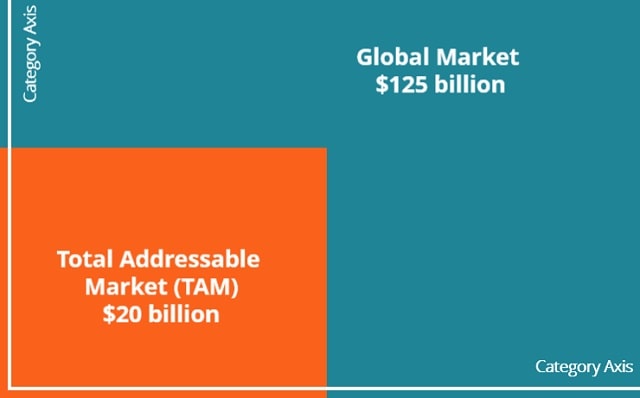
The Total Addressable Market (TAM) is important to differentiate between the global market for companies and investors alike. Silicon Valley has a strong view on TAM. To be taken seriously, your TAM needs to be $10B+, to generate real excitement, your TAM needs to be $100B+. This goes some of the way towards explaining the increased investment in digital health and real estate. Both have humongous TAMs, both real estate and digital health, depending on how your quantify them are measured in trillions. But, despite their apparent size, when you really cut them down to size, something comes to light about the overall market. 

While U.S. real estate asset prices are worth trillions, there are $100B in real estate agent commissions a year. Of those, the majority of agent relationships are created from first degree connections (friends, family, colleagues). So, of the “up for grabs” agent market, if you absolutely nailed a new real estate brokerage model, you are talking about maybe a $10B market, of which getting 20-30% would be a great feat. 

RedFin, with their discount brokerage model took 15 years to get to 1-2% market share across several U.S. cities. So despite the headline figures, maybe that vertical SaaS player with a seemingly small TAM of $6B, but clear GTM and high margins, looks more attractive. TAMs can be quite deceptive. 

But TAMs alone don’t explain why Vertical SaaS has done so well and we have yet to see a real estate tech or health care tech $10B+ winner. The incentive systems are so well baked in health care and real estate. Try seeing a cash list at your local hospital. Or, buying a home directly, without an agent. Both will put you directly into the teeth of the system. And you will see it squirm at first, then reject you and if you continue to push, it will bite you. 

These deeply ingrained incentive systems and regulatory capture create the false sense that the TAMs are really up for grabs. PCP to specialist networks look like they should be run more efficiently, but then you learn about the strong ties among members. Real estate agent and mortgage brokers too have close relationships. Laws have banned passing of referral bonuses, but that doesn’t stop dinners, sports tickets and gift giving that skirts the system. 

Spending time in real estate and more recently in fast-growing consumer fintech (Earnin), the absence of these built-in systematic biases was refreshing. It reminded me of the thrill of the blue ocean, of green field. While the challenge of creating a new category of product is immense, I’d argue, it’s far easier than the challenge of working through the systematic entrenchment in health care and real estate. 

While I am not altogether bearish, we are still waiting for the breakout in either health or real estate. In health, I’m bullish on direct primary care models and virtual care. They’ve shown real promise in reducing costs for patients. I’m bullish on risk models that are finally, at a glacial pace, changing incentives in the system. 

In real estate, the buy before your sell models are brilliant. These are definitely the highest NPS experiences in real estate. These companies abstract complexity in the way great software does. Their models are also very attractive, seller commission + buyer commission + mortgage + bridge loan. The economics add up quick. 

As the classic saying goes, as a startup can you figure out distribution before the incumbent figures out innovation. In spaces with systematic lock-up, incentive misalignment and regulatory capture - the incumbents can not innovate at all, but change the system around them to either harm your ability to distribution and advantage their ability to respond. 

As with most things, there is no black or white answer to how to approach these spaces, we live in the grey. We exist in the fuzziness and volatility of the new economic marketplace. We remain stuck inside the wall of investment information available. The best we can do is analyze, re-compute and keep our opinions ever-changing as the dynamics in these spaces come to light.

Is Selling A ULIP Policy During A Recession Smart?

ulip policy market meltdown unit-linked insurance plan

With the on-going market conditions amidst the never-ending pandemic, it can be concerning many of the investors who have contributed their hard-earned money in a financial instrument. Many people have also become anxious due to the negative market movement, making them consider surrendering their investments. One of these financial tools includes Unit-Linked Insurance Plan or ULIP plan which has an investment component. 

So as an investor what should you do during a market meltdown? Some might advise you to liquidate your investments and others might ask you to hold it. So, let’s understand the best way to avoid losing money with ULIPs during a situation like this. 

This Is Why You Should Stay Invested In ULIPs 

The fall in the market is very evident and is also reflected in the Net Asset Values (NAV) of funds. Thus, the value of your ULIP fund may also seem low giving you the impression of fewer profits in the foreseeable future. If you are a first-time investor who trusted the market’s stability, this scenario can be worrisome. But on the flip side, surrendering your policy at a time like this can lead to increased losses. This is because giving up your ULIP policy at current rates will drive you to more damage than holding your ULIP investment until the market situation settles. Hence, you should stay invested in your Unit-Linked Insurance Plan and practice different strategies to reduce losses. 

How Do ULIPs Work? 

The premium paid for the ULIP policy is divided in a specific proportion where one part gets utilized to secure a life cover and other gets invested in various debt and equity funds. The pool of money generated through many policyholders is then invested in market instruments in varying proportion to get lucrative returns. You have the choice to choose between fund types based on your risk appetite and financial goals. The three asset classes; equity, debt and hybrid funds have varying risk factors and rate of returns. 

As equity funds invest in market-linked instruments, the risk is higher due to volatility but good returns can be expected in the long- term. Whereas debt funds do not invest in market-linked instruments, the risk is lower but returns are limited suitable for short-term. Hybrid funds are a mix of both with medium risk and profit opportunities. Depending on your insurance provider, a ULIP benefit that you can enjoy is the free fund switches which allow you to shift between funds if the returns aren’t satisfying. 

Policyholders of ULIPs are also allotted units like in mutual funds where each unit has a Net Asset Value which changes regularly. This value determines the net rate of returns of ULIPs. This Net Asset Value varies depending on market conditions and the performance of the fund you chose. 

To get better returns from your ULIP investment, you can try the asset allocation strategy where you allocate the premium in a fixed proportion between debt and equity funds. If you have invested in debt funds, you can move some of your money to equity and take advantage of the lower ULIP NAVs. You can also try other ULIP strategies and try to gain the most from the lows of the market rather than surrendering the policy. 

Conclusion

Even if the on-going situation may demand you to exit the funds and get what you can before it is too late, liquidating your investments can cause major losses. The efforts you have put in to hold funds for long-term benefits will go in vain. Rather than surrendering your ULIP policy, you can wait out the storm or try to switch between asset classes to earn some gains.

Financial News Now - Economy Update

frugal finance news financial updates economy developments startup trends

The financial world has been turned upside down recently and things are changing daily. It's hard to stay on top of the latest economic developments and investing trends. Here are the Frugal Finance news stories you need to know now:

Treasury Secretary Janet Yellen has put lawmakers on notice: the U.S. is running out of money fast. That’s right, the money printer might turn off temporarily due to out of control spending in the last two decades (not just from Trump or Biden). Unless, of course, Congress raises the debt ceiling. Yellen has said that if Congress fails to raise or abolish the debt ceiling by mid-October, the U.S. will default on its debt for the first time in history. Yellen also indicated that such this potential event would be a catastrophe for the American economy. A default could have unprecedented consequences for the U.S. Domestically, it could cause the suspension of “Social Security benefits, child tax credits, and paycheck for the military.” Internationally, it could jeopardize the U.S. dollar currency and credit status, which recently was downgraded globally for the first time in history. 

Conservatives insist that they will oppose raising the debt ceiling or suspending it. To make matters worse, a default could coincide with a government shutdown if Congress fails to act quickly. Interest rates rose, sending stocks plummeting yesterday in response to some of the fears. The past several weeks have been stressful on Capitol Hill, as the Democrats have pushed to pass short-term funding and raise the debt ceiling whilst advancing President Joe Biden’s aggressive $3.5 trillion social infrastructure plan. Political opponents recently averted disaster by passing legislation to prevent a temporary government shutdown, with a few hours left to spare on the deadline! But that doesn't mean another potential government shutdown isn't on the horizon, especially with the partisan split bigger than ever before.

Last Tuesday was red Tuesday in the markets. The Nasdaq and Russell 2000 both gave up more than 2%. The S&P 500 sank 2.04% and the Dow dropped 1.63%. All but one sector closed deep in the red. Energy was the lone duckling to register a gain. $XLE gained 0.34%, but $XLK dipped 2.9% and $XLC collapsed 2.44%. The 10-year yield reached its highest level since June, extending the sell-off in tech. To make matters worse, Treasury Secretary Janet Yellen warned that the U.S. government will run out of cash unless Congress raises the debt ceiling. United Natural Foods had a day – shares spiked 27% to 3-year highs after exceeding earnings expectations. Here’s the full report. $LCID recovered its intraday losses in after hours, spiking 6.6% on the news that its first production car began production today. Deliveries will begin next month. The FAANG gang got hit hard – $FB fumbled 3.7%, $AAPL fell 2.4%, $AMZN descended 2.6%, $NFLX shrank 1.5%, and $GOOG gave up 3.8%. $GOGO went 37.6%, $DATS drove 26.7% higher, and $CEI climbed 18.4%.

Global investors grapple with sustainable investing, a labor shortage, and the insistence of employees to work remotely. This summer, we surveyed hundreds of LPs, GPs and service providers about their sustainable investment practices, gathering insights on an increasingly important topic to many in the private markets. We are breaking down the data by respondent type and region to determine what is driving investment decisions. This year's writeup includes a new section that separates VCs' responses from the broader category of general partners. Report topics include: What motivates sustainability efforts for LPs, GPs and others. How investors measure their strategies' impact. The biggest challenges when it comes to pursuing sustainable investing. The effects of the world's current social and political landscape.

VCs bet on the technologically unproven field of quantum computing. IonQ, a quantum computing company, is set to close a reverse merger with a blank-check company and begin trading on the NYSE today at a market capitalization of about $2 billion. Tech giants including Google and IBM, as well as startups like IonQ, Rigetti Computing, and PsiQuantum, are all competing to make the most powerful and reliable quantum machine. While a fully functional quantum machine is still a long way off, venture capitalist interest in the nascent technology is at an all-time high. Investors are betting that some real-life applications will emerge within the next five years, but most quantum computer hardware companies will still need significant capital infusions.

Planning to pursue infrastructure work long term? Private equity investors committed to growing their portfolio companies' government work may benefit from splitting their commercial and federal divisions. With the possibility of new federal infrastructure contracts ahead, now may be the right time to learn the advantages and best practices. Many good reasons exist to consider a split, including the different buyers, client journeys, communications and buying processes, decision-making, audit scrutiny, reporting requirements, and cost structures, to name several. Further, building separate commercial and federal divisions will create broader and deeper resources in both camps, which can be a go-to-market differentiator.

Shares in VC-backed biotech startup Oxford Nanopore jumped as much as 47% in its first day of trading on the London Stock Exchange, following an IPO that valued the company at £3.4 billion (about $4.6 billion). Oxford Nanopore specializes in DNA and RNA sequencing. It made a name for itself during the pandemic, developing COVID-19 testing kits. Its investors include IP Group, Tencent and Temasek. The company, which was valued at £2.2 billion with its last private funding round, is the eighth VC-backed UK startup in the biotech and pharma space to go public this year and the largest by market cap, according to new data. Oxford Nanopore sold 122.4 million new and existing shares at 425 pence apiece, raising £524 million in the offering. IP Group said the IPO generated £84 million for the investor, which will retain a 10.3% stake in the company.

America’s leading producer of memory chips handed investors a small surprise in earnings today. However, the surprise coincided with a forecast that booming demand wouldn’t continue into the next quarter. Micron Technologies reported EPS of $2.42 (analysts expected $2.34). The company also booked revenue of $8.27 billion, a small beat (analysts expected $8.21 billion.)  Revenue was up 36.5% YoY. Those figures should inspire confidence among investors. Unfortunately, there was one big hazard that dampened the otherwise solid quarter. The company’s guidance for the coming quarter suggested that Micron’s best days are behind it (at least, for the next few quarters.) The company expects revenue to be $7.65 billion next quarter, which is a far cry from the $8.49 billion that analysts expected. The company’s EPS guidance was also lower. Micron anticipates non-GAAP EPS of $2.10 next quarter (analysts expected $2.48.) The company’s Q4 2021 earnings coincided with the release of full-year earnings, which can be read here. All-in-all, Micron’s FY 2021 revenue was $27.71 billion, with this quarter being its best by a sizable margin. $MU stock fell over 6% on the news. Other chipmakers fell in sympathy with Micron, including $WDC, $AMD, and $STX.

Pfizer, Moderna, and J&J have become the undisputed winners of the COVID-19 vaccine race. That’s why pharma giant Sanofi is dumping its COVID-19 vaccine candidate to refocus its efforts. Sanofi’s mRNA COVID vaccine flexed a strong performance in its study. According to Fierce Biotech, “between 91% and 100% of participants had a fourfold or greater increase in neutralizing antibody levels over baseline.” In other words, it was pretty effective. However, it might not be as effective at competing with existing vaccine candidates by the time it’s ready for market (late 2022.) Because Sanofi’s vaccine would be extremely late to market, the pharma company is instead focusing on COVID boosters and moving on to greener pastures in the vaccine space. The company says that the next stop for its mRNA platform is a quadrivalent flu vaccine. Sanofi is already one of the leaders in the flu vaccine space, so this move makes a lot of sense. According to a press release issued today, the company plans to initiate clinical studies for its flu vaccine in 2022. Sanofi’s high hopes for mRNA kicked off in August with its acquisition of Translate Bio. The company paid $3.2 billion with the intention of building mRNA vaccines to address “current and future infectious diseases.”

Amazon announced its latest slate of new products this morning, and guess what? THERE’S A ROBOT. Amazon closed up its fall product release today with some fancy gadgets to kick off the 2021 holiday season. Among the gadgets announced include a smart thermostat, the Echo Show 15, a new partnership with Disney, Amazon Glow, a fitness tracker, the Ring security drone, and Astro: Amazon’s new home robot. Astro the Robot moves independently, has eyes and a body, and features Alex’s voice assistant capabilities to control smart home devices — it even acts as a guard dog (or should we say, a guard bot?). Amazon’s robot costs $999.99, but its official release date is TBD.

A suits versus retail traders saga continues as Citadel and Robinhood executives vehemently deny Citadel’s role in pressuring Robinhood (and other brokers) to halt stock trading during January’s MemeStock Madness. A number of ongoing class action lawsuits are starting to surface additional details about January’s stonk madness with Gamestop and AMC. Robinhood responded, saying that the ongoing suits convey “a false narrative of collusion” between Robinhood and Citadel. Citadel’s Ken Griffin unleashed a slew of Tweets on Monday denying the firm’s role in requesting Robinhood to halt trading. The lawsuit’s plaintiffs allege that Citadel’s tremendous short position on $GME shares prompted the firm to pressure Robinhood to halt MemeStock trading for retail investors. Although top officials at Robinhood.com and Citadel had “numerous communications with each other that indicate that Citadel applied pressure on Robinhood,” Robinhood emphasizes “We will work vigorously to continue correcting the record with the facts.” In an internal discussion at Robinhood on January 27, Robinhood’s brokerage arm president said “you wouldn't believe the convo we had with Citadel. total mess”. Meanwhile, Citadel claims “Conspiracy theorists and plaintiffs’ lawyers are trying to concoct an absurd story from regular-way communications among Citadel Securities and the brokers who handle orders for retail investors.” So who actually has their story straight?

Bitfinex, one of the crypto world’s biggest (and most controversial) crypto exchanges, is once again in the news it is truly something alright. The exchange reportedly paid $23.7 million in transaction fees to deposit $100,000 on the blockchain. Oops. The British Virgin Islands-based exchange deposited $100,000 in Tether ($USDT.X), the stablecoin pegged to the dollar, to the decentralized exchange DeversiFi yesterday. Due to some error, the network charged the transaction a whopping $23.7 million as a gas fee. While DeversiFi called it “erroneously high” in a tweet, others took digs. The issue is pretty big since blockchain transactions are supposedly irreversible. To make things even more suspicious and weird, Tether and Bitfinex share common owners and executives. DeversiFi and Bitfinex are also closely linked. This is not the first time that Bitfinex is in the news for odd behavior. Earlier this year, customers lost nearly 119,756 BTC (more than $60 million) from the cryptocurrency exchange.

The S&P 500 and Dow Jones both bounced from yesterday’s dip. Where do we go from here? That’s anyone’s guess. The Nasdaq fell 0.24% to its lowest price since July and the Russell 2000 dipped 0.20%. Utilities bounced the hardest, increasing 0.91%. Consumer staples and healthcare also improved. $BNB.X was the only major large-cap coin in the green today, up 7%. Bitcoin and Ethereum traded marginally lower. Warby Parker went public today by way of the New York Stock Exchange. $WRBY opened at $54.05 and closed at $54.49, giving the eyewear company a valuation of over $6 billion. More on this below. Natural gas futures reversed 7.16%, falling from seven-year highs set yesterday. The U.S. is on thin ice — as the United States runs out of money, Treasury Secretary Janet Yellen warns of potentially “catastrophic” consequences for the U.S. economy. Read the full story below. $RGC ripped 33.8%, $PALT popped 60.1%, and $OMG.X gained 15%.

How The Grinch Stole Supply Before Christmas How The Grinch Stole Supply Before Christmas. Good evening, everyone. Another Thursday has passed us by! It’s only one more day till the weekend!! Every major index ended the day red. The Dow dove 1.6% and the S&P 500 slipped 1.2%. Not a single sector registered a gain. Industrials got whooped the worst, falling 2.05%. That’s one way to end the worst month for stocks since March! Bitcoin and Ethereum were the only ones to catch a bid. $BTC.X bopped 4.20% and $ETH.X increased 4%. Cotton futures closed at ten-year highs, sugar futures soared to four-year highs, and natural gas retook seven-year highs. Initial unemployment claims for the previous week totaled 362,000. According to Dow Jones, economists expected a total of 335,000. That sucks. The Delta variant, as well as raw material shortages, have likely slowed growth in the third quarter. The third quarter’s GDP is expected to grow at a rate of less than 5%. Oh, and a worldwide manufacturing slump has companies scrambling before the holidays. More on this below. $QTUM.X climbed 12.2%, $PALT ripped 26%, and $OPRX hopped 14%.

A Supply-Strapped Holiday Season? A Supply-Strapped Holiday Season? About a month ago, COVID lockdowns throughout Vietnam (a mega manufacturing hub for major US brands) posed serious issues for companies adapting to post-COVID demand. Now, they’re getting worse. In August, Abercrombie & Fitch CEO Scott Lipesky said “We are working through an extended closure of factories in Southern Vietnam.” Urban Outfitters CEO Richard Hayne shared the sentiment, saying that “We have a lot of product there, and we’re trying to get it in” regarding huge swaths of supply stuck in Vietnam mid-lockdown. As it turns out, August was an omen of bad things to come. After Trump’s anti-China tariffs, companies sought factories in other locations. Vietnam was one of them. Some companies like Gap, Lululemon, and Nike manufacture anywhere between 31-50% of their products in Vietnam now. But with the supply chain in flux, U.S. businesses are rethinking their manufacturing presence in the country. Nike lost out on 100 million pairs of shoes due to Delta variant-related lockdowns in Vietnam. Lululemon has started shipping goods on airplanes to keep up with demand. And Bed Bath and Beyond’s own pre-holiday earnings served as a warning for the rest of U.S. retail: expect supply-chain issues this holiday season. Despite increased demand, $BBBY sales plunged 26% through August and the company lowered its full-year revenue projections due to wildly expensive inventory shipping costs. $BBBY and $NKE aren’t the only losers, either. Retail stores fell in sympathy with the Vietnam-related concerns, including $KSS (-11%), $M (-8%), $JWN (-8%), $ANF (-7%), $GPS (-7%), $DBI (-6%), $AEO (-5%), and $TJX (-5%). So did the Grinch steal supply?

There are many multimillion-dollar paintings collected by Bezos, Andreesen, and Leonardo DiCaprio. In fact, the finance bros at Deloitte projects the real art world (not NFT junk) to grow in value by 58% through 2026. That’s a whole lotta fun coupons! Why the rare “Double Down Alert” on art: J Pow aint printing Picassos, so art can cover your ASSets Contemporary Art returns 23.2% when inflation’s > 3%. Literally 0.01 correlation to stonks. Early investors returned 32% in 2020 with a Banksy exit using this art investing platform (splash). So what the heck are you waiting for?

Lordstown Is Selling (Not What You Think) Lordstown Is Selling (Not What You Think) Featured Image EV company Lordstown Motors is reportedly looking to sell its Ohio plant to Foxconn, the company that makes iPhones. The reported acquisition comes at a time when Lordstown is scaling up production of its electric pickup truck, Endurance. The company is also strapped for cash and looking to tap additional funding. However, a sale of its 6.2 million square foot plant would make a lot of sense. Lordstown uses just 30% of the plant, according to Reuters. Foxconn’s sudden jump into EVs is no surprise. Foxconn announced in May that it would build EVs for Fisker, an electric vehicle company. The Taiwan-based company has been looking for a place to call home for its EV ambitions in the U.S. Foxconn crashed out of a heavily-politicized tech manufacturing deal with the state of Wisconsin, which involved a $10 billion factory, earlier this year. Now, it might pick up steam in neighboring Ohio. Lordstown has been embroiled in controversy for months. In March, the company was accused of misrepresenting the number of preorders booked for its electric pickup truck. Hindenburg Research, which had previously gone after Nikola Motor, indicated that “the company’s orders appear largely fictitious.” That prompted an investigation into the Lordstown, which resulted in its CEO and CFO resigning. Lordstown is 10%-owned by Workhorse, the company that failed to secure a contract from the United States Postal Service for new delivery vehicles. In February, USPS awarded the contract to a defense contractor that makes military gear, concrete mixers, and firetrucks. Notably, it has never built a production EV before, just small runs of EVs. $RIDE ripped 8.4% today.

Lucid Preps for Delivery Speaking of EVs… Lucid is rolling vehicles off its assembly line with ambitions to begin deliveries next month. The company’s first vehicle, a luxury EV sedan called Lucid Air, starts at $77,400 (before tax credits.) We featured Lucid in the Rip last month after the company’s Lucid Air Dream Edition R, an ultra-limited-edition run of the vehicle, received an EPA-certified 520-mile range on a single charge. That made Lucid’s first vehicle the first electric car to breach 500 miles, pretty impressive! The Lucid Air has four editions, which have ranges varying from 406 miles to 520 miles. The company has booked over 11,000 reservations, which might not sound that impressive, especially when you consider that Ford has already received 120,000 preorders for its F-150 Lightning. But Tesla had just 12,000 reservations for its high-end sedan, the Model S, in 2012. Lucid is no Tesla (at least, not yet), although the company’s got a solid foundation for its first vehicle. But who knows where Lucid is headed from here. The company is valued at $41 billion as of this writing and went public via the Churchill Capital IV SPAC earlier this year. $LCID stock closed down 3.4% today.

TikTok is the latest to jump into the NFT rush. Today, the video-sharing social networking site launched a non-fungible token (NFT) collection that will see its top content creators partner with top NFT creators. TikTok fans will be able to buy their favorite ‘moments,’ and the platform has even created its own digital auction for the sale. According to the announcement, TikTok Top Moments will feature six “culturally significant TikTok videos.” Lil Nas X, an American rapper, will be the first creator to launch one-of-one/limited-edition TikTok NFTs with artist Rudy Willingham. TikTok will sell their NFTs on Oct. 6. The videos will also be presented at the Museum of the Moving Image in New York from Oct. 1 through Nov.5 in a collection entitled ‘Infinite Duets: Co-Creating on TikTok.’ TikTok’s NFTs will be minted on Immutable X, a layer-2 scaling solution that runs on the Ethereum blockchain, but this isn’t the first time TikTok has entered the crypto space. Last month, the company partnered with the cryptocurrency music service Audius.

Philip Morris International and Altria, two tobacco giants, have been made to stop the sale of their heated tobacco device, IQOS. The company’s IQOS tobacco device supposedly violated a patent owned by R.J. Reynolds, a rival in the tobacco space. IQOS is a heated tobacco product, which was marketed as a “safer” alternative to smoking cigarettes. The U.S. Food and Drug Administration said in its 2020 marketing authorization press release that using IQOS [reduced] “exposure to harmful chemicals,” but were still “not safe.” IQOS, which was sold by Philip Morris and licensed for sale by Altria in the US was an effort by the two tobacco giants to shift away from traditional tobacco products. IQOS didn’t make up a significant sum of their sales. However, IQOS was an attempt at reinvention for Big Tobacco, which has been in need of change. Unfortunately, change hasn’t come easy. Take Altria’s 2018 investment in Juul, which gave it a 35% stake in the leading e-cigarette company. Juul’s edge in the market was its flavored products, which were banned not that long after the acquisition due to accusations that it was targeting minors. Although, the company’s sales supposedly recovered after the ban. Altria ($MO) fell 6.6% and Philip Morris ($PM) fell 4.7% after the news broke and big tobacco takes another financial gut punch.

Warby Parker’s IPO via direct listing was a win for the eyewear company as its share price skyrocketed 36% above its reference price in $WRBY’s trading debut. $WRBY closed the day at $54.53 per share, +36% above its $40 reference price. By market close, Warby Parker’s valuation shot to about $6.8 billion — over twice the company’s $3 billion valuation from its last funding round. Warby Parker was founded over a decade ago as one of the first hallmark brands to provide one-stop eye check-up and eye-wear sales at most of its brick-and-mortar locations. The company is also one of the first direct-to-consumer prescription eyewear brands offering both online and in-person services. Not too shabby. We SEE you, $WRBY.

Gaming Technologies, Inc. (OTCQB: GMGT), a global leader in end-to-end gaming solutions, has added celebrity chef Gordon Ramsey to its rock-star lineup of brand ambassadors. Its current roster of premier partnerships includes Playboy and boxing champion Saul ‘Cannelo’ Alvarez.

Binance Coin ($BNB.X), the fifth-largest cryptocurrency by market cap, soared nearly 10% today. The move came on the heels of Binance Coin’s quarterly burn event. Every quarter, Binance buys back a large amount of $BNB.X to burn (coin burning permanently removes coins from the network.) With a reduced supply, tokens that remain in circulation theoretically become more valuable due to scarcity. In turn, that pushes prices up. Because the burn is tomorrow,  investors bought $BNB.X today in anticipation. Binance burned $390 million worth of $BNB.X in Q2 2021. Binance Coin was initially developed as a utility token that provided Binance users a discount on trading fees. Since it was launched in 2017, Binance Coin has become the native token of the Binance Chain and Binance Smart Chain. The latter has become one of the most active DeFi blockchains in the world.  Due to its many use cases, experts believe Binance Coin is worth keeping in the portfolio.

Dollar Tree is soon to be a Dollar Fifty Tree. This story hits close to home as the home of frugality and saving money. The discount dollar store retailer that previously only sold products for $1 or less just announced that it would be raising prices. The announcement coincided with an increase to the company’s share buyback program. The retailer (which historically sold items for a dollar or less) said that it would start selling certain items for “$1.25 to $1.50” to help pay for higher freight and wage costs. Dollar Tree’s price hike comes amidst a flurry of problems afflicting retail chains: inflation, supply chain woes, and a shortage of employees. Dollar Tree is also leaning into selling higher-priced $3-5 items, which are part of the Dollar Tree Plus collection. Dollar Tree Plus products are already in 340 stores and will be in over 1,500 by the end of 2022. On the news of the buybacks and price hike today, $DLTR rose 16.5%. Maybe money does grow on trees. Dollar tree shareholders are pumped but Dollar Tree customers not so much.

Dealmaking activity has rebounded in the France and Benelux region this year. From exits to fundraising, our latest report breaks it all down. Sweden's financial watchdog is looking into whether EQT violated disclosure regulations in a $2.7 billion share sale. The France and Benelux region has seen a huge rebound this year, as private capital activity is on track to surpass previous annual bests. In only two quarters, PE dealmaking virtually reached pre-pandemic levels, while records have been broken in the region on the VC side. Let's examines the PE and VC markets in France, Belgium, the Netherlands and Luxembourg, breaking down trends across deals, exits, fundraising and sectors. Key highlights include: Activity in Europe's second-largest PE ecosystem reached €87.6 billion in the first half of the year, marking a year-over-year increase of 55.2%. Swelling VC deal sizes put the region on the path to new heights. Fundraising activity had a robust start to the year for both PE and VC investors.

Sweden's financial watchdog is investigating whether one of Europe's largest PE firms violated regulations concerning the disclosure of insider information. EQT is facing a probe into whether it failed to publicize in a timely manner that former and existing partners were selling shares in the firm totaling $2.7 billion. The public offering allowed senior executives to exit some of their stock earlier than planned under a lock-up agreement that was supposed to last until late 2022. Financial regulator Finansinspektionen said that it decided to open an investigation over the "postponed publication of inside information" after being notified of the move by EQT on the same day as the share sale. After being contacted to justify the delay, EQT said in a statement that the firm "has handled the information correctly" and "looks forward to a continued positive and constructive dialogue with the Authority." Partners including chairperson Conni Jonsson and CEO Christian Sinding sold approximately 6% of the firm's issued share capital for 370 Swedish kronor (about $42.75) apiece. The partners said in a press release that they would commit to reinvesting 50% of the proceeds into EQT vehicles over the next fund cycle.

What's driving record capital in genetic medicine? Genetic medicine has attracted record-breaking capital in biotech, with roughly $150 billion invested since 2013. Gene editing enables scientists to precisely tackle the genetic root causes of diseases. Such an approach can be "one and done" and thus avoid the chronicity of the current standard of care. Rapid advancements in this field are creating a robust product pipeline and attracting record capital. But despite all the enthusiasm, companies should tread cautiously with this technology.

Investors are consistently allocating larger amounts of capital to startups that go on to exit successfully—a trend especially distinct with later-stage financing. Our recent analyst note is the third in our series breaking down venture returns by round. In this new installment, we've refined our approach to enable richer analysis of the flow of capital. The data suggests a clear relationship between capital raised and the success or failure of a company. The earliest stages, especially Series A, show asymmetrically high returns compared with later-stage deals. The attractive VC fund returns of the past few years have accelerated the increase in capital allocated to venture investing.

Swedish electric vehicle maker Polestar has agreed to go public through a merger with US blank-check company Gores Guggenheim. The combined company, which will be listed on Nasdaq, will have a valuation of around $20 billion. The deal includes approximately $800 million of cash from the SPAC, which is backed by PE investor Alec Gores and Guggenheim Capital, and a $250 million PIPE investment which will be used to invest in the production of new models and its international expansion. Polestar was set up 4 years ago by automotive giants Volvo Cars and Zhejiang Geely. In April, it raised $550 million from investors including Chongqing Chengxing Equity Investment Fund Partnership, I Cube Capital and Zibo City Government. Polestar is not the only European electric vehicle-related company that has sought to go public via a US SPAC. In June, Barcelona-based EV charger maker Wallbox announced plans to merge with Kensington Capital Acquisition Corp., valuing it at around $1.5 billion including debt. Earlier this year, Quell Acquisition Corp. agreed to combine with German electric aircraft maker Lilium at a $3.3 billion valuation.

Towns from Maine to Washington are still seeing fallout from ongoing closures of the US-Canada border. As China doubles down on banning crypto transactions, NFT marketplaces are using clever workarounds. Never before in history have so many people been under the gaze of so many strangers. One writer muses about what the internet has become, and what happens when the experience of celebrity becomes universal. How to prepare for the future of healthcare investing Are you prepared for the unique challenges facing private equity investors in the current healthcare landscape? At this year's HPE New York 2021 conference, an elite faculty of PE leaders will explore the most pressing challenges facing buyers and sellers.

Momenta, a Chinese startup developing autonomous driving technologies, has received a $300 million investment from General Motors. The company's other backers include Toyota, Dailmer, Tencent and Temasek. Emerge has emerged and raised a $130 million Series B co-led by 9Yards Capital, Spruce House Investment Management and Tiger Global. The Arizona-based company offers a logistics management platform for freight operations. Sternum has raised a $27 million Series B led by Spark Capital. The Tel Aviv-based company offers a platform to secure Internet of Things devices. Intelinair has raised $20 million from investors including Regulator Group and Scientia Ventures. The company offers a crop intelligence platform to help growers make data-based decisions. Intelinair was valued at $41.25 million in 2018, according to recent data. Windpoint Partners-backed Nelson Global Products has acquired Tru-Flex, a designer and manufacturer of hoses and exhaust products for vehicles and industrial use. Daiwa PI Partners has acquired Y International, a Tokyo-based ecommerce retailer of bikes, accessories, maintenance services and more. Daiwa PI bought the business from private equity firm The Riverside Company.

Our analysts will explore the records set throughout the first half of the year, despite lingering uncertainty around COVID-19 and macroeconomic volatility. Key statistics include: VCs completed €47.1 billion worth of transactions in H1 2021, signaling that the VC dealmaking environment has never been stronger. European PE posted its second-highest quarterly dealmaking total on record, thanks—in part—to growing vaccination rates and strong debt markets for leveraged buyouts.

The Augmedix (OTCQX: AUGX) platform, powered by artificial intelligence technology and expert human assistants, converts natural clinician-patient conversation into medical documentation. They provide live support, including referrals, orders, and reminders, so clinicians can focus on what matters most: patient care.

The Evergrande crisis, stagnant prices, investors cashing out are all signs of a real estate downturn and exposing the Chinese economy's dependence on property. This huge hit has impacted all markets, economies, investors, and even local businesses

There are new financial news stories and tech articles coming out every hour, so stay tuned to Frugal Finance for more breaking developments!

New Frugal Finance Blog Posts & Articles