Showing posts with label Tech. Show all posts

How Blockchain Technology Boosts Manufacturing Production

blockchain technology boost manufacturing production machine learning

Blockchain Basics

New blockchain technology has had a huge impact on the manufacturing industry worldwide. In the current days, the world highly gains attention towards terms like cryptocurrency, bitcoin, Ethereum token and blockchain technology. The reason is nothing that most of the peoples are getting more benefits from those technologies, especially blockchain. When it comes to blockchain technology, it has evolved a lot in the market and has brought more benefits. In this article, we will cover blockchain technology, its evolution and how blockchain technology helps in the manufacturing industry. Lets we start a discussion with blockchain tech and how it has an impact on different industries such as manufacturing and finance. 

What is Blockchain Technology? 

Initially, Blockchain was just one of the technology that primarily supported all cryptocurrencies such as bitcoin but the experts can see that it have a large scope in the future then just meets the needs of bitcoin. On further analysis, we found that it can bring enormous changes in the internet networks itself. Consistently, technology has evolved more and a type of blockchain has grown a lot. So, from today, blockchain is widely being used as a distributed ledger technology. This technology has created a chain of blockchain where each of the blocks contains information as well as the data stored together and verified. These blocks are further validated and attached to the string of transactions and information in the previous blocks. In simple terms, let's compare it with google docs. As you know, multiple users can simultaneously use and can edit a single document on google docs. Likewise, even with blockchain technology, you have a distributed ledger. 

There is a difference here, unlike in google doc, you can't change the previous data. You can only add to the ledger. Some of the features of blockchain technology are blockchain keeps all data records which is referred to as a "ledger". All the data which is exchanged is a "transaction". Once the transaction is verified, it is added to the ledger as a "block". To verify the transactions, blockchain uses a distributed system called a Peer-to-peer network (p2p network). 

Once the transaction gets completed, the data is verified and added to the blockchain, it can't be changed anymore. After that, demand for blockchain has gradually increased a lot and also being noticed in other industries. 

Industries Benefiting From Blockchain Technology

In short, blockchain can create revolution almost in all the industry. But, the most likely ones that can have large benefits from it includes: 

- Healthcare 
- Banking and financial services 
- Real estate 
- Security 
- Manufacturing Industry 

Out of the above-mentioned industries, the manufacturing industry has become more inclined towards blockchain technology. Let us get into deeper that how blockchain technology can have an impact on the manufacturing industry. 

The Role Of Blockchain In The Manufacturing Industry

When we talk about modern ways of manufacturing industry, the supply chain can work across many organizations, as well as many countries. This can make the system more difficult in the way of finding solutions for increasing efficiency and chasing individual events. Most of the time, the company information in the manufacturing industry flows through the supply chains. They have a uniform way of storing and exchanging data. 

When it comes to blockchain, it can make smarter as well as secured supply chain whereas you can track the journey of your products within the real-time visibility. For example, if you are looking for material delivery, you can track the materials which you have ordered on the website and when it will arrive, who receive them and when they transport the material to the next stage and so on. Everything is recorded as blocks in the blockchain. So, you have seen minimal details of the supply chain process and there is no chance of any kind of manipulations.

There are many benefits that the manufacturing industry can get while using the blockchain technology. If you are the one among them who do experimentation with the blockchain, you must don't miss the opportunity to read the below mentioned five benefits are currently works in the real scenario. 

1. Amplified Inventory Management 

Blockchain technology offers a holistic and permanent data of every single transaction details that takes place in your supply chain process. Moreover, it opens you to connect to each party in the value chain - be it suppliers, production sites and distribution centers. The records which are store are easily accessible by those who are connected to the network. As everyone in the networks has a copy of the information, so there is no confusion happen in the supply chains process. This, in turn, become the intensify inventory management. 

2. Upgraded Data Security 

Information like Invoices and contract details that are exchange in any supply chains process is highly confidential. Sharing details by the way of traditional methods can be a risk and it can be easily hacked by anyone. Instead of using traditional methods, blockchain keeps the information more secure with the best cryptography techniques. So, if you are looking to build blockchain networks for your manufacturing industry then either choose a freelance blockchain developer or a defi development company for solutions in supply chain management to avoid cybercrime.

3. Better Traceability & Transparency 

Blockchain Technology in the supply chain can provide the data of all information related to your transaction. For instance, how the products are made, from where they start shipping and how will manage data and much more. However, if the data is permanent and it can be easily shared with your supply-chain network, it provides you a detailed tracing and tracking abilities.

4. Automatic Payment Process To Suppliers 

Blockchain technology has s facility to transfer of the fund to any part of the world. You don't stick it to the traditional banking methods. Money transfers can be made directly between the payers and payee. The whole payment system through blockchain is secured. It can be done quickly. You don't want to wait for a day or even for an hour. Once all the digital secure transactions data becomes a part of blockchain agreements and if your networks agree with the terms and conditions, then the smart contract can begin the commercial process automatically. 

5. Improve Customer Engagement 

Blockchain is stronger than normal storage technology. Because you can analyze the data to create forecasts and predictions, which can further help you to solve the flaws in your supply chain management. Not only this, but your analytic tools can help to boost your customer satisfaction. You can use the blockchain database to find ways for developing your delivery timeline. Moreover, the customers can also have the ability to access the blockchain data to a certain extent. For Instance, one of the clothing brand provides customer access while showing them an approval form or a labor union sheet. Sharing data will create transparency, which ultimately results in loyalty and also creates ever long-lasting customer relationships. 

Blockchain Technology Is A Game Changer For Your Manufacturing Business 

A lot of new technologies are enhancing the way of manufacturing industries used to work with their supply chain management and blockchain technology is one among them. As blockchain technology continues to grow, the supply chain industry is sure to look up the true forms of transparency, accountability, and efficiency. In summary, the manufacturing industries will adopt the blockchain technology.

Latest innovations in technology have raised productivity in the manufacturing sector, but they also have made significant issues in hiring.  There are a number of employees who lack the technical skills required to manage increasingly advanced manufacturing setups. Luckily, a learning management system (LMS) can solve this issue, providing extensive training as companies make the switch to more innovative technological solutions. If you want to optimize learning in manufacturing, look for the following learning management system features: 

Ease in using technology Or else, excellent employees may find difficulty in adoption of new technologies, and the lastly they need to choose a learning management system that is more complicated than the technology they are already struggling to master. The best manufacturing learning management system for manufacturing will be perceptive in nature, simplifying the learning curve so that employees can focus on the actual content of the courses, in contrary to the layout or navigation of the LMS. Easy enrollment and flexible scheduling Ease of use in a learning management system should not be restricted to navigation of application. 

Users must also enjoy easy accessibility to courses, along with flexible scheduling. Employees working in the manufacturing sector often do their job at odd hours and may struggle to receive additional training into their already crammed schedules. A manufacturing learning management system with flexible scheduling opportunities will make it easier for busy employees to stay updated with training and certification requirements. Reduce errors and improve compliance As a result of using a high-quality LMS for manufacturing, more qualified workforce is achieved. These proficient employees will work in a more efficient way, while making less production errors. Meanwhile, compliance with the local, state and federal regulations will increase as an outcome of improved health and safety training. 

Whether it’s the EPA, the FDA, or other government compliance program, an LMS can increase compliance and decrease the potential for audits. Competency Management Employees and supervisors should not face any accessibility issue during competency tracking. This allows supervisors to know whether employees have acquired the skills necessary for the job at hand, while also presenting employees just how far they’ve come and how far they have to go. There is also a motivational factor involved, as employees take pride in completing the LMS training and express an enthusiasm for continued training and certification. 

Blockchain Technology For Manufacturing Mastery

Now that you know the benefits of using LMS for the manufacturing companies – you’re probably excited to put its best features to immediate use. So just go ahead and choose the best LMS for improving your company’s efficiency, quality and safety to enjoy a host of other incredible benefits.

How Much Do Managed IT Services Cost for Businesses?

how much do managed it services cost business information technology management

On average, SMBs spend between $10,000 and $49,000 every year on technology. Out of these SMBs, 22% feel like they're spending too much.

Are you part of this demographic? Then you may want to look into managed IT services, as this can help cut down on costs.

In this article, we'll give you a short guide to managed services pricing so you can figure out if it's right for you.


Factors That Affect IT Services Cost

As you may have guessed, there's no single price for managed IT services. The exact amount you'll have to pay depends on several factors. Let's explore these IT costs below.


Your Information Technology Needs

Managed IT services entail quite a few things. They can include:


  • Antivirus updates
  • Managed firewalls
  • IT helpdesk
  • File security
  • Data backup and disaster recovery
  • Employee training

By outsourcing your IT services, you can pick and choose the services you need. Obviously, if you only need IT helpdesk services, then you'll pay a lot less than a client that chooses more services from the above list.

For example, if you're planning on having some sort of small in-house IT team, then you won't need as many outsourced managed IT services; this keeps the costs low. But on the other hand, if you choose to fully outsource, then you'll need to allocate more of your budget to this area.


Your Company's Technology Infrastructure

If your business isn't very tech-heavy and your employees use their computers and phones for very basic purposes, then the managed IT provider won't have to work as hard, meaning the pricing shouldn't be as high.

But if your tech infrastructure requires lots of interconnectivity between laptops, desktops, smartphones, tablets, and more, then this will take more time and effort for the managed IT provider. This may result in higher prices.


The Pricing Model You Choose

There are several pricing models a managed IT provider may have. They can either be a flat fee you pay on a monthly, quarterly, or yearly basis. Or they can be a per-user or per-device pricing model.

If you feel like your IT needs will fluctuate constantly, then either per-user or per-device may be best for you. For instance, if you're just starting out, then your business may grow significantly in the near future, meaning you'll acquire more employees and devices.

Otherwise, flat-based fees will probably offer the most cost-savings in the long run. This is best for companies that are more well-established and won't see exponential growth anytime soon.

If the provider offers all 3 options, then you can even switch from each type, depending on how your business is doing. This allows you to accommodate your budget better.


Consider Managed IT Services for Your Business

Now you know the costs that come with managed IT services, depending on what your company's needs are. As you can see, prices are very straightforward, so you know what to expect whenever you are billed.

For the above reason, it is an excellent idea to outsource your IT. So research some managed IT companies like IT solutions and start saving some money!

Did you enjoy this article on managed IT services pricing? Then please check out our other blog posts on all things information technology. Visit the Tech section of the Bootstrap Business Blog right now!

How To Buy IPv4 Addresses For Additional IP Space

how to buy IPv4 addresses additional IP space

An increasing number of IT businesses are in urgent need of IPv4 address space to either bridge the gap to IPv6 integration or current network limitations. As a consequence of the depletion of IPv4 addresses, there is now a market for available IPv4 address space that facilitates buyers and sellers alike. 

However, the process of obtaining the necessary IPv4 addresses is rather complex, requires patience and becomes a whole lot easier when you have sufficient knowledge of the rules and regulations opted by the RIR. Yet it is not impossible! On the contrary – to buy additional IP addresses is merely a matter of knowing how to approach the objective. 

Here is your guide on how to do purchase more IP addresses in 4 simple steps! 

1. Determine Your Need 

Before entering the market, determine your needs. Is it a limited number of IPv4 addresses you need? Or are you searching for a substantial IPv4 block? Determining your needs will help you navigate the market easier as you know what to search for. 

Moreover, it will help you determine the budget you need in order to obtain the required IP address space. These factors play into how your first steps in the market will go. Good preparation is key with IP addresses! 

2. Contact A Licensed Broker 

Now that you know what you need, it is time to contact a broker to help you navigate the IP market. They will draw from their extensive network of sellers to find a party with the right offer for you. Moreover, a licensed broker is able to execute a background check on your required prefix, where it is located and eliminate any risks of blacklisted IP addresses. 

Your broker is familiar with the entire process of buying IPv4 addresses through the RIR. When an interesting deal comes along, they will provide you with a quote and upon agreement introduce you to the seller. 

3. Agree On The Price 

Upon introduction to the seller, you start to negotiate on terms and conditions. Then agreements are made on the actual sales and escrow, after which payment and signing can be prepared. All parties sign the paperwork, invoices are sent and the payment is transferred to the escrow account. 

Then the actual transfer starts with the RIR and seller. Within a couple of days to a week, the transfer is completed. 

4. Use Your Newly Acquired IP Space 

Now that you are the owner of the IPv4 space, you are able to use it as you wish and for as long as you need to. 

And when you don’t need the IPv4 space anymore in the future, make sure to not overlook the value! Simply sell the IPv4 addresses again using an IP broker and earn your investment back – if the market is still as heated. 

IP Increase 

Many IT businesses need IP increases to improve. Now you have a step-by-step guide to make this essential improvement for your business.

Why Internet of Things Tech Could Save Retail

iot technology save retail industry new retailer tech

Retail as an entire industry has been getting decimated for the last decade now with stores and customer shopping behavior shifting online. Top retailers that were around for a century have gone bankrupt and each more more big box stores are closing their doors. Malls and "Mom & Pop Shops" are a distant memory for most shoppers as Amazon and other e-commerce giants have risen from their ashes. 

The recent global events have only amplified and accelerated this trend for most retailers and ecommerce platforms. The only few bright spots in the regular retail industry include Wal-Mart, convenience stores, dollar stores, and some niche shops. But overall things are looking rough for retail and businesses are really hurting. 

Retailers are reeling and on the ropes. But there is still hope with top new retail technology like IoT smart tech.

IoT (internet of things) involves the use of hardware, software, systems integration, and data services for businesses or consumers. Virtually any device with an internet connection can be transformed into an IoT device. So essentially just Wi-Fi, ethernet, or a cellular / satellite signal is required for the software and/or hardware. A smart device means it is enabled to share and monitor real-time data on cloud-based systems with computers and smartphones. 

Today IoT is being used in all types of business niches and industries thanks to its wide range of big benefits and positive impacts, especially within the retail industry. The use of IoT can help you overcome the most common challenges of your retail business and help it grow. Brick and mortar stores and retail shops can get smart like the countless e-commerce businesses that have been replacing them, and they must to survive. And if retailers don't get smart, they don't stay in business long.

Improve Inventory And Supply Chain Management 

Inventory and supply chain management is one of the most time-consuming tasks of having a retail business. IoT for retailers can help you take those processes to a whole new level. IoT on supply chains and inventory management can collect a massive amount of data in real-time, analyze it, or track it. Inventory control no longer will require human resources, now your employees can focus on more valuable tasks. 

Two of the biggest IoT inventory control technologies include smart shelves and RFD scanners. 

Smart shelves use RFID technology to track inventory in retail stores, they can use RFID tags, scanners, and weight sensors to check inventory levels and send an alert when a product is out of stock or when the theft of goods occurs. 

You will receive low stock alerts that will help minimize the out-of-stock situations and avoid losing sales opportunities. 

The RFID tags also allow your customers and employees to have quick access to the product information, your customers can download an app and interact with the smart shelves, and while they are walking through the store they can get personalized offers and recommendations based on previous purchases. 

If your retail store contains freezers and store cases then you can also take advantage of temperature sensors to make sure they are at the right temperature and guarantees the right lifespan of products like meat. The best part is that you can monitor the data remotely. 

Enhance Retail Customer Experience 

You can use IoT to improve customer engagement in your brick and mortar shops. One of the most promising technology is facial recognition systems that will recognize you once you enter the store and give you personalized promotions and product groupings. 

They analyze your customer behavior and shopping habits to provide content that will improve customer value and help you market your store the right way and perform strategies that will enhance customer engagement and provide a tailored customer experience (CX) for each client. 

Another example of how IoT improves retail customer experiences includes a smart fitting room. They have a large mirror with a touch screen, the device can send you recommendations on clothes and accessories, allow you to call for a store assistant, adjust the lighting, and create a profile where your fitting history will be stored and you can send the information to your mobile phone. 

Each item will be equipped with an RFID tag and once it is in the fitting room the device will identify it. 

And then there is the whole huge topic of AR and VR in retail to help increase sales and improve CX, which another entire article could be written on.

Track Your Retail Assets 

Shopping baskets and carts are a valuable asset for your retail store and tracking them can take a lot of time, not to mention that if you lose one it can be expensive to replace it. 

The installation of tracking devices on shopping carts and baskets to know where they are at an exact moment. It lets you know if they are being used, and the system can also alert you when there is any damage to one of them. 

You can use the information from the data to make sure your customers always have shopping carts or baskets available to them. 

IoT Helps Your Retail Stores Save Money 

IoT is an investment that is absolutely worthwhile and can help you economize in your retail store business innovation. For example, smart bulbs and temperature sensors in freezers and fridges can minimize the waste of energy and the use of smart cameras and sensors can help you prepare better for those high-traffic moments in your store. That can improve the flow and efficiency of your retail store. 

Retailer Rescue

Using IoT can become a crucial part of your retail store, help you save money, enhance the customer experience, improve the efficiency of your business and help it grow. This growing new smart tech truly is the life vest that retailers need to survive and thrive in a strained evolving economy. So if you are a retailer that is taking the situation really seriously, you should be investing in Internet of Things tech right now for your retail stores!

How Modern Tech Innovations Are Impacting Us

business technology innovations

In our rapidly advancing world, the sky is the limit when it comes to technological advancements and modern solutions. From the bustling streets of cities to the digital highways of the internet, innovation continues to propel us towards a future filled with endless possibilities. In this exploration, we will soar through various aspects of contemporary progress, examining how these changes impact our daily lives and shape our future. 

The Digital Dawn 

The Rise Of Smart Technologies 

In recent years, we have witnessed a significant surge in the adoption of smart technologies. Homes are becoming more connected, and gadgets smarter, making our lives more convenient and efficient. Voice assistants, smart thermostats, and automated lighting systems are no longer futuristic fantasies but everyday realities. 

The Impact On Daily Life 

These advancements have streamlined many aspects of our daily routines. For instance, controlling your home's climate, security, and entertainment systems can now be done with a simple voice command or a tap on a smartphone. 

The Evolution Of Online Platforms 

The digital landscape has also transformed how we interact with the world. Online platforms have become central to our social lives, business operations, and entertainment choices. The rise of e-commerce, streaming services, and social media platforms illustrates this shift. 

Changing Consumer Behaviors 

With the convenience of online shopping and next-day deliveries, consumer behavior has evolved. People now expect a seamless digital experience, from browsing products to receiving them at their doorstep. 

The Green Revolution 

Embracing Sustainable Solutions 

Sustainability has become a key focus in recent years. Companies and individuals alike are seeking out eco-friendly alternatives to reduce their carbon footprint. Renewable energy sources, such as solar and wind power, are gaining traction, showcasing our commitment to a greener future. 

The Role Of Electric Vehicles 

Electric vehicles (EVs) are at the forefront of this green revolution. With advancements in battery technology and charging infrastructure, EVs are becoming more accessible and practical for everyday use. 

Health And Wellness In The Modern Age 

The Advancements In Healthcare 

The healthcare sector has seen remarkable innovations, from telemedicine to advanced surgical techniques. These advancements have made healthcare more accessible and efficient, improving patient outcomes and experiences. 

The Emergence Of Wellness Trends 

Alongside medical advancements, there is a growing focus on wellness and holistic health. Practices like yoga, meditation, and mindfulness are becoming mainstream, promoting mental and physical well-being. 

A List Of Modern Innovations 

- AI and Machine Learning 
- Blockchain Technology 
- Augmented Reality (AR) and Virtual Reality (VR) 
- 5G Connectivity 
- Autonomous Vehicles 

The Future Of Entertainment 

The Digital Transformation Of Media 

Entertainment has undergone a digital transformation. Streaming services have revolutionized how we consume media, offering a vast library of content at our fingertips. 

The Rise Of eSports 

Also eSports is another area witnessing explosive growth, with professional gaming becoming a lucrative career and a mainstream entertainment option. 

The Unseen Forces Shaping Our World 

Big Data And Analytics 

The use of big data and analytics is reshaping industries by providing insights that were previously inaccessible. Businesses can now make data-driven decisions, enhancing efficiency and competitiveness. 

The Power Of Social Media 

Social media platforms are not just for connecting with friends; they are powerful tools for marketing, social change, and even political movements. 

Embracing Change And Looking Forward 

As we embrace these technological advances, it is crucial to stay informed and adaptable. Innovations like dispensary Las Vegas highlight how even traditional industries are evolving to meet modern needs. 

Conclusion: The Sky Is Not The Limit 

Our journey through the clouds of innovation reveals that the sky is not the limit; rather, it is just the beginning. As we continue to innovate and adapt, the future holds endless possibilities, limited only by our imagination and determination to reach new heights.

Understanding Reverse ETL And How It Works

reverse etl how it works extract transform load data

In today’s economy, data has become increasingly important. As technological capabilities advance, more and more businesses are beginning to use data to track and optimize their performance. 

One of the main processes used to source and organize data is ETL, or “extract, transform, load.” Within this process, users are able to extract data from different sources, transform it into a functional, safe resource, then load that data into systems that other users can access. 

Essentially, ETL is used to centralize data in a data warehouse. However, it is also used to send data from data warehouses to third party systems. This process is known as “Reverse ETL” and is quickly becoming an industry standard among tech companies. 

If you’re looking to set up your data team for success, you’ll need to educate yourself on a few key points. To learn more about reverse ETL and how it works, keep reading below! 

ETL 

To understand reverse ETL, you need to first gain a firm grasp on traditional ETL. This process fits under the category of data integration methodology. 

Through ETL, raw data is extracted, transformed on an alternate processing server, then loaded into a target database. This database can be loaded with a myriad of different data cells and organized according to the user’s preferences. 

ELT 

Recently, as more companies have moved to cloud data warehouses, ELT (extract, load, transform) is starting to replace ETL. Unlike the ETL process, users do not have to transform their data before loading it. 

Instead, they can load the raw data directly into a cloud data warehouse. From there, users can conduct data transformations from inside the warehouse through SQL pushdowns, Python scripts, and other code. 

ETL and ELT both move data from third party systems to target data warehouses. The third party systems used are typically business applications like Hubspot and Salesforce, while the databases are usually cloud applications like Oracle and MySQL. 

The Reverse ETL Process 

With reverse ETL, the source is the data warehouse, not the target. The target acts as a third party system. Data is sourced from the warehouse, transformed within that warehouse to meet data formatting requirements of the target, then loaded into the target for action taking. 

This method is known as reverse ETL, rather than reverse ELT, since data warehouses are unable to load data straight into third party systems. However, this process deviates from the traditional ETL process because data transformation is done within the warehouse. As of right now, there is no intermediate processing server that can transform the data. 

To illustrate how this process would be used in the real world, consider this: if you have a customer lifetime value score in a Tableau report, you can’t process it in another app like Salesforce. This is because the data requirements of these apps are different. 

In order to transfer the data, a data engineer would first have to apply an SQL-based transformation to the data inside of Snowflake to isolate the LTV score, format it for Salesforce, then move it to a Salesforce field. 

Impact Of Reverse ETL 

This process allows businesses to operationalize their data by pushing data back into third party systems like business applications. 

Any team can benefit from using reverse ETL, whether you are in sales, marketing, or product. There are an innumerable amount of applications for reverse ETL. 

Some popular examples include syncing internal support channels with Zendesk to enhance customer service, moving customer data to Salesforce to optimize sales, adding product analytics to Pendo to improve customer experience, and organizing support, sales, and product data to customize marketing campaigns for customers. 

Even if your company already uses a cloud data warehouse, you can benefit from reverse ETL. Sometimes, data ends up in the wrong hands. Reverse ETL solves this issue by transferring data directly into applications leveraged by line-of-business (LOB) users. 

Some teams already have access to data via BI reports but unfortunately, these reports are often underused. The data that really is impactful for teams are the systems and processes that they already know. 

This is where reverse ETL comes in. Reverse ETL allows businesses to utilize data in an operational capacity. In real-time, teams can make decisions based on this data. 

Reverse ETL can also help streamline data automation by eliminating manual data processes like CSV pulls and imports. These processes can be time-consuming and slow down your workflow. 

You can use reverse ETL to complete a step in a broader data workflow. For example, if you’re creating an AI/ML workflow on top of your Databricks stack, you can use reverse ETL to move formatted data into the sequence.

How Does A Web Server Work? Tech Tutorial

what is a web server how does a computer server work internet

Before moving towards a web server for your company, you should understand them a bit first. Here are the business basics for understanding servers.

What Is Server Or Server Computer? 

A server or server computer, also known as host computer, is a computer or device that can store large amount of data and provide services to the other computer which are connected with serve. 

Client Computer 

The computer who requests to the server computer to get some services. 

Host Computer 

Host computer also known as server computer is computer the receive the request from client computer and in return sends the data according to request. 

What Is The Web? 

The world wide web is a collection of web pages from across the globe. 

What Is A Web Server? 

Web server is a computer that store thousands of websites and their data and provide related data when someone searches or request throught web browser. It is computer or device that remains available 24 hours for the users.

How A Web Server Works? 

Web server responds to the customer request in either of the following methods: 

- Sending the document to the client associated with the requested URL. 

- Producing response by invoking a script and speaking with the database. 

Key Points 

When a user sends a request for a web page, the web server search for the requested web page if the asked page is discovered then it will ship it to the purchaser with an HTTP reaction. 

If the requested internet page is not discovered, the web server will ship an HTTP response: error 404 no longer determined. 

If the user has requested a few other resources then the webserver will contact the utility server and information save to construct the HTTP response. 

Client-Server Model 

The client-server model is a model that distribute workloads between the client and server. Frequently client and servers communicate over a laptop network on separate hardware, but both client and server can also live inside the equal system. A server or host runs one or extra server applications, which share their assets with clients. A client computer commonly does now not share any of its sources, but it requests content material or service from a server. clients, therefore, provoke communique classes with servers, which look forward to incoming requests. Examples of PC programs that use the client server model are e-mail, network printing, and the world wide web internet

Communication Between Client And Server 

Client and servers exchange messages in a request-response messaging sample. The client computer sends a request through web browsers, and the server returns a response. This alternate of messages is an example of inter- procedure communication. To talk, the computers ought to have a common place language, and that they should observe rules so that each the consumer and the server realize what to anticipate. 

The language and regulations of communique are defined in a communications protocol. All protocols operate inside the application layer. The application layer protocol defines the primary styles of the talk. To formalize the statistics exchange even similarly, the server may additionally implement a software programming interface (API). The API is an abstraction layer for gaining access to a provider. by limiting communique to a specific content material layout, it helps parsing. with the aid of abstracting get admission to, it helps cross-platform records exchange. 

Servers Simplified

A server may additionally receive requests from many distinct customers in a quick time frame. A laptop can most effectively carry out a constrained quantity of duties at any moment and is predicated on a scheduling machine to prioritize incoming requests from client to accommodate them. To save you abuse and maximize availability, the server software may additionally limit the provision to clients. Denial of carrier attacks is designed to exploit a server's duty to system requests using overloading it with immoderate request rates. Encryption must be carried out if sensitive records are to be communicated between the purchaser and the server.

How To Evaluate Network Detection And Response (NDR) Solutions And Software

how to evaluate network detection and response ndr solutions

The digital era has made many things easier in business, but other things like cyber attacks have become all the more threatening. Company and organization networks are being hacked at rapid rates with the damage is climbing into the trillions of dollars for businesses worldwide. If there is anything that is a surefire bet about network security today, it’s that it will only become a greater concern for enterprises going forward. The combination of more devices, changing technology, greater speed and productivity, as well as classic human error, are all contributing to this. 

But what are organizations supposed to do to protect themselves from malicious threats? Network detection and response is one such approach that covers many bases for the enterprise. In essence, network detection and response (NDR) is a way for businesses to stop threats in multiple ways through a single solution. 

This works in 3 primary stages: delivery, dormancy, and detection. 

If the threat is detected right away in the delivery state, it can be surrounded and neutralized with minimal damage. Recent research from IBM shows the average threat takes 280 days to be understood and contained. That’s a lot of time. NDR combats this by using enterprise networks as a sort of immune system that roots out unwelcome guests. Finally, NDR can stop extensive damage from advanced threats by detecting when they attempt to communicate outside of the network. Quarantining these dangers as soon as possible can mitigate maximal data loss. 

Now that you have a grasp on the broader concepts of NDR, it’s time to dig into some of the details that will affect the quality of products and services. Here’s what you need to know when evaluating network detection and response solutions. 

What Kind Of Visibility Is Offered? 

If you want to stop cyber threats from causing problems for your enterprise networks, you need to have as much visibility as possible. There are a few ways organizations should think about this when searching for network detection and response tools. 

On the most basic level, you’ll want to have the ability to view threat assessments across your entire enterprise network. Seeing overarching performance and security readouts will be helpful in evaluating whether or not your networks are actually sufficiently secure. This, however, isn’t the only thing that needs to be considered here. 

While having a wide focus is important, the devil is often in the details. This is especially true when dealing with network security. Just because the whole system is working fine right now doesn’t mean nothing is amiss. This is why it’s important to have the ability to view things at a more granular level. Without this, it’s possible to miss threats that are sitting at the packet level. 

Can They Triage Without Internal Intervention? 

Time is of the essence when dealing with network threats. The longer an attack goes unnoticed, the more time it has to spread and cause damage throughout a network. Therefore, it’s a huge deal if an NDR service is able to triage for you, even if you don’t have anyone at the helm. 

Threats don’t sleep. It doesn’t matter if your top IT person is on vacation; attacks on your network need to be remedied immediately. Not only are the going to be financially damaging the longer they persist, they can lead to legal and reputation issues as well. Having network detection and response services provided by a third-party organization means you’ll always have experts monitoring your networks, and ready to triage. 

What Technology Is Powering Them? 

In today’s world, the power of your technology can make a big difference in an organization’s ability to fight cyber threats. This is why it’s important to look at how a NDA solution uses modern tech in its approach. 

Machine learning is a particularly valuable asset here, as it’s constantly refining its methods and improving the discovery process. Services that utilized ML and AI are likely going to have a more robust product with far greater capabilities. This is an essential consideration when your whole organization is on the line. While this might seem like an exaggeration, it’s really not when you consider over 50% of small businesses shut down permanently within less than a year after a data breach

Protect The Network

Overall, network detection and response is a great way for enterprises to protect themselves against threats. Keep these important concepts in mind while searching for the right NDR for your business or professional organization.

6 Tech Solutions To Boost Business Big Time

top tech solutions boost business big new technologies

Let’s be real, new technology has become an indispensable part of the business realm in the new economy. Technology innovation is progressing faster than ever, becoming integral in most aspects of life, and the business world is no exemption. The good news is that advanced technology options for businesses are now more frugal than ever before. 

The world is constantly going through a technological revolution, and it’s becoming extremely difficult to keep up with the exponential advances in industrial science and business technology. Therefore, business owners must constantly relearn how new technologies affect their marketing, advertising, and service strategy provision so that they can transform their companies to technology-managed service provision. 

Below we discuss 6 top tech solutions that every business owner should be investing in for 2021 and beyond. 

Top Technology Solutions To Boost Business

1. Upgrade Your Business Website 

This one is a no-brainer, but there are still many companies that haven't built a website or need a major upgrade. When the audience visits your website, it gives them the first impression of your business. The impression you make on your website can either get them to remain on your page and learn about your business or leave for your competitor’s page. It is, therefore, important to set up a visually appealing and easy to navigate website. 

With integrated technology how you set up your web design elements can affect SEO in and of itself. It is important to design a website that can comfortably and uniquely be viewed on any device with any screen size. Web design can be difficult to understand if you are unfamiliar with how it works, but to access proper web design practices consider contracting a web design agency for a better website setup. 

2. Content Automation

This goes along with your business website. The goal of content automation is to program or automate processes involved in content marketing that may be redundant, time-consuming, or costly. Tasks that are often involved in content automation include search engine optimization (SEO), social media scheduling, and tagging. 

Content workflow automation makes it easier to keep track of the process of your content creation and improve your content-building activities. This can be achieved when workflow platforms automatically; notify people about new tasks and progress, schedule posts, or create a centralized location for blog posts and articles. Incorporating this technology in your business will go a long way in reducing the need for human intervention in the content life cycle. 

3. Invest In Smart Advertising Tech Solutions

Digital advertising solutions are an effective choice for helping businesses to; reach more potential customers, generate more business opportunities, and increase the business growth rate. 

There is a vast range of advertising options; from social media advertisements to using bing ads, to using google ads, to affiliate marketing. It is prudent for business owners to take the time to identify the most suitable advertising solution for their business without overstretching the allocated marketing budget. 

To attract walk-in customers, consider investing in viewpoint LED screens which have become increasingly popular for their ability to display high-quality stunning images. The screens are bright enough such that they are visible clearly from great distances even in bright daylight. 

4. Amp Up Cyber Security 

As Covid 19 forces a larger number of businesses to take their operations online, the need for a stronger cyber security platform becomes more crucial. In a typical office setting, a centralized security system can cover the office WI-FI, IoT devices, and desktop computers. But how well does this option fare when people have to work from home with their own devices and residential grade internet? 

As your business draws more value from its data, you start to carry larger risks. Thankfully new platforms are being developed that can work with businesses of all sizes. Most companies use data classification software designed to help categorize data to make it easier to access while minimizing the risk of breach. 

Ransomware and other hacking has become the newest epidemic in the world today. Countries and supply chains have been brought to a standstill with cyber attacks as corporations have paid billions of dollars in ransom. Don't be the next victim of weak cybersec strategies.

5. Roll Out Robotics 

Let’s face it, the next wave of business modernization involves the use of robot automation. Robots are rapidly replacing the human workforce in performing repetitive, monotonous, intricate tasks. On the brighter side, robotics technology allow the human workforce time to focus on what is important. 

Robotic automation enables manufacturing and supply chain industries to deliver; quality, efficient, and productive products and services while lowering production costs. Adopting the use of robots in workplaces increases the precision and speed of the tasks at hand. 

6. Very Effective Virtual Call Center Operation

The Coronavirus crisis has forever changed how call centers think about maintaining business continuity. Virtual call centers have made it possible to work from different geographical positions outside the office while remaining a cohesive unit and perform tasks with ease and efficiency. The remote solution uses cloud-based software so that at-home agents can be active and efficient anywhere with a reliable internet connection. 

The software also enables the management of information flow to your virtual employees, specific route tracking, including tracking process to ensure compliance. 

BizTech Conclusion 

Technology has clearly changed the way business is conducted. No matter what type of business you are running, whether online or offline, technology solutions are an evolution you cannot afford to miss out on. It is prudent for business owners to take time to research the right technology solutions to invest in, ensuring the above-listed ideas don’t miss out. These tech upgrades will go a long way in establishing a well-regarded customer-oriented business.

10 Benefits Of An Operational Data Store

benefits operational data store ods


Database sizes are increasing all the time and to reap its benefits, companies need to find ways to process data with as little disruption to business operations as possible. With the growing demand for speed, low latency and scalability, new solutions are necessary to help solve challenges. 

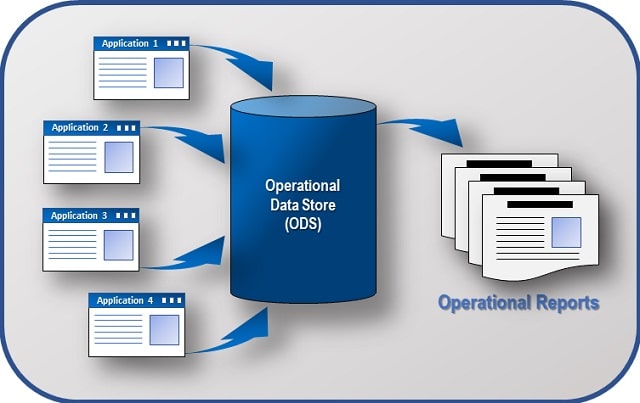
Collecting and storing data is useless unless companies can use it to achieve business objectives. An Operational Data Store (ODS) can be a real benefit, especially if it is a next-generation ODS rather than a traditional one. 

1. A Consolidated Repository For Previously Isolated Systems 

An Operational Data Store integrates data coming from a variety of different sources and puts it in consistent format while business operations continue. It, therefore, provides a consolidated repository for previously isolated systems of record. According to Giga Spaces, the main advantages of integrating data from the various systems of record is for analysis and reporting. 

Business owners and employees can make more informed decisions by having a more comprehensive view of data than when it is siloed in the different systems of record. The integrated tables contain the most recent, relevant snapshot of operational activities and therefore, reports on operational processes are more sophisticated and holistic than reports coming from individual systems. 

2. Real-Time Processing 

One of the problems when dealing with huge quantities of data is high latency. Making API calls to various data sources for each action makes real-time processing impossible and customers are unable to get the response times they demand today. An ODS focuses on a single business concept, such as a customer, service or product and constantly updates data, overwriting previous data. 

As the data is in real-time or as close to real-time as possible, it enables excellent operational decision-making. For example, creating a marketing plan today involves using real-time data to target customers and hone in on their preferences and needs. Data analysis can also help with monitoring performance and improving marketing campaigns. 

3. Very Fast Performance 

A next-generation ODS uses a distributed in-memory core and this means back-end systems are unaffected by unplanned loads or unexpected volumes. Over-provisioning with expensive resources when volumes fall is inefficient and this becomes unnecessary with an ODS in place. 

The ability to scale autonomously means that companies can maintain customer experience when volumes peak and a high concurrency of users does not affect performance at all. 

4. High Availability 

When many systems of record need managing, the chance of a system of record going down is high. Decoupling the API layer from the systems of record means applications can continue working even when a particular system of record isn’t available. 

For example, checking the credit card status of a customer against the ODS is possible without having to interrogate an authorization system that may be down. Customers today expect 24/7 service and are not satisfied if service is disrupted for any reason. 

5. Better Predictive Modeling 

When real-time or near real-time data is available for analysis, predictive modeling is more robust and accurate. Predictive modeling is a process used by businesses, involving the use of data and statistics to predict outcomes. Forecasting outcomes can reduce time, efforts and costs. 

For example, businesses can predict potentially late deliveries, sales orders, and other impacts or risks. Variables such as regulation changes, market conditions and environmental factors can be factored into calculations to offer more complete views. 

6. Easier Diagnosis Of Problems 

By having a current view of operational status, users can diagnose problems without having to go to individual systems of record. For example, a service rep could find a customer order and determine its status quite easily. 

7. Time-Sensitive Business Rules 

Businesses can build time-sensitive business rules on an ODS. They can automate certain processes and improve business efficiency. Without current, integrated operational data, this would be impossible. The rules engine can recommend a certain action to an appropriate system for execution. For example, if fraud is suspected, an authorization system may be alerted to take an appropriate action. 

8. Remote Data Center Synchronization 

Global organizations often have data centers in remote sites due to the need to keep to certain regulations and offer high availability. An ODS makes it possible to synchronize remote data centers and allow for cross-site replication in real-time. Data synchronization ensures secure, accurate and compliant data and successful customer experiences. 

Clean, consistent data is essential for product and service competence but also for data governance issues like regulatory compliance. Without seamless synchronization, data transactions can be delayed, and decisions can be affected by inaccurate data. A glitch can also have a negative impact on customer retention and sales. An ODS allows for unaffected performance and accurate decision-making. 

9. Effective Security 

With mobile apps and the rise of online transactions, security issues such as data breaches and cyberattacks are on the increase. Data privacy regulations are stricter than before and organizations need to secure even their internal systems. 

A modern ODS can effectively support role-based security, data masking and advanced encryption systems. Only a few people have security to access systems of record but an ODS doesn’t have the same security issues as it doesn’t contain historical data. 

10. Handles Data On-Premise And In The Cloud 

Many organizations today have data on-premise and in the cloud. They adopt a hybrid solution so they can enjoy the benefits of each to the needs of the business. An ODS can handle data from many different sources without compromising performance. It can orchestrate data in real-time or near real-time from on-premise or in the cloud data sources. It doesn’t matter what systems data comes from or where it is stored. 

A Final Word On Operational Data Stores

Companies choosing to modernize their architecture with a next-generation ODS will drive their digital transformation and improve their throughput and scalability dramatically. They can upgrade their operational capabilities as an ODS enables better decision-making and reporting. By becoming more productive and efficient with company data, they can maintain a competitive edge and stay profitable.

Why AWS Cost Optimization Should Be Part Of A Cloud Strategy

aws cost optimization cloud strategy amazon web services fees

One of the main reasons why companies move their workload to cloud services is for economic benefits. However, many firms ignore the opportunity to make higher AWS cost optimization as they are satisfied with the initial OpEx and CapEx gains. Even if they move their workloads to AWS (Amazon Web Services), most of them retain the approach they used on the physical infrastructure. But they might fail to see that this approach might end up costing more than them saving up. 

This is one of the main things that the in-house technology lacks, the operational, architectural, and financial knowledge to manage costs. Hence, AWS Premier Consulting Partners are available to ensure that the company's current cloud strategy is integrated with the AWS cloud and cost optimization is maintained. 

Begin By Understanding The Present Cost Of The Company 

A good AWS cost optimization application in the company requires gaining a deep understanding of the company's current costs, identifying opportunities for cost optimization, and then implementing the new ones. Software like SWS provides those tools for the customers to understand the pattern of expenses. Additionally, the consultants will be required to implement things like using appropriate tools, system analysis and results, and other changes to make the work optimized. They ensure that these changes do not affect the security or the performance of the company negatively. 

Cost Management Tools That Companies Must Have 

AWS issues cost management tools to help companies understand how they are using their resources and how to save them. 

1) The AWS Cost-Usage Report 

This provides a detailed report of the day-to-day or the hour-to-hour usage of all the company's resources, their use, and the cost incurred. 

2) Cost Explorer 

This tool provides aggregate and detailed reports that can be custom-designed, including charts and tabular data to understand and manage company expenses. This tool also allows to filter different costs and usage and group them to identify any recurring trends, detect anomalies and manage the factors influencing the costs. 

3) Cloud Watch 

It is an efficient tool that gathers and tracks metrics and provides an insight into the performance of the application and utilization of resources. 

4) CloudCheckr And CloudHealth 

They provide detailed billing analytics of the company. CloudCheckr, for instance, can identify unused and idle resources and services, mismatched EC2 (Electronic Compute Cloud), and provide suggestions for resource re-sizing. 

What Are The Cost-Cutting Opportunities That An AWS Consulting Partner Can Find? 

There are numerous tools available to understand and analyze the current cost of the company. With a thorough understanding of the company's business goals and the AWS environment, they can create a custom dashboard containing default usage reports and cost management reports. There are some changes that they can make to lower expenditure, and they are: 

1) Taking The Spot Instances Into Account 

They help find EC2 on sale, which are largely unused and available at steep discounts. If the company has a little flexibility about a few interruptions when their applications run, the EC2 costs can be lowered using Spot instances. 

2) Substituting Monolithic Applications 

Consultants can help replace old applications with high-performance, cost-efficient, and highly specific tasks like AWS Lambda functions. 

3) Identifying And Removing Unused Resources 

They help determine the resources that are no longer in use in the production units, testing, and development and remove them from consuming the company's resources and additional costs. 

4) Adding the Most Efficient Resources 

The consultants refer to the AWS cloud's performance data, and they make sure that the right services and resources are used in the company to provide maximum efficiency. 

5) Using Additional AWS Services 

Additional AWS services like CodeCommit, CodeDeploy, and CodeBuild are implemented to ensure organized and automated deployment processes. 

Overall Benefits Of Having An AWS Cost Optimization Strategy 

A strong foundation for an AWS cost optimization strategy can be laid by working with a consultant from an AWS Premier Consulting Partner. Many companies may find it difficult to analyze their resources, cost, suggesting changes, and implementing improvements, when done alone. Due to this, numerous businesses end up impacting their performance and security. This can happen because of under-providing the resources or not attempting to take full advantage of the AWS infrastructure. But working with AWS Premier Consulting Partners like Mission can help companies avoid these issues and make the expenses more economical. With continuous monitoring of the cost and resources and AWS cost optimization methods, the company is bound to make significant gains.

New Frugal Finance Blog Posts & Articles