Showing posts with label Management. Show all posts

How To Improve Your Organization At Work

how to improve organization at work

What makes a business successful? Of course, there are several factors to consider when it comes to a company's success. These variables are different for every business and even the definition of success can be subjective. Some company success factors include productivity, hard work, being able to work in a team, sales, and arguably the most important one is organization. 

Being organized while at work helps you gain control over time, productivity, as we as other things. Also, you would be able to focus more on your goals and overall improve the success of the business whether you’re an employee or the boss. Efficiency is essential to any workplace because it saves a lot of time, and we all know that time is money.

But, sometimes, no matter how hard you try, you can’t stay organized. This, on the other hand, can negatively affect your work and you will end up being buried in paperwork because you couldn’t have find the right strategy to complete everything in a timely manner. 

Believe it or not, there are some effective strategies to stay organized at work. You just have to know what they are for optimal workplace efficiency. Continue reading the article to find out more about the topic of being more organized at work. 

tips improve work organization

Make A Plan For Your Days And Stick To It 

It is possible that scheduling your days can aid you in remaining on track with your commitments. The practice of time blocking, which is intended to decrease distractions, consists of organizing your calendar so that you accomplish particular tasks at set times of the day. Time blocks serve as a blueprint for your day, allowing you to be adaptable and change them as required to accommodate meetings and other last-minute requirements that stand in your way. 

how to improve organization work productivity

Create A Productive Routine 

Incorporating a regular pattern into your life boosts your chances of building habits that provide you with structure and make your day go by more efficiently. Habitual behavior helps with productivity and efficiency along with starting positive cycles of prosperity.

It is possible that a routine may help you achieve your goals more successfully over time because the activities you take to get there will become more streamlined as a consequence of the routine. A routine will become more automatic as it is used more frequently. 

Maintain Strict Devotion To Your Schedule 

You should make every attempt to keep to a timetable and your routine as much as possible once you have booked time in your calendar. While it is easy to deviate from the schedule, having a timetable makes it easier to get back on track with the tasks at hand. When working on a project with a group of coworkers, it is extremely important to keep track of the time. Suppose your coworkers are counting on you to complete a task before they can begin their own. It is vital that you follow a precise schedule so that you may complete all of your work on time and without making any mistakes. Using a consultant time tracking app can help ensure efficiency and productivity.

boost workplace organization efficiency

Make Use Of Your Email Calendar 

Workplace meetings with coworkers, managers, or the whole office are probably to going to be a regular event for most people. The use of an email calendar to set up alerts for these meetings will help you remain on top of things as well as prepare for them in ahead of their arrival. Furthermore, using an email calendar to set deadlines for activities helps you to complete your tasks on time and keep your daily schedule while being organized. 

Check your work calendar on a frequent basis to ensure that you are on top of your activities and that scheduling conflicts are avoided. Rather than depending on your memory, it is preferable to jot down all of your responsibilities in a notebook in pencil. Planning and scheduling software, as well as planning and scheduling forms, may be used to help you organize and schedule long-term projects. 

Make A Comprehensive List Of Everything 

When you write notes, it can assist you in recalling important information and providing a place where you can refer back to your notes if necessary. Your thoughts can be recorded on paper or in a digital notebook, based on what is most convenient for you and your workplace setting. 

Think about taking notes during conferences, noting important dates, and establishing a to-do list to keep track of everything. Organize your time by creating daily, weekly, or monthly to do lists for important tasks. Every morning, go over your daily objectives with yourself before getting started. 

Create A Filing System For All Of Your Documents 

You will benefit from creating a file system, whether it is for physical or digital stuff, because it will help you to reduce clutter and stay organized. It is possible to create folders for different types of important documents, such as invoices and contracts, in order to better manage your files. You may also establish email folders for different types of correspondence, like senders or projects, to guarantee that you keep all of the important correspondence while not overburdening your inbox with irrelevant messages. 

Make Sure To Clean Your Desk 

The motivation, attention, and productivity of employees who work in a clean atmosphere is increased, and a lot. The ability to locate critical documents and other material more quickly and readily is a result of this capability. Weekly cleaning and sorting of stuff into folders and desk drawers should be a regular part of your daily or weekly schedule. Desks and offices must be attended to weekly for best organizational optimization results.

Think About Getting Desk Organizers 

Desk or drawer organizers can be extremely useful when it comes to keeping your workspace well-organized. Using one organizer for writing instruments and notebooks, and another for push pins, paperclips, and other small office supplies, you may organize your workplace in a variety of ways. In order to keep your workspace neat and clear, put things of similar size together and make use of all space available on the desk and in the drawers. This will help you to stay on top of your job. 

Optimal Organizing 

You no longer have to wonder how to stay organized at work if you simply follow the steps above. Sometimes it can be challenging to bounce back from being too lazy and unproductive, but with these simple steps, you can once more become more organized and therefore inspire your employees to do that as well. 

There are always helpful books you can read or articles online on how to increase organization in the workplace as well as how to learn from your mistakes and not repeat them in the past. Use whatever resource necessary to get organized and productive again, because you know your competitors are doing the same! It is time to declutter your workspace and organize optimally.

5 Methods To Run A Construction Company

how to run a construction company methods success building business

You don't work in construction because the work is easy; you do it because you love it. Learning how to run a construction company is no easy task either. Like any fine trade, it takes practice. 

We know you didn't set out to fail, so we've compiled a list of construction company tips that will lead you on your way to success. So if you are interested in improving your business, read on to learn some tips that should help improve your productivity and profitability. 

1. Consult Staff Members 

The people working on the job-site have a wealth of knowledge when it comes to the intricacies of day-to-day operations. They often have insight on how to efficiently improve processes compared to upper management who's job duties are hands-off. 

Consulting your staff early on in the planning process will create an opportunity for them to spot possible problems before they become a big issue. Your experience staff members have a lot of know-how when it comes to getting the job done; utilize them! 

2. Maintain Equipment 

Running a construction company is not possible without properly-maintained equipment in good working condition. When your equipment fails, it will lead to delays which will slow down productivity and lead to higher expenses. Your work-fore should perform regularly scheduled maintenance on all equipment to prevent breakdowns and delays. 

Equipment that's maintained at regularly scheduled intervals as per the manufacturer will last longer and cost less to own over time. A breakdown will often lead to expensive and time-consuming parts replacement. You would be kicking yourself if that happened, especially if it could have been easily prevented by replacing a few inexpensive parts before they wore out. 

3. Learn How To Run A Construction Company Using Technology 

The construction industry is bringing up the rear when it comes to industries that have adopted the use of technology. Granted, we don't need it for every aspect of the job, but there are some great technological resources for construction companies out there. 

Managers can utilize project management software to plan workflow and stay on track with the project timeline. There is technology available to help with accounting, construction IT services, and sharing job-site pictures with the team. 

4. Improve Productivity 

Productivity is a measure of effectiveness given the expended effort. Staying productive on a construction site means executing a carefully planned work schedule. Make sure the work is done in a logical sequence that maximizes the efficiency of all employees and contractors. 

Maximizing productivity will lead to completing jobs ahead of schedule and under budget, resulting in higher profits. 

5. Market Yourself 

Make your name synonymous with quality construction. That way your company will already be on the forefront of potential customer's minds when it comes time to bid a job. 

Put up signs at current job sites, plaster your company name on your work trucks, and take out an ad in your local papers. Set out to be a positive force in your community and your name will command respect when it comes to construction. 

Get To Work Building Your Business

There are many aspects to consider when learning how to run a construction company. The bottom line is profitability, so make sure to track your numbers from each construction job. 

If you found these tips for construction companies helpful, check out some of our other posts to learn more ways to improve your business! Visit the Real Estate section to learn more about construction, property management, and building strategies.

How to Find a Venue for Your Professional Event

match pro venue professional event business events planning

Preparing to plan a professional event?

Whether you are putting together plans for a conference, a seminar, a trade show, an awards show, or a product launch, there a bunch of keys to ensuring that it is a total success.

You will, of course, need to choose the right time to hold the event. You will also need to make sure the right people are invited to it. But maybe above all else, you'll need to find the right pro venue to stage your event.

No matter how meticulous you are with regards to mapping out the rest of your event, it'll all be for naught if you don't track down the right venue for it. It's why you should take your time when choosing a venue and keep at it until you land on the ideal one.

Here is how to go about doing it.


Keep Location in Mind When Looking for a Pro Venue

This should almost go without saying. But you should not, under any circumstances, rent a venue for a professional event if it's situated in a place that's going to be difficult for your guests to get to.

If, for example, you're going to be hosting an event in San Francisco, look for an event space that's somewhere within the city limits. If you roam too far outside of San Francisco, you're going to find that many of your guests might skip your event since it won't be convenient for them to get there.

You want to make it as easy as possible for all your guests to make their way to your event. With that in mind, choosing a pro venue that's located in the right place is an absolute must when you're planning out your event.


Make Sure a Venue Offers More Than Enough Parking

Once people show up for your event, are they going to be able to find a place to park?

This might not be a question that you ever consider when you're planning out an event. You'll be so worried about what's inside of a venue that you won't spend a ton of time thinking about what's outside of it.

Find out how many parking spaces are going to be available to your guests on the night of your event. 

The last thing you want is for people to show up at your event and leave when they realize that the parking situation is a nightmare.


Search for a Venue With Enough Space for Everyone on Your Guest List

One of the first things you should ask the owner of an event space when you're meeting with them about their venue is, "What is your capacity?" The capacity will let you know how many people you can fit into a venue at one time.

You should obviously do this for the comfort of your guests. You don't want to try cramming 400 people into a space that's only designed to hold 200 people. It'll lead to people spending the entire night bumping into one another.

It'll also go against all of the fire and safety codes that are in place and could get your event shut down if you're not careful. You want to make sure that the pro venue you pick has a capacity that sits well above the total number of names on your guest list.


See Which Services and Amenities a Venue Offers

There are some venues that will rent you an event space and leave it at that. They won't offer any extra services or amenities, which will leave you to bring in your own vendors to provide them.

But there are also venues that will extend all the services and amenities that you need for your event, either included in the cost of renting the venue or for an additional fee.

Some of the services and amenities that you'll likely need will include:

  • Catering
  • Table, chair, and linen rentals
  • Audio-visual equipment

You might also need someone to help you set up a venue for your event and clean it up once it's over. You should come to an understanding with the owner of an event space as far as which services and amenities they will provide.


Consider the Layout of a Venue When Thinking About Using It

The type of event that you're planning will dictate the type of layout that you'll need inside of a pro venue.

For instance, if you're planning an awards show, you'll need a large stage for performers and presenters. You'll also need plenty of room to put chairs for your audience. This means that a venue with a bunch of smaller rooms isn't going to work for you.

By the same token, if you're holding a seminar that's going to feature different speakers talking to different groups, you might benefit from a venue with a choppy layout. It'll give you an opportunity to send those who attend your event to different areas based on what and who they want to see.

When you walk into a venue for the first time and it's empty, you're going to need to be able to picture your event taking place in it to see if it'll work. It's why it's essential for you to spend time thinking about how you envision your event going before settling on an event space.


Ask a Venue About Their Acoustics

Is there anything worse than spending tons of time and money staging a big event only to have guests complaining about how noisy it is inside? This is something that event planners don't always take into account when planning professional events.

You should speak with an event space owner about the acoustics in their facility and push them to tell you how speakers and music will sound during your event. Poor acoustics can ruin an event and make it impossible for people to enjoy themselves.

You should be especially wary about holding an event in a big, open space like a warehouse. These types of spaces don't always have the best acoustics, and the acoustics can ruin an otherwise great event in some cases.


Check Out the Accessibility of a Venue

A lot of event planners enjoy holding events in older venues that have a ton of history jam-packed into them. These venues often entice guests and get people talking about how lovely they are.

There is one big problem with many older venues, though. They don't always offer the same kinds of accessibility that you will find in most newer venues. They sometimes haven't gone through the necessary upgrades to make them more accessible.

You want to find a venue that makes it simple for people with mobility issues to get around. A pro venue should have everything from ramps to elevators inside of it to allow for people to maneuver their way around without a problem.


Figure Out If a Venue Fits Into Your Budget

The cost to rent a pro venue is going to depend on dozens of different things. Some of the factors that will impact the price of a venue include:

  • The location of the venue
  • The size of the venue
  • The services and amenities that a venue offers
  • The history of a venue
  • The general appearance of a venue

Prior to looking around at different venues for a professional event, you should find out exactly when you want to rent a venue. This will help you avoid falling in love with a venue only to discover that it is booked on the night you need it.

You should also crunch the numbers and figure out how much you can afford to spend on a venue based on your event budget. It will allow you to steer clear of finding the perfect venue only to find out that it is out of your price range.

Cost shouldn't be the only thing on your mind when you are shopping around for venues for an event. You don't want to take the cheapest venue you can find and learn first-hand why it was so cheap in the first place.

But you should be open and honest about your event budget from the beginning with venue owners.

They might be able to find ways to work with your budget if it means renting out their venue for your event.


Book the Best Pro Venue for Your Next Professional Event

The pro venue that you choose for your next professional event could ultimately make or break it. 

Choosing the wrong venue could leave people with a bad taste in their mouth once your event ends.

Try to start looking around at various venues at least six months before your event is scheduled to take place. This will give you an opportunity to check out and consider a wide range of options before narrowing your choices down.

Once you find a venue that suits your needs, put down a deposit for it and start planning out the other details of your event. Your venue will establish a strong foundation for your event and get the planning process off to a great start.

Check out the rest of our blog for more tips on planning successful events.

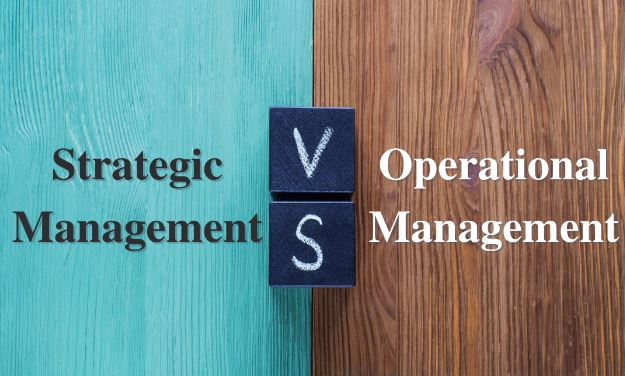
Business Strategic vs. Operational Management

strategic versus operational management

For success in new new economy, companies must invest in and support strategic and operational management excellence. Management professionals can find out more about strategic vs. operational management below, including looking at specific factors impacting both now and in the future of their business. 

The Differences Between Strategic vs. Operational Management 

According to Jeff Bartel, chairman and managing director of Hamptons Group in Miami, three components set businesses apart: strategic planning, agility, and innovation. But, what exactly is the difference between operations and strategic planning? 

Operations refer to what actions a business takes to get things done. Strategy relates to the plans and methods behind operations. Lastly, strategic management has to do with how and why, and it is integral in ensuring operations activities drive a business toward overall goals. 

Technology's Impact On Operational Management In The New Economy 

From artificial intelligence and automation to cybersecurity to protect customers and the bottom line, technology will play a role in operational management for modern businesses. 

Innovative Modern Ways To Improve A Company's Cash Flows 

Automation is critical to improving cash flow, as it typically does more with fewer resources. It also frees up human resources to attend to more complex issues, such as R&D, customer-centric problem solving, and growth. 

Hyper-automation is increasingly important. This is the act of using AI machine learning and other technology to automate everything, allowing you to save time and money while increasing efficiency and customer satisfaction. 

Cyber attacks are hitting cash flows hard, so operational management must keep tech security in mind. By September of this year, the number of data breaches will outpace last year's numbers, making this a growing problem. 

Modern Sales Opportunities To Reach New Markets 

AI machine learning can also be used to improve user experience. Tech-backed automations drive more satisfactory self-serve digital options. Algorithms provide people with exactly what they want or need and analyze user interactions to help businesses make minute and significant changes to continuously improve. 

Is Your Strategic Management Nimble Enough In Today's Business World? 

Businesses of all types rely on digital landscapes for success, and digital moves fast. If your strategic management is not agile enough, it is hard to remain competitive. 

Dynamic Capabilities To Help Businesses Pivot 

Companies have four primary options for pivoting based on market changes. 

Radical Pivot - This is an option to consider when a business model needs a major overhaul. For example, core assets and activities are under threat by market forces, consumer evolution, or resource issues. 

Multi-Pronged Pivot - In cases where core assets are under fire, a multi-pronged pivot might be the right choice. For example, many companies that previously sold hardware or physical products now sell digital products. 

Operational Pivot - This is the standard option when core activities are the issue. Printing companies, for example, retain substantial core assets, but fewer people print at home as the world moves toward paperless goals. Scanning, photo, and art printing were once required. 

Opportunistic Pivot - Companies with strong core assets and activities may evolve into new endeavors to strengthen future growth. 

Intelligent Composable Business 

Composable businesses are made up of many disparate parts that work together. That makes them flexible and supports fast, easy pivoting. The COVID-19 pandemic demonstrated a need for this across all industries. 

Strategic Management Strategies 

Strategic planning involves setting the right goals for your business. Your strategic plan should keep in mind mission and values and ESG criteria or other external criteria that might impact sales or your bottom line. 

Identifying Strategic Goals And Strategic Risks 

Begin by identifying your target customer. That coupled with the brand's mission helps you create strategic goals for aligning business operations with customer needs while supporting growth and stability for the future, identifying risk areas, and developing strategies for mitigating or avoiding them. 

Waste-Free Strategic Planning 

A typical strategic risk is getting mired in strategy and planning and never taking action. Waste-free strategic planning reduces this risk by identifying limited metrics and goals, choosing the most critical initiatives, and concisely communicating the strategy. 

Getting Your Company To Follow The Strategic Plan 

Getting buy-in for the strategic plan can also be a challenge. Some steps to grease the wheels include: 

● Sharing the goals and what they mean specifically for each stakeholder 

● Inviting team members to take part in molding the plan into actions 

● Communicating the plan from the top-down, offering each team member an explanation of how it impacts them and how they are essential to the success 

Operational Management Strategies 

Operational planning and management strategies should follow strategic planning and use technology and other resources. 

The Importance Of Data In Today's Companies 

Data is critical to success for modern companies. It helps inform product development and marketing decisions to inventory management and customer service. In fact, while speaking to Jeff Bartel in his Miami office, he suggested performing routine internal audits to identify pain points where a great amount of time effort are spent for very little return. 

Data is also foundational to AI and machine learning that creates cost-saving, efficiency-driving automation. 

How Web Data Integration Helps Operational Management 

Data silos slow processes and create operational risk in the form of miscommunication. Web data integration helps ensure team members across various departments have the information they need to serve customers and perform work quickly in real-time. 

Geospatial Data Is Vital  

Location matters. To serve them the most effective digital marketing, you have to know where customers are. Likewise, supply chain logistics depend on knowing where a product is at any given time. 

Examples of Operational Goals 

Examples of operational goals include: 

● Improving safety performance, which could be measured by the number of incidents reported 

● Increased productivity, such as more work per hour or fewer missed deadlines 

● Enhanced quality of service or products, which could be measured with quality surveys or error reports 

Performance Goal Setting Accessibility 

Goal setting accessibility is critical to long-term success. Team members must know what their goals are and how to meet them. 

Consider using SMART goal-setting processes. Goals should be: 

● Specific 
● Measurable 
● Achievable 
● Realistic 
● Time-based 

Getting Your Company To Follow The Operational Plan 

Getting buy-in for operational plans is similar to getting buy-in for strategic objectives. First, ensure everyone understands the big picture of the business and their roles in it. Set challenging but achievable goals and provide rewards structures to engage team members in the new normal. Most people need to know there is something in it for them if the company succeeds.

Opportunities In The Fleet Management Market Industry

opportunities fleet management market industry trucking transportation

Fleet management is the mechanism by which the company manages both fleet and asset records, from purchase to disposal. This allows the company to cut costs, increase productivity, and ensure enforcement through an entire fleet service. 

The worldwide fleet management market is expected to expand during the projected timeline. Fleet management is the management of all facets of a vehicle in a company. Fleet vehicles are those that are important in the industry or have a significant impact on the business. 

Maintaining a fleet of passenger vehicles can be difficult under the best of circumstances. Add to that some external forces over which a fleet manager has no authority, such as regulation, car demand volatility, and spiraling costs, and the challenge will quickly become daunting. The right tools will play a critical role in managing fleet management operations. 

The operation's mission would be to monitor the entire lifecycle of commercial vehicles while reducing associated harm, optimizing performance, increasing competitiveness, and maintaining regulatory compliance. Employee cars used at jobs, referred to as the grey fleet, must also be considered in this process. 

Fleet companies are many. Fleet management is required for haulers, couriers, sales, delivery, telecommunications, public transportation, and emergency services. Understanding the processes needed to operate a fleet would allow the business to manage related costs, stay competitive in the industry, and help satisfy the customers' needs. 

Fleet maintenance can be done in-house, usually by appointing a fleet manager, or outsourced to an independent fleet solutions company. 

Fleet management software provides the company with up-to-date reports on the fleet's efficiency anytime users need it. In essence, it is a complex database with various apps that help document and track critical features that will improve efficiencies and bring prices down by considerably reducing and enhancing performance. 

Place and inventory control, development monitoring and equipment placement, and optimization are the three fundamental fleet management components. Driver action, technical diagnostics, and vehicle monitoring are all part of fleet management. 

It covers fuel control, risk assessment, targeted marketing, fleet vehicle finance, and other resources. Fleet management has applications in the service industry, gas and oil chemicals, refining, manufacturing, distribution, banking, telecommunications, public transit, government, and environmental services, etc. 

Fleet management includes all types of vehicles, including trucks and vans, buses and trams, cargo ships, etc. Due to increased demand for storage and transportation, many opportunities in the fleet management industry have arisen. 

A rise in fuel prices, an increase in emissions problems, access costs, a need for operating performance, and a decrease in management system components are key market factors. 

Fleet management offers benefits such as routine maintenance, equipment efficiency, increased driver safety, fleet routing scheduling, which results in cost-effective operations for owners and operators, a quick procurement process, fleet safety, and customer loyalty. 

Fleet Management Market Overview

The fleet management solutions market was estimated at USD 7.34 billion in 2024 and is projected to rise at a CAGR of 20.07 percent over the forecast period to hit 22.08 billion US dollars by 2026. Businesses are gradually adding transit into their offerings. As a result, commercial fleets have grown significantly in recent years. 

According to statistics, deliveries of vehicles to commercial fleets from eight significant manufacturers in the United States rose by 2.1 percent, to 69,145, in February 2024, relative to the previous year. Increasing maintenance costs, resulting from increased demography, have had a significant impact on the fleet management industry. 

Increasing operating costs arising from growing demand for utility vehicles, rising maintenance spending, and persistent increases in enforcement costs have all had a substantial effect on the fleet management industry. 

Big and medium-sized fleet owners are constantly using fleet management tools to streamline activities. Adoption has been sluggish among small fleet owners due to a lack of knowledge, a reduced operational size, smaller budgets, and an increase in running costs. 

Fleet injuries result in the most costly damage claims for companies, at an estimated loss of about USD 70,000 per wreck, which has stressed the importance of commercial fleet maintenance. 

The demand for fleet management solutions is characterized by increased fragmentation, the growing involvement of original equipment manufacturers, low levels of product differentiation, and falling hardware and connection costs. 

The level of competition has gradually risen due to high market penetration by market leaders and expanded R&D initiatives, which have resulted in developments in telematics and analytes. Furthermore, due to the growing amount of data in the fleet management market, businesses have been engaging in cloud technology.

The Significance Of Compliance Training

significance company compliance training compliant employees

There is a good reason why rules and laws exist. They may not be our favorite things on the planet, but you will surely agree that the Wild West wasn't really a paradise on Earth. Luckily, those days of mayhem are over, and the safety of the people is a product of a set of regulations that discourage any problematic behavior. 

On a similar note, every business organization has to adhere to rules and regulations. It involves safety standards, health standards, government laws, and other requirements. Non-compliance can be disastrous for your company's reputation and result in legal consequences, and run-ins with the law are hardly enjoyable experiences. The answer lies in a solid training program so that every employee will have a clear idea of what compliance actually is. Check this website for more employee training insights and compliance information. 

Training For What? 

There's more than one type of compliance training for obvious reasons: workplaces are complex areas that involve many factors. A single course is not enough to cover all subjects, so it's necessary to provide a thorough, interactive program that will be informative as well as enjoyable for your employees. First, let's check out some of the most common types of training. 

One cannot stress the importance of workplace safety enough. Each company has safety hazards to a greater or lesser degree, and informing your staff how to recognize them and react appropriately is a top priority. A construction site is an excellent example of a workplace with many risks, and safety training is more than just a simple necessity. 

Sometimes, the work suffers because of substance abuse. Only one addict among your employees, be it alcohol, opiates, prescription drugs, or something else, is enough to disrupt the entire working process. People under the influence cannot perform to the best of their abilities, so it helps to include substance abuse training as part of the program. 

Yet another potentially problematic issue is workplace violence. People who abuse their positions to threaten their subordinates either verbally or physically present a real threat to the entire organization. Training your personnel on the dangers of violence is also a great way to encourage employees to speak up if they've been mistreated in one way or another. 

For our final example, we will briefly mention cyber security. Having a safe computer network is invaluable in today's IT-driven business world, and companies always have to be on the lookout for cyber-criminals. Knowing about common hazards like social engineering scams, malware, data stealing, etc., will help you protect your company from unexpected disasters. 

employee compliance training

A Series Of Benefits 

The examples we just mentioned are just a part of the specter of compliance courses out there. You can also deal with health, anti-discrimination and diversity, sexual harassment, occupational safety, and so on. In fact, the more areas you include in your program, the safer your company will be. Also, your staff will certainly appreciate your efforts to improve their workplace. 

As we have seen so far, compliance should be considered a high-level responsibility. There are far too many examples of companies that disregard the rules, run by irresponsible managers or careless employees. Sometimes it takes severe penalties or even a complete shutdown before they realize the consequences of their actions. 

It's nearly impossible to have a safe, risk-free, and productive workplace without following the rules. To illustrate this better, let's imagine an office with three males and one female. One of the men harasses the woman, and the other two either support him or keep quiet about the whole situation. You can easily see how devastating the results can be for the female. This scenario is very probable if you fail to provide harassment training that will discourage any potential offenders. 

Your company's productivity can suffer because of absent employees. They might not show up because of injuries, psychological issues, or some other problem. Compliance training reduces the risk of such hazards: if your employees are made aware of dangers in the workplace, they will know how to keep away from them. 

Dangers Of Non-Compliance 

More than just a good idea, compliance is typically required by law. A bank that allows a security breach and fails to protect its clients' data will face severe legal repercussions, lawsuits and will lose a lot of money in the process. (Professional experts such compliance training partners can clarify this even further.) Instead, it could have invested a much lower amount for security training and avoid the whole disaster. 

Hospitals, for example, are subject to regular tracking and testing to ensure that the staff certifications are valid. These employees need to be even more compliant than others, otherwise, the healthcare facility will have to pay fines or even get suspended. 

These two examples illustrate perfectly why compliance training is such a necessity in today's world. The regulations are strict, the competition is high, and the only chance to survive is if you do your job as efficiently and responsibly as possible. Keeping employees compliant is essential to the overall safety, security, and success of your entire business.

5 Inexpensive Corporate Gift Ideas Employees Love

inexpensive corporate gift ideas employees will love

According to a study called the Business Gift Satisfaction Survey, 57% of people say that their opinion of a business can be impacted both positively and negatively by the gifts they give.

Whether you are giving business holiday gifts to your employees, customers, or business partners, it is worth putting some thought into your gifts each year.

Are there ways of giving out corporate Christmas gifts without breaking the bank?

Definitely. Let's take a look at 5 inexpensive corporate gift ideas that employees and coworkers will love.


1. Calendars

Whether you decide to gift a calendar with your companies logo on it or not, this is a great gift to remind you employees and clients of your appreciation all year long.

Calendars are great because they are both functional and aesthetic. Sure, you can give your employees a phone charger for their car, but there's something so utilitarian about that. The holidays are a time of year to show a little more softness, and a well-designed calendar can be a great way to do just that.


2. Mugs

When you're trying to come up with gifts for employees under 10 dollars, it's important to try and think of something that would be useful to everyone.

You'll be hardpressed to find an employee that doesn't use a mug every day! Even if they aren't a coffee or tea drinker, they serve as great pen holders. Give out mugs with your company's logo or a pleasant design and they might just become your employees' favorite mug.


3. Gift-Certificates

Sometimes the best gift is to let people choose their own gift. Gift certificates can be a thoughtful option when you feel like it's impossible to get one thing that will please everyone.

Even if you're looking for employee gifts under $5, you can give out gift certificates to coffee shops or iTunes. 5 dollars is more than enough in those circumstances for your employee to treat themselves on your dime.


4. Gourmet Food, Coffee, or Tea

Whether it's chocolates, popcorn, green tea, or some delicious coffee, food and drinks are safe and crowd-pleasing corporate gifts.

To add another interesting note to this gift, consider giving it some local flavor. Gift locally roasted coffee beans or some tea blends from your town's best-loved tea house.


5. Notebooks

While you certainly can give your employees notepads with your company logo on it, this might be a good opportunity to give them something higher-quality.

Consider buying small leather-bound notebooks for each of your employees. If you wanted to go above and beyond with these corporate gifts, you could have them personalized with a subtle company logo printed on the cover.


It's Worth the Time to Come up With Corporate Gift Ideas Your Employees Will Love

Let's face it, you wouldn't be able to run your company without your employees. Around the holidays, it's important to show them how much you appreciate their hard work and dedication. Even if it isn't much, a little gift can go a long way in terms of employee morale.

Did you love this article about corporate gift ideas? Be sure to check out the rest of our blog for more useful content on employee gift giving and office politics.

10 Top Human Resources Management Challenges

hr management current trends hrm challenges human resources department difficulties

The consistently changing business landscape requires human resource managers to revisit their corporate responsibilities. Since the beginning of this century, the corporate sector has transformed by introducing new trends into the human resources management (HRM) industry. Incorporating these trends has become a challenge for today's HR managers. And what is the chief motivator behind the success of a well-established company? Many CEOs will describe the thriving human resource departments as the reason why the company flourished. So, if you wish to manage your organization proactively, it is essential to understand these HR trends and challenges. 

Now we will discuss in greater detail many of these transformations that have revolutionized HRM worldwide for 2021. 

Top 10 Industry Issues In HR Management Today 

Technological advancements and the coronavirus pandemic have contributed to a rapid shift in how the corporate sector operates. When remote work is gradually becoming more popular among employees while social distancing is becoming a norm, the future workplace will not be the same. The burden lies upon the HR department shoulders to help companies incorporate these changes and survive in this tech-dependent, contactless, and diverse age. So, if you belong to the HR community, you can excel in your skills by pursuing an online MPA or MHRM. 

Here are the most significant challenges faced by modern-day HR managers: 

1. Upskilling The Staff

The first problem all HRMs face is to invest in employee education. Some companies lack resources to upskill their workers while others have no time for training courses. HR must provide online courses for the staff's mentorship and skill development. Recruiting external educators helps your workers acquire new skills and assume more duties. Since expertise is a single field no longer makes one a sought-after employee. So, upgrading your workers' skills will remain a popular trend in 2021. 

2. Finding The Right Talent 

The market has become more competitive than ever, so companies will contend with recruiting the most talented individuals. Once the coronavirus is under control, this will be a headache for every organization. The HRMs will have to adopt the post-pandemic norms to attract the right talent. Which incentives will win you more recruits? What sort of opportunities is the new generation looking for in the 2020s? HR must meet the demands of the new hires to make them prefer joining your company. 

3. Diversity With Inclusion

Expectedly, the US will cease to be a majority-white country by 2050. This increasing diversity – while celebrated – has also resulted in some workers getting harassed or feeling discrimination in the workplace. In 2021, such incidents may involve the company in some hefty lawsuits when it fails to protect workers from harassment. HR must concentrate on diversity with inclusion to retain more employees from minority communities. It will allow well-qualified people to stay at your organization. 

4. Employee Experience

Recently, improving employee experience was found to be the third-most important initiative among HRMs. Since it boosts worker productivity, makes them more loyal, and enhances employee satisfaction. Now, where is the challenge? Well, this pandemic has digitized a person's workplace experience. The HR department should work to make employees feel more comfortable in this tech-based world. They must accept feedback from workers and turn this feedback into action to retain more employees to maximize productivity and talent retention. 

5. Virtual Work 

The pandemic reinforced the concept of telecommuting, and the traditional workplace switched to a more flexible home-based form. But this transformation has become permanent for some. Twitter and Microsoft allowed some employees to telecommute whose presence was deemed unnecessary in offices permanently. Data shows that over two-thirds of workers would prefer home-based jobs. Therefore, the trend of remote work won't dissipate soon and needs to be addressed by HRMs. 

6. Collaborative Work 

Telecommuting has become more common, which has impacted how teams work together. Collaboration among employees is essential for their overall productivity. Organizations have found that workers who collaborate online without meeting each other are less productive than employees who see each other face-to-face. So, HRMs must focus on bolstering virtual teamwork within a company to make everyone efficient digitally. This challenge shall continue even after the pandemic is over. 

7. Incorporating AI

Automation has influenced many departments within an organization, and HR isn't an exception to this development. These AI-powered tools enhance the recruiting process and increase worker engagement. In 2021, this trend will keep growing, and HRMs must learn to accept this trend since automation removes human errors from a procedure and improves the efficiency of each process. Managers must rely on these software programs to interview and recruit people. 

8. Legal Compliance

A company's HR department is also responsible for learning about the employment regulations and their changing nature. It is impossible to neglect these legal complexities assuming that they do not affect your organization. COVID has led to the government imposing strict guidelines about limiting any harmful practice in offices. We have traditional laws regarding hiring procedures and workplace safety. The HRMs must keep up with updated versions of these regulations to avoid future lawsuits. We also can't forget about payroll compliance as well.

9. Leadership Development

Studies show that one-third of companies have organized leadership development programs. The HRMs must improve the efficacy of these programs to produce more workplace leaders and help workers hone their management skills. Leadership keeps your employees engaged and motivated. They become more open to the idea of taking on further responsibilities. It also contributes to the progress of soft skills. The HR department oversees the success of these leadership programs. 

10. Combating Burnout 

Unmanaged workplace stress may lead to burnout among employees that threatened two-thirds of American employees pre-pandemic. In 2020, the virus caused mental wellness to plummet 25% in the US and the UK. The HRMs have found combating mental illnesses a fresh challenge in recent times. They eliminate burnout by allowing employees access to mental health counselors and hold events to promote mental stability. Offering telehealth facilities also improve people's wellbeing. 

Other Top HR Management Current Concerns 

- More Complex Payroll 
- Growing Employee Benefits
- Employee Accessibility 
- Recruiting When Fewer People Want To Work 
- Monitoring Employee Actions Online Everywhere
- Avoiding Offending Anyone

HR Management Current Challenges Conclusion 

The coronavirus pandemic contributed to creating several HR and payroll trends we expect to become the norms of the future. The fast-paced business industry faces the challenge of adopting these trends for survival in the consumer market. The human resource department is not alien to some of these challenges as well. For instance, about 75% of employers surveyed five years ago believed that attracting and retaining the right talent would grow as a problem. 

In 2021, this challenge will persist but also develop into a more serious dilemma for HR managers. It has become the responsibility of your HRM department now to add real value to the organization. The human resources dept will have to maximize their efforts to help your company survive and grow.

3 Tips to Maximize Team Performance for Software Development

tips maximize team performance software development employee productivity

Did you know 85% of employees are not engaged in their work? 

If your software development team is disengaged, they probably aren't performing at a high level. If that's the case, you should probably address the issue, or else your company might begin to lose money. 

Read on, and you'll discover three tips that'll help you improve engagement and, therefore, team performance. If your software team is running a little slow, these tips will help bring about some changes. 

Let's begin building better business team performance! 

1. Create Clear Specifications 

Poorly defined specifications can have a negative impact on team performance. 

This is often because bad specifications result in the wrong kind of work being produced. This then means that people will need to revisit the project to fix the errors caused by the poor specifications. 

As a result, you should closely review the specifications of a potential software project before you go ahead with it. You might even want to get some feedback from your team to determine how you can make the specifications better. 

2. Keep Projects Moving 

If you're going to develop a piece of software, you will likely need to go through several phases. 

So, to increase SaaS project productivity you will need to: 

• Create a plan for the project 
• Write the code 
• Get other team members to review the code 
• Test the code for bugs 
• Launch the project 
• Review the project for issues once it has gone live 

Often, when a development team experiences low performance, it's because a certain piece of work gets stuck in one of these phases. 

Due to this, you need to set up systems to ensure this kind of issue doesn't affect your projects. One way you might do this is by introducing deadlines for each phase of the development process. 

3. Bring in Help 

In some cases, a project might take a long time because it is very complicated. 

If that's the case, you might want to hire an external project management team. These individuals will have lots of experience with big development projects, and so they'll know how to move your project forward. 

When working with these individuals, you may want to ask them to host a 'workshop.' This workshop could explain how large projects should be approached, and this knowledge can then be used by your team in the future. 

If you go down that route, make sure you get some documentation from the company providing the workshop. This will then give your software development team something they can refer to later on. 

Will You Improve Team Performance? 

You should now understand how to increase team performance amongst your software developers. 

When it comes to increasing performance, there is always something you can do better. Following this, you should conduct a review every quarter to figure out how you can better improve performance. 

If you conduct these regular reviews, you should end up with a high-performance team in no time at all. 

Would you like to read an additional piece of content on maximizing your business team performance and productivity? Read more management articles in the Career and HR sections of our Frugal Finance Blog! Remember, teamwork makes the dream work!

The Most Common Business Administration Jobs

most common business administration jobs

Studying business administration will arm you with several core business skills and fundamental knowledge to pursue various career paths. 

You'll gain confidence in key principles of business such as finance, accounting, and project management, which can give you workplace flexibility in the future. And possessing this type of flexibility is crucial in a now ever-changing employment market. 

Here are some of the most common business administration jobs you can aim for if you choose to dedicate your time to the subject. And the best part is, studying business administration can lead to direct employment! 

Digital Sales and Marketing 

With the monumental expanse of companies selling their products and services on the internet, there's plenty of demand for digital sales and marketing professionals in the job market. 

The number of specific job roles within sales and marketing is too many to count. Yet, with so many job roles out there, it means one could fit your wants and needs perfectly. 

By getting a business administration degree, you demonstrate that you have the dedication and ability to comprehend a range of practical concepts. Plus, you'll have solid foundations in a subject that many sales and marketing departments or companies will appreciate. 

Human Resources 

Human resources management and behavior are typically aspects that are studied within a business administration course. 

When you have the theoretical and practical knowledge of how to handle HR in a company, you suddenly become more employable. Every established company needs HR specialists, and jobs in this field can be gratifying if you are well organized and enjoy working with people. 

Business Consultant 

Studying a 60-week AAS degree, for instance, could set you on a pathway towards business or management consultancy. 

When equipped with a wide range of business knowledge and skills, they can be used to analyze real-life scenarios in business. After studying such things as quantitative methods and business decision-making, you could be in a position to advise companies on the best course of action. 

You may advise on how to increase revenue by recommending structural changes or systems within an organization, for example. 

Event Planning 

Whether it's planning meetings, conventions, or other events, an event planner must be on the top of their game in their job role. 

Event planners need multiple skillsets, and many of these are provided within the study of business administrations. 

For example, studying business administration will teach you about accomplishing goals, planning effectively, organizing, directing, and controlling many aspects of a business. Event planners need many of these skills to manage large teams, coordinate logistics, and meet deadlines on time. 

Business Administration Jobs 

Business administration is one of those subjects with a good balance of theory and applicable skills that can serve you well in the job market. 

The business administration jobs we've looked at are just some examples of the direction you could choose to take in your business administration career. 

Ultimately, studying business administration should be seen as a stepping stone that projects you upwards, potentially much quicker than other pathways. Plus, you'll likely benefit so much more from a leaner, meaner, and more strategic mindset when you complete your course. 

Visit the Career or HR sections of the Frugal Finance Business Blog to learn more about top business admin jobs available for job growth potential.

New Frugal Finance Blog Posts & Articles