Showing posts with label strength and conditioning. Show all posts

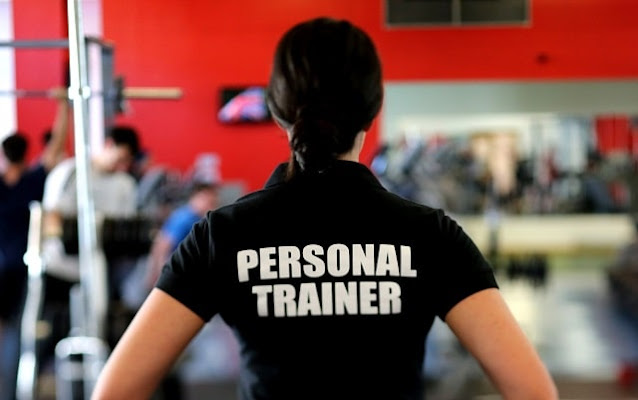
What Are the Common Types of Personal Trainers?

different types of personal trainers

When most people think of getting healthy, they think of dieting. This isn't surprising, as 45 million Americans start a diet each year. But many of these people are doomed to fail because they don't focus on what really matters—exercise. 

In conjunction with a healthy meal plan, exercising can help you get the results you want. 

If you don't know much about working out or planning healthy meals, you might want to get some professional advice. There are several types of personal trainers—all of whom can help you transform your life. 

So what are the different types of personal trainers and fitness instructors? 

Keep reading to learn about some of the different kinds of personal trainers. 

Physique Trainers 

The majority of personal trainers that people work with are physique trainers. If you've ever gone to the gym and seen a professional coaching someone through a workout, it was most likely a physique trainer. 

These professionals work to help people achieve their physical goals. This can include anything from wanting to gain muscle to wanting to slim down a few sizes. 

Physique trainers know exactly how certain exercises will affect your body. They know which workouts can give you the results you want, as well as how often you need to be doing them. 

While they're talented inside of the gym, they're not lifestyle trainers. Physique trainers won't be able to help you fight off cravings or other problems that happen outside the gym. 

Performance Trainers 

While the majority of personal trainers are physique trainers, a small minority of them are performance trainers. As their name suggests, these are individuals that specialize in training people for the performative side of fitness. 

The specific event that these functional performance professionals train you for depends on what you hope to participate in. Many performance trainers work to help their clients excel in weight lifting competitions, triathlons, or certain sports, like track and field. 

Crossfit is a good example of a program that focuses almost exclusively on performance. It emphasizes strength, power, and speed. As these are high-intensity workouts, make sure that you work with the best personal trainer with the right credentials and experience. You want them to have the required licenses or even an online personal trainer certification. 

Lifestyle Personal Trainers 

While physique and performance trainers concern themselves with the results, lifestyle personal trainers focus on the process. By giving their clients the mindset and the tools they need to succeed, they encourage long-term results. 

Lifestyle trainers understand all of the usual roadblocks that people have. This includes things like the feeling of unworthiness, a general desire to give up, and having an unhealthy relationship with food. 

Personal trainers will work hand-in-hand with you to solve all of these problems. They understand that you can have the best body in the world but still be unhappy with the way that you look. 

They emphasize dieting and exercising in a way that doesn't encourage snapbacks to old habits once the program finishes. 

Accountability Coaches 

Working with an accountability coach is a drastic yet healthy measure that some people choose to take to get the results they want. Although they can specialize in other areas, many accountability coaches work in the field of fitness. 

These professionals work with you to spell out your goals. They then create detailed plans that aim to help you tackle them. These plans will have subgoals with varying levels of importance. 

Aside from helping you craft plans, accountability coaches then help you achieve them. They also hold you accountable for all of your actions. 

They don't shame you when you don't achieve your goals, but they do encourage you to do better and try harder the next time. Many people need this level of motivation which is why accountability coaches are so popular. 

Boot Camp Instructors 

If you are looking to work out in a group setting, then attending a boot camp might be a good idea. Leading the class will be a type of personal trainer known as a boot camp instructor. 

Many boot camps take place outside in places like parks or beaches. This makes them a great place for people to soak in the outdoors while also getting fit. 

Boot camp instructors can direct classes covering anything from yoga to Pilates. They work to ensure that everyone in the class feels comfortable and is performing the exercises safely and effectively. 

Sports Trainers 

Sports trainers are exactly what they sound like—professionals that help individuals train and prepare for certain sports. This can include anything from swimming to football or rugby. 

Sports trainers know what muscle groups they need to target in workouts to help you succeed at the sport you participate in. For example, if you are a swimmer, your trainer might have you work your shoulders, arms, and core. 

These personal training professionals also know all about how to prevent injury while training in the field. They work to get you as fit and effective as possible while also ensuring that you don't injure yourself in the process. 

Understand the Different Types of Personal Trainers 

Whether you have a New Year's resolution or just think that it is time for a change, it is never a bad idea to get started on a fitness journey. The right personal trainer can help you get started and hold you accountable to your health and fitness goals. 

Use this guide on the different types of personal trainers as a resource to ensure that you end up working with a certified fitness professional who can truly help you. 

Did you enjoy this article on personal training? If you did, make sure to check out the rest of our site. You'll find all kinds of posts in the Frugal Fitness section that can help you boost your mental and physical health.

Free Home Boot Camp Conditioning Workout

Free Home Boot Camp Conditioning Workout Frugal Fitness Fit Fat Loss Lean Toning Metabolism


Burn fat, build endurance, and increase your lean muscle with this free home workout. Alternate exercises, minimize breaks between sets, and use a step / stair for your bodyweight dips, upper body stepups, and even pushups. No actual equipment needed!

1x 30s Jumping Jacks (Warmup)

3x Pushups
3x Bodyweight Dips
3x Burpees
3x Jumping Jacks
3x Situps
3x Upper Body Stepups
3x Planks w/ Alternating Leg Raises

30 Second Plank (Burnout exercise)

Add even more of a challenge by throwing in some jump squats or alternating explosive lunges!!

It won't take long but it will burn a ton of bodyfat!

Frugal Fitness World Wide Wellness
Also visit Bootstrap Business

Cinder Block Sports Specific Smackdown Workout


Burn Fat, Build Muscle, & Improve Explosiveness w/ This Free Workout! Lay The Smackdown on your bodyfat!

Frugal Fitness Fun For Everyone! Subscribe Today


For More Great Tips, Get My Best-Seller On Amazon:

I hope you enjoyed this article about how to live healthier on a frugal budget and maximize your performance!

Interested in more articles about frugal fitness? 

Read My Posts:

Stay Frugal & Fit My Friends!

Frugal Fitness World Wide Wellness
Free Workouts & Nutrition On A Budget
"Crushing Fitness Costs Worldwide"

Also visit the Financial Success

How To Start Out As A Personal Trainer & Be Successful

be successful personal trainer

This post below is a combination of two previous posts I made a year or two ago regarding getting started as a personal trainer or strength and conditioning coach. Every month, if not every week, for nearly a decade, I get questioned by someone about becoming a personal trainer or how they should get certified. I've been a personal trainer for 10+ years and it is still a rapidly growing but also rapidly more competitive industry with a lot of burnout and failure. 

I love being a personal trainer. I've been one shortly after deciding that I wanted to be one at the age of 17 (I did high school presentations on the career path as a junior and got certified before my senior year). For years, all I ever wanted to be was a personal trainer, and the best one in the world at that. My goals have changed a bit recently but I will always be a personal trainer at heart, and a successful one at that who has succeeded in big health clubs, personal training studios, strength and conditioning facilities, and as an independent in-home trainer.

Personal training has been good to me over the years and given me a lot of opportunities for work and to meet a lot of great people. But it is not the easy, stress-free, and glamorous profession that some might think it is. If you are not one of the best out there you may fail with flying colors. You will get underpaid, under-appreciated, taken advantage of, and probably quit if you don't absolutely make it your life. You have to love it, make it a number one priority, and educate yourself to be the best. 

You may need to be willing to train clients from $5-15 an hour, or for free, for years like I did. I started at the very bottom, training friends and relatives and students and lunch ladies. You have to be willing to make a very small amount of money in a very unstable profession. You need to be ok with working erratic hours and working 6-7 days a week at least for a few years. Most people do not get or retain millionaire movie star, pro athlete, or CEO clients. You have to want to work for every dollar you get and genuinely want to help every regular person become the best they can be with a higher quality of life.

Sadly, most people that ask me about becoming a trainer will end up failing or quitting after a short period of time, but I answer their inquiries anyways. Out of about 100 people that have asked me about becoming a trainer, about 10 actually end up pursuing it, and out of that 10 about 2-3 end up sticking with it. Here are my responses to their questions on the type of certification to get, how to get started, and my experiences in the beginning.


*Begin Original Posts*

I have the NSCA Certified Strength and Conditioning Specialist and Certified Personal Trainer certs. The Certified Strength and Conditioning Specialist cert is the best one in the industry as far as I'm concerned because it is the only one you need a college degree for (any 4 year degree). I've also been ISSA certified fitness trainer and performance nutrition specialist. ISSA's performance nutrition program is pretty comprehensive and I learned a lot so I would recommend it. I also have gotten another dozen certifications from other organizations over the years such as NASM, AFAA, and Apex.

The NSCA certs cost about $300 each, and you also have to pay $100 a year to be a member of the NSCA. The ISSA certs are about $400-500 each but no annual membership fee. The NSCA is more strict about continuing education units as well for maintaining your certs, they expire after 2 years and you need to go to seminars and classes to get your CEUs. Those cost money as well.

Anyways, certifications are nice and you learn a lot but they are not everything. Expanding your knowledge on health and fitness as much as possible and learning how to market yourself are more important and necessary than certs. They are not required everywhere. Being a Performance Nutrition Specialist doesn't really mean that much, it just means you are competent enough to make nutritional "recommendations" to clients. It does not make you a Registered Dietitian by any  means.


My advice to a colleague and anyone looking to become a Personal Trainer, based on my personal experiences...


I started my in-home personal training business in March 2006 and it's been doing pretty well so far. You obviously have to get your name out there and find your own clients which is tough but it gets easier after you've built up a clientele and reputation. I've been certified by the ISSA as a Certified Fitness Trainer and Specialist in Performance Nutrition for almost 7 years now. They aren't the best certifications but they served me well and will get you a job at pretty much 98% of gyms and health clubs. Last year I got my NSCA CSCS and CPT certification which are obviously superior and they are accepted absolutely everywhere. I would say the CSCS is the gold standard since only college graduates can get it.

If you are looking to be a college or semi-pro strength and conditioning coach, you obviously need the CSCS. There are tons of colleges in the area, I'm sure you could find a job somewhere if that is what you wanted to focus on. Pay is pretty bad from what I hear as a strength coach, and the hours can be extremely long. You really have to love what you do and love training athletes and getting client testimonials.

If you want to be a personal trainer, you technically don't need any certifications! I would say less than half of the trainers out there have an active certification. You are already ahead of the game having a college degree in exercise physiology or health science, i forget what you finished with. Having certifications makes you more marketable and may help you get a job quicker but it isn't a necessity at a lot of gyms and health clubs. I would still recommend getting your CSCS to cover all your bases and make you a stronger candidate. You could also leverage your fitness expertise to get involved with the best MLM companies in the fitness industry! 


There are 2 major options for being a personal trainer from the start. You can work at a Fitness Together, Getting In Shape For Women, or Fitcorp type setting where you don't have to pick up your clients, the owner/manager sells all the client packages and you just worry about training the clients. This is easier to do when starting out but you don't learn as much or have as much control. The other option is to work at a Gold's Gym, Boston Sports Club, etc where you only get paid on commission pretty much and you need to find your own clients. It takes an investment in time to get your clientele and you might not get paid much at first but in the long run you will probably make more money. You also learn how to sell a lot better. Going completely solo like me and marketing your personal training business can be done anytime but I would recommend learning the ropes at another gym first.

I started out working at YMCA's when I was 17 and did floor hours, new member orientations, cleaning, free training sessions, and substituted for other trainers that went on vacation. If worst came to worst, you could always get a lot of hours or a full time job at the YMCA. There are plenty of old and lazy people at Y's and you might even be given some clients right off the bat. 

Don't get hung up on certifications, send out the applications/resumes, practice training friends/family/neighbors, and get some work experience in for cash, at least part time. Learn as much as you can about fitness and nutrition. Take a tip from the Army and be the best you can be, or you will fail.


Frugal Fitness Fun For Everyone! Subscribe Today


For More Great Tips, Get My Best-Seller On Amazon:
frugal fitness books

I hope you enjoyed this article about how to live healthier on a frugal budget and maximize your performance!

Interested in more articles about frugal fitness? 

Read My Posts:

Stay Frugal & Fit My Friends!

Frugal Fitness World Wide Wellness
Free Workouts & Nutrition On A Budget
"Crushing Fitness Costs Worldwide"


Also visit the Bootstrapped Entrepreneur

Workout Outline For Peak Performance Leading Up To High School Soccer Tryouts


Frugal Fitness has trained many youth, high school (Medfield High School), and collegiate (Merrimack College and Harvard University) soccer players to maximize their performance both in and out of season. Sure it's not World Cup quality talent, but these are still top 1% worldwide athletes. 

(Recommendations Based on Appropriate Summer Training, 2.5 Mile Run Test, 100 m Sprint Tests, 200m Sprint Tests, and Traditional Soccer Drills, Scrimmages, etc.)

Obviously the most important thing is all the training you do over the whole summer and prior to that, but the week leading up to tryouts can optimize your performance during the tryouts if done correctly. These recommendations by Frugal Fitness are to optimize rest, speed, power, endurance, agility, and minimize overtraining / injury / and fatigue if done correctly and in conjunction with a comprehensive, integrated, and long term training regimen.

Workouts / Nutrition Before Tryouts:

Day Before Tryouts:
Rest / Very Light dribbling practice, go to sleep early, extra carbohydrates, and water

2 Days Before Tryouts:
Captains's Practice + Stretching, go to sleep early, extra protein, carbohydrates, and water

3 Days Before Tryouts:
3 Mile Jog, 2-3 Sprints After, light dribbling & shooting practice, stretches, extra protein, carbohydrates

4 Days Before Tryouts:
Weight training workout and bike / elliptical high intensity intervals between weight/ab sets, extra protein, carbohydrates

5 Days Before Tryouts:
3-4 Mile Jog, a few sprints after, stretches


If you've been working hard all summer, it will pay off after following this outline leading up to the big tryout days and you will reap the rewards with ideal performance.


Frugal Fit Fun For Everyone! Subscribe Today


For More Great Tips, Get My Best-Seller On Amazon:

I hope you enjoyed this article about how to live healthier on a frugal budget and maximize your performance!

Interested in more articles about frugal fitness? 

Read My Posts:

Stay Frugal & Fit My Friends!

Frugal Fitness World Wide Wellness
Free Workouts & Nutrition On A Budget
"Crushing Fitness Costs Worldwide"


Also visit the Bootstrap Businessman

Is Swimming a Good Workout? Your Questions Answered!

Got A Question For The Frugal Fitness Guru? Tweet Me!
No Way, Swimming isn't a good workout at all, Nope doesn't burn fat...
Question:

Frugal Fitness, me and my friend are having an argument about swimming. She thinks that swimming is a waste of time and will not help you lose weight or build muscle. I tend to disagree. What is your standpoint on this?

Frugal Fitness Answer:

Great question, your friend is absolutely wrong to say that swimming is a waste of time and doesn't build any muscle or burn bodyfat. Swimming is a total body workout that works pretty much every muscle group in the body and therefore burns a large amount of calories (the more/larger muscles involved in a movement, the more calories required to perform it). It works every joint range of motion and plane of movement so you may be less likely to neglect certain muscle groups or joint ROM. Swimming can be done in bursts of high intensity intervals or long bouts of low-moderate intensity lap swimming, both options will emphasize different muscle fiber types and energy systems in the body. Like jogging and doing sprints afterwards, you can include both types in your workout.


One of the greatest benefits of swimming is that nearly everyone can enjoy the benefits because it is very low impact on the joints. Therefore, it is a great option for those with arthritis, tendonitis, limited range of motion, post-surgery / injury rehabilitation, or those with other physical limitations. Swimming can strengthen your muscles without adding bulk and increase your metabolism and lung capacity significantly. There are many different strokes you can perform so you can emphasize certain muscle groups as you desire and keep your body from adapting by mixing things up. This will help prevent hitting plateaus in your progress when it comes to fat loss and performance.

There are a plethora of other benefits that swimming can provide for you but there are almost too many to mention in one blog post. Also on a related topic, water aerobics and treading water are both excellent options as well for burning fat so feel free to add those in to your swimming workouts for extra variety.

That being said, swimming doesn't necessarily cover all your bases when it comes to achieving all of your health, fitness, physique, and athletic goals. While swimming can provide excellent resistance for your muscles and connective tissue, it is not a weight-bearing activity and will not cause nearly as much adaptive increases in bone density compared to weight training, elliptical, stairmaster, or even walking. This is very important to keep in mind if you are at risk for osteoporosis or osteopenia. Water aerobics provide assisted/partial weight-bearing activity since the buoyancy of the water  Swimming may provide light to moderate resistance for your muscles to work against but for many athletes and weightlifters / bodybuilders, it will not be enough to mimic their specific event or create the desired muscle hypertrophy (mass increase). To achieve a completely well-rounded and effective workout regimen, I would recommend complimenting your swimming workouts with traditional weight-bearing cardiovascular bouts, weight training, and core exercises.


So overall, swimming is an excellent workout when combined with other forms of cardiovascular and resistance training throughout the week. It is great for those looking to get back into fitness, minimize joint strain, rehabilitate an injury, work multiple muscle groups, or just do it to relieve stress in a positive manner. If you aren't hitting the pool this summer (or at your local health club in the winter), then start now!

Frugal Fit Fun For Everyone! Subscribe Today


For More Great Tips, Get My Best-Seller On Amazon:

I hope you enjoyed this article about how to live healthier on a frugal budget and maximize your performance!

Interested in more articles about frugal fitness? 

Read My Posts:

Stay Frugal & Fit My Friends!

Frugal Fitness World Wide Wellness
Free Workouts & Nutrition On A Budget
"Crushing Fitness Costs Worldwide"


Also visit the Bootstrap Businessman

How To Work Out To Swim - Swimming Training Frugal Fitness

frugal swimming workout


Frugal Fitness Swimming Question 1:

I swim 20 minutes x day at lunch, 5 times a week medium intensity, like to trim down around my waist.
I also do weight training at night, but not able to increase the intensity. Would you suggest to slow the swimming? I work out with weights about 4/5 times a week, I noticed that I am a bit tight a night lately; Goal is to trim down around the belly button and tone up without losing size. I am about 5'11/6'00 and 200 lbs.


workout to swim


Fantastic job on the consistent and frequent workouts! Swimming and weight training are a phenomenal combination, however it seems that you are doing a very similar workout each week, every week. Your body has adapted to these workouts and you are not getting nearly the same fat burning or muscle building benefits as you did originally. You need to start mixing things up significantly. First off, have you ever considered doing some weight training at lunch and swimming at night? That way you would have more energy and less stiffness for your lift and could make larger increases in intensity. Another thing option is to change up the amount of time you swim, instead of 20 minutes every time maybe 15 minutes one day of higher intensity, then another day of 30 minutes lower intensity. Maybe throw in some high intensity intervals. Same thing for weight training, try separating your lifting workouts into different muscle group splits, vary the weights you use and repetition scheme (some sets do 6-8 reps with heavy weight, other sets do 15 reps with lighter weight). You could also throw in some different forms of cardio on top of or instead of swimming such as bike, treadmill, elliptical, stairclimber, row machine, jump rope, step, etc to shock your body and burn more fat. 

frugal swimming workout


Frugal Fitness Swimming Question 2:

I never thought about changing the daily routine weights during the day, swimming at night. Probably it is because the pool is an outdoor one, the weather is nice here,most of the time, so I want to take advantage of the sun. But it is a nice thought. Recently I did start doing some high-intensity swimming intervals one day, and swim at low intensity next day. Some swimmers are telling me that when I do high intensity intervals, I need to calculate at least a 10 minutes cool down. What is your thought on that? Regarding the weight training what is the length of time you suggest to hit the weights per session? Do you recommend to do high swimming intervals at lunch time and light weights at night or high swimming intervals with high weights ?


frugal swimmer


Answer 2:
I would agree that if you are doing high intensity swims you should do a cooldown, 5 minutes should be fine if you don't have 10 minutes. I would do weight training for about 45 minutes, you don't want to do much longer than that especially if you are also swimming that day. If 45 minutes is too easy, then reduce your breaks between sets and get in more exercises. I would recommend doing lighter weights if you did a high intensity or extra long swim earlier that day since you will be in more of a fatigued state. If you did an easy swim or no swim earlier in the day, then feel free to use heavier weights. Swimming is a great option overall to improve your health and well-being through consistent low-impact physical activity.


bo derek swimmer
Swimming Helped Make Bo Derek A "10"
(I don't know if that's true, but it might be!)

How To Work Out To Swim - Swimming Training Top Tips

Frugal Fitness Fun For Everyone! Subscribe To Frugal Fitness Today


For More Great Tips, Get My Best-Seller On Amazon:
frugal workout books

I hope you enjoyed this article about how to live healthier on a frugal budget and maximize your performance with swimming!

Interested in more articles about frugal fitness workouts and sport? 

Read My Blog Posts:

Stay Frugal & Fit My Friends!

Frugal Fitness 
World Wide Wellness
Workouts & Nutrition On A Budget
"Crushing Fitness Costs Worldwide"


Also visit the Startup Marketing

Also Visit Frugal Business

How Do I Improve My Vertical Jump? Your Questions Answered!


Your Question:
What are some exercises I can add to my workouts to increase my vertical jump?
Frugal Fitness Answer:
Incorporate Olympic Lifts into your workouts such as power cleans, jerks, and snatches. These will give you the total body explosiveness you need to improve your vertical jump. Start with light weight and focus on technique and speed, if you master the technique then you can up the weight. You also obviously need to be doing plenty of squats, lunges, deadlifts, and calf raises to achieve and improve strong lower body and core strength and explosiveness. Explosive squats and plyometrics will translate over to the vertical jump very well also. At one point I had a vertical jump of 34 inches, not bad for someone who's short.

Frugal Fitness Fun For Everyone! Subscribe Today


For More Great Tips, Get My Best-Seller On Amazon:

I hope you enjoyed this article about how to live healthier on a frugal budget and maximize your performance!

Interested in more articles about frugal fitness? 

Read My Posts:

Stay Frugal & Fit My Friends!

Frugal Fitness World Wide Wellness
Free Workouts & Nutrition On A Budget
"Crushing Fitness Costs Worldwide"

Also visit the Affordable Marketing

Research Critique: Affect of Stretching on Vertical Jump Performance

        The article I am critiquing isThe Effect of Static, Ballistic, and Proprioceptive Neuromuscular Facilitation Stretching on Vertical Jump Performance” in The Journal of Strength and Conditioning Research: Vol. 21, No. 1, pp. 223–226. Prior to reading this article, I had originally been taught in my personal training course that static and even ballistic stretching could be detrimental to subsequent power and strength movements. This seemed to be true from personal experience when I was shot putting, jumping, or lifting heavy weights. During our Essentials of Strength and Conditioning class last semester, the book published with NSCA approval claimed that stretching prior to a strength or power movement could actually increase strength and power levels and therefore performance. This seemed feasible only if ballistic stretching was done because it more closely mimics the movement that will be performed.


In this article, 18 collegiate males were tested to determine the effects of static, ballistic, and proprioceptive neuromuscular facilitation (PNF) stretching on their vertical jump measurements. Their measurements were taken prior to stretching and then after different time intervals after stretching had occurred. Measurements compared statistically showed a 4-5% decrease in vertical jump after static and PNF stretching, and a 2-3% drop in vertical jump height after ballistic stretching.  Both of these decreases were relatively consistent until about 15 minutes beyond the time of stretching, then there was no statistically significant difference after this point. The study concluded that static and PNF stretching was not a good idea prior to a strength or power movement. They attribute the decrease in vertical jump performance from a decrease in stiffness in the musculotendinous unit.
I am not an expert by any means but I agree with this study for the most part. I understand the fact that strength and power will be diminished if musculotendinous units are too tight or there is significant deficits of joint range of motion. For most individuals though, adequate range of motion and musculotendinous junctions should be sufficient for an exercise such as the vertical jump, as long as this tightness does not get in the way of the movement. The only criticism I have for this article is that the sample size could have been bigger ideally and the athletic experiences of the subjects is not given. I wonder what their athletic backgrounds were and if college or elite athletes would have the same results. It would also be interesting to see if female subjects would have the same results if tested in this fashion. After reading this article I am more confident that ballistic stretching or very minimal overall stretching is the way to go prior to a power movement (a specific warmup is always warranted though of course).

Frugal Fitness Fun For Everyone! Subscribe Today


For More Great Tips, Get My Best-Seller On Amazon:

I hope you enjoyed this article about how to live healthier on a frugal budget and maximize your performance!

Interested in more articles about frugal fitness? 

Read My Posts:

Stay Frugal & Fit My Friends!

Frugal Fitness World Wide Wellness
Free Workouts & Nutrition On A Budget
"Crushing Fitness Costs Worldwide"

Also visit the Affordable Marketing

Plyometrics For Improved Golf Performance


Golf has always been a sport that has focused more on technique, strategy, and mental focus rather than physical conditioning. Many golfers today still consider resistance training or anything like it to be taboo for the sport. They believe that it may make them stiffer from losing range of motion and it will negatively affect their golf swing and technique. The sport is finally starting to come around however, especially with the best golfer of all time, Tiger Woods, participating in a resistance training program all year round. Increased competition in golf and improved training methods will make weight training and plyometrics a necessity instead of risk.
            A skilled golfer sees improved club speed and drive distance because of several factors. It is common sense that increased strength and power would correlate relatively strongly with increased club speed and drive distance. Increased rotational speed and efficient mechanics are also extremely important in channeling that strength and power. A golf swing begins at the hips, then moves through the trunk, then to the shoulders, arms, hands, and finally the club head. The leg muscles act as stabilizers for the rest of the body so torque can be applied to the club from rapid contraction of small muscles. Because of the quick and precise motion required to drive a ball effectively, plyometrics along with a base of resistance training is an excellent choice to improve mechanics. The backswing is the prestretch motion that creates stored elastic energy to be released quickly during the front swing.
            A base in general resistance training is needed before plyometrics can be utilized for safety reasons and to ensure effective training. Basic lifts will help to improve coordination, muscular force production due to improved muscle cross-sectional area, and muscular strength needed to withstand the biomechanical forces placed on the body during plyometrics training. All of the plyometrics done in this experiment were medicine ball exercises mimicking different segments of the swing. This type of training allows the nervous system to more quickly recruit more muscle fibers for the swinging motion. This study found that overall there were at least modest improvements in driving distance and club speed. This improvement due to resistance training and plyometrics can be associated with a drive of a few dozen meters extra on a drive and that can translate in less strokes on your score card. Even better still, with this type of training (along with adequate stretching), muscle hypertrophy was found to be minimal and range of motion was not affected negatively. Overall, I think it would be ridiculous for a golfer not to engage in plyometrics training.

Frugal Fitness Fun For Everyone! Subscribe Today


For More Great Tips, Get My Best-Seller On Amazon:

I hope you enjoyed this article about how to live healthier on a frugal budget and maximize your performance!

Interested in more articles about frugal fitness? 

Read My Posts:

Stay Frugal & Fit My Friends!

Frugal Fitness World Wide Wellness
Free Workouts & Nutrition On A Budget
"Crushing Fitness Costs Worldwide"

Also visit the Affordable Marketing

New Frugal Finance Blog Posts & Articles